
Clean kitchen grease naturally: cabinets and chandeliers
Kitchen grease creeps onto every surface near your stove, from cabinet doors to that beautiful crystal chandelier overhead. Commercial degreasers promise quick fixes but often contain harsh chemicals that leave residues and fumes. This guide teaches you how to remove stubborn kitchen grease naturally using safe, eco-friendly methods that work on both wood cabinets and delicate crystals. You’ll learn proper preparation, step-by-step cleaning techniques, and maintenance habits that keep surfaces sparkling without toxic products.
Key takeaways
| Point | Details |
|---|---|
| Natural ingredients work | Dish soap, baking soda, and distilled water effectively break down kitchen grease without harsh chemicals. |
| Two-step method wins | Apply baking soda paste for 5 to 10 minutes, then wash with surfactant soap for best results. |
| Crystal needs gentle care | Use drip spray with isopropyl alcohol and distilled water to avoid streaks on chandeliers. |
| Prevention saves time | Weekly wipes and exhaust fans reduce buildup and eliminate need for frequent deep cleans. |
| Dispose grease properly | Collect cooled grease in containers and trash it to prevent drain clogs. |
What you need: eco-friendly materials and preparation
Eco-friendly kitchen grease removal primarily uses dish soap, baking soda, and white vinegar with a two-step cleaning method. Dish soap contains surfactants that surround and lift grease molecules, making them water-soluble. Baking soda provides gentle abrasion and alkaline properties that help break down acidic grease deposits. White vinegar cuts through mineral buildup but works less effectively on greasy lipids, so save it for finishing touches on non-porous surfaces.
Gather soft microfiber cloths, a non-abrasive scrub brush, spray bottles, and protective gloves before starting. Test any cleaning solution on a hidden cabinet spot first, especially on painted or stained wood, since some finishes react poorly to alkaline solutions. Avoid using vinegar directly on natural stone countertops or unsealed wood, as the acid can etch or discolor these materials.
Pro Tip: Wipe cabinet fronts weekly with warm soapy water to prevent grease from hardening into stubborn layers that require intensive scrubbing.
Proper grease disposal protects your plumbing. Dispose of grease into trash containers after it cools and solidifies, never pour liquid grease down drains where it hardens and causes expensive clogs. For crystal chandeliers, include distilled water in your supply list to avoid mineral spots that tap water leaves behind. Review your household cleaning checklist for chandeliers to coordinate cabinet and fixture cleaning efficiently.
| Ingredient | Purpose | Cost per use | Application tip |
|---|---|---|---|
| Dish soap | Surfactant lifts grease | $0.10 | Use 2-3 drops in warm water |
| Baking soda | Alkaline scrub | $0.05 | Make paste with water |
| White vinegar | Mineral deposits | $0.08 | Dilute 1:1 with water |
| Isopropyl alcohol | Crystal streak-free | $0.15 | Mix 1:3 with distilled water |
Step-by-step kitchen cabinet grease removal using natural products
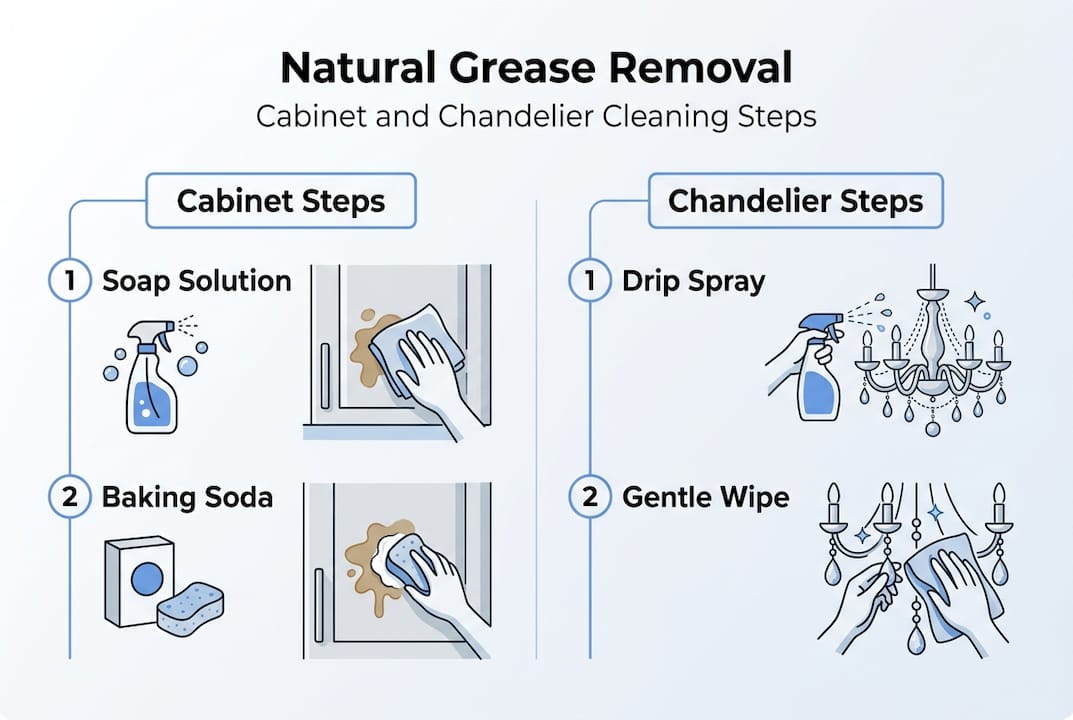
Start by mixing three tablespoons of baking soda with enough water to form a spreadable paste. Apply this paste evenly across greasy cabinet surfaces, paying extra attention to areas near the stove where grease concentrates. Allow a 5 to 10-minute dwell time for the alkaline baking soda to break down the grease bonds chemically before you begin scrubbing.
Heat enhances cleaning power significantly. Fill a bowl with hot water and add several drops of eco-friendly dish soap, creating a sudsy solution. The warmth helps surfactants outperform acids for grease lipids by lowering the surface tension of water molecules, allowing them to penetrate and emulsify stubborn deposits. Dip your microfiber cloth into this hot soapy water and wipe away the baking soda paste in circular motions, reapplying soap as needed.
- Create baking soda paste using 3 tablespoons soda and 1 tablespoon water.
- Spread paste evenly on greasy cabinet areas and let sit 5 to 10 minutes.
- Prepare hot soapy water using eco-friendly dish soap and warm water.
- Wipe paste away with soapy cloth using gentle circular scrubbing motions.
- Rinse cloth frequently in clean hot water to avoid spreading grease.
- Dry cabinets immediately with a clean towel to prevent water spots.
- Repeat on stubborn spots, increasing paste dwell time to 15 minutes if needed.
Never mix vinegar and baking soda simultaneously during cleaning, as the fizzing reaction neutralizes both ingredients and reduces their individual cleaning effectiveness. Instead, use baking soda first for scrubbing power, rinse thoroughly, then apply diluted vinegar separately if you need to tackle mineral deposits or hard water stains on non-wood surfaces.
Pro Tip: Keep a spray bottle of diluted dish soap solution under your sink for quick daily wipes that prevent grease from hardening into layers requiring intensive treatment.
For painted cabinets, reduce scrubbing pressure and test your paste on an inconspicuous edge first to ensure the finish tolerates alkaline solutions. Wood cabinets benefit from immediate drying to prevent moisture damage, so keep extra towels handy. Explore chandelier cleaning spray solutions that use similar surfactant principles for your overhead fixtures.
Cleaning crystal chandeliers affected by kitchen grease safely
Crystal chandeliers hanging near kitchens accumulate an invisible grease film that dulls their sparkle over time. For heavily soiled crystals, hand wipe each piece first using a cloth dampened with mild soapy water before applying any spray treatment. This pre-cleaning removes thick grease layers that drip sprays alone cannot penetrate effectively.
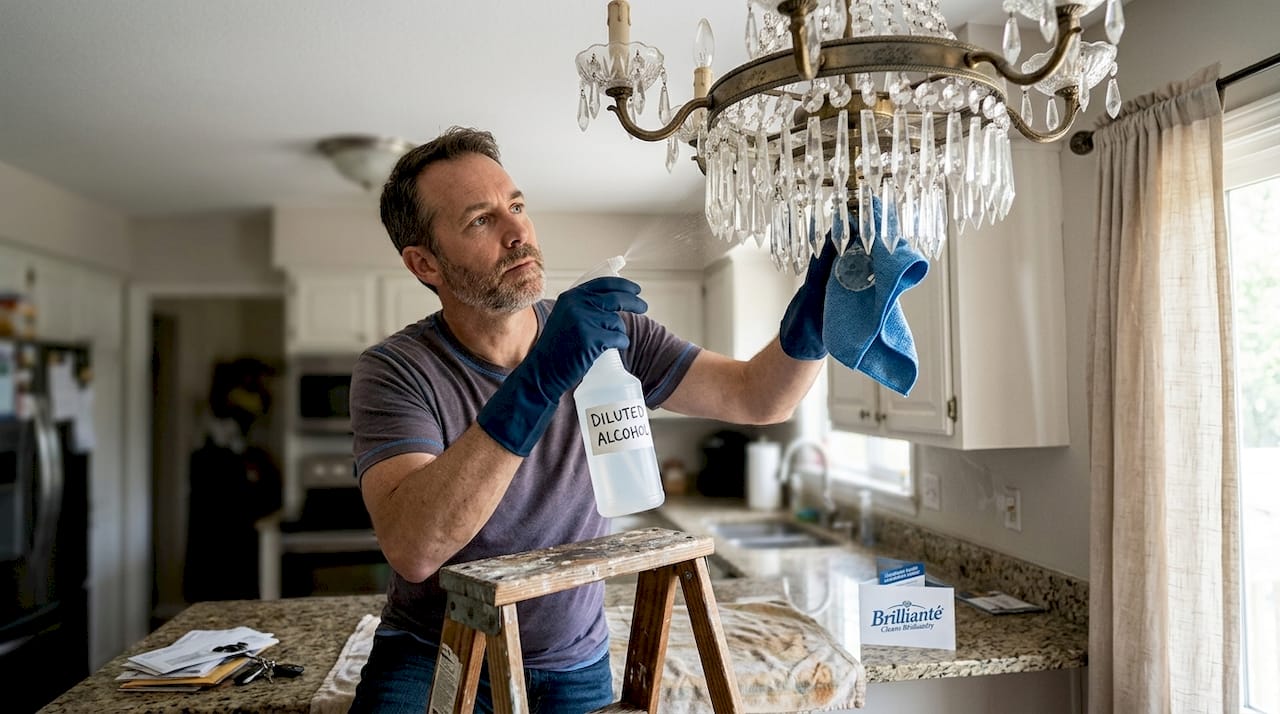
Prepare a drip-dry spray of 1:3 isopropyl alcohol to distilled water in a clean spray bottle. Isopropyl alcohol evaporates quickly and leaves no residue, while distilled water prevents the mineral deposits that tap water creates. Commercial ammonia-free chandelier cleaners work similarly but cost more per ounce than this homemade solution.
Cover the floor beneath your chandelier with towels or plastic sheeting to catch drips. Turn off the fixture and let bulbs cool completely before cleaning. Spray each crystal generously until cleaning solution drips freely, carrying dissolved grease and dust downward with gravity. Crystal chandeliers require distilled water to avoid streaks and mineral deposits that dull the finish. Let the fixture air dry completely without wiping, as rubbing can create streaks and redistribute grease.
Pro Tip: Clean chandeliers on a dry day with low humidity so the alcohol-water mixture evaporates faster and more evenly, preventing water spots.
- Cover surrounding surfaces with towels before spraying to protect floors and furniture.
- Remove delicate crystal drops if they show heavy buildup and wash separately in soapy water.
- Avoid touching crystals during drying to prevent fingerprint oils from replacing the grease you just removed.
- Schedule chandelier cleaning after cabinet work so airborne grease particles don’t resettle on freshly cleaned crystals.
| Spray type | Cost | Safety | Effectiveness | Streak risk |
|---|---|---|---|---|
| DIY isopropyl mix | $0.20/oz | Non-toxic, flammable | Excellent on light grease | Very low |
| Commercial ammonia-free | $0.80/oz | Non-toxic | Excellent, added shine agents | Low |
| Vinegar water | $0.10/oz | Non-toxic | Poor on grease, good minerals | Medium |
| Tap water only | $0.01/oz | Non-toxic | Poor | Very high |
Review your chandelier cleaning checklist to coordinate this work with your regular kitchen maintenance schedule. The same natural surfactant principles that clean cabinets apply to crystal, but the delicate material demands gentler application methods and streak-free formulations.
Preventing kitchen grease buildup and maintenance tips
Prevention beats emergency deep cleaning every time. Install and use your exhaust fan during all cooking to capture airborne grease before it settles on cabinets and chandeliers. Backsplashes protect walls directly behind stoves, while splash guards on cooktops contain spattering oils. Exhaust fans and weekly wipes prevent buildup better than any cleaning product can remove hardened deposits.
- Run exhaust fans at high speed whenever frying, sautéing, or cooking with oils.
- Install tile or stainless steel backsplashes that wipe clean easily behind cooking surfaces.
- Use splatter screens over frying pans to contain oil droplets.
- Position chandeliers at least 3 feet from stove surfaces when possible during kitchen design.
Weekly maintenance takes just minutes but saves hours of scrubbing later. Establish a Sunday routine or pick any consistent day that works for your schedule. Small consistent efforts compound into major time savings over months.
- Wipe cabinet fronts with warm soapy water using a microfiber cloth every week.
- Check stove hood grease traps monthly and clean or replace filters as needed.
- Hand wipe chandelier crystals monthly with a barely damp cloth to remove dust before it combines with cooking oils.
- Schedule deep cabinet cleaning every 2 to 3 months, adjusting frequency based on cooking habits.
- Inspect caulking and seals around backsplashes quarterly, resealing gaps where grease can hide.
Pro Tip: Mark your calendar for bi-monthly deep cleans and chandelier inspections so maintenance becomes automatic rather than reactive.
Dispose of grease properly by collecting cooled cooking oils and solidified fats in sealed containers, then placing them in your regular trash. Pouring grease down drains causes it to solidify inside pipes, creating blockages that require expensive professional removal. Keep an empty coffee can or jar under your sink specifically for grease collection.
Natural cleaning methods match chemical degreasers in effectiveness on non-porous surfaces when you apply them correctly and consistently. The surfactants in plant-based dish soaps work through the same molecular mechanisms as synthetic versions but break down safely in the environment. Your chandelier care checklist integrates seamlessly with these cabinet maintenance routines, creating a comprehensive eco-friendly kitchen care system.
Discover eco-friendly cleaning products and expert support
You’ve learned the science and techniques behind natural grease removal, but having the right products simplifies the process significantly. Brilliante Crystal Cleaner offers a professionally formulated drip-dry solution that applies the same surfactant principles you’ve learned in a convenient spray format. Made in the USA with environmentally friendly ingredients, this cleaner works on both kitchen crystals and other delicate surfaces without harsh chemicals or abrasive residues.

The spray-and-drip method eliminates the wiping step that often creates streaks, letting gravity and evaporation do the work while you focus on other tasks. Hundreds of satisfied customers rate it as the top choice for maintaining crystal clarity between deep cleans. Browse our eco-friendly cleaning products to find solutions that match your specific kitchen needs, from daily maintenance sprays to intensive grease removal formulas.
Our blog provides ongoing guidance through detailed resources like the chandelier cleaning checklist that helps you coordinate all your kitchen cleaning tasks efficiently. Expert advice, product recommendations, and step-by-step tutorials make eco-friendly cleaning accessible even for beginners. Visit today to explore how professional-grade natural cleaners can simplify your kitchen maintenance routine.
Frequently asked questions
What is the best natural ingredient for breaking down kitchen grease?
Surfactants in dish soap work most effectively by surrounding grease molecules and making them water-soluble, allowing you to rinse them away easily. Baking soda provides helpful scrubbing action and alkaline properties that enhance grease breakdown when combined with surfactants and warm water. Vinegar alone performs poorly on lipid-based grease but excels at removing mineral deposits, so use it separately after degreasing rather than as your primary grease fighter.
How often should I clean kitchen cabinets to prevent grease buildup?
Wipe cabinet surfaces weekly with a mild soapy water solution to prevent grease from hardening into stubborn deposits. Schedule deep cleaning sessions every 2 to 3 months to address any buildup that weekly maintenance misses. Adjust this frequency based on your cooking habits, cleaning more often if you fry foods frequently or less often if you cook infrequently.
Can vinegar be mixed safely with dish soap to remove grease?
Mixing vinegar and dish soap together reduces cleaning effectiveness because the acid neutralizes the alkaline surfactants chemically. Use them in sequence instead, applying baking soda paste first, rinsing thoroughly, then following with diluted vinegar only if you need to tackle mineral deposits on non-wood surfaces. This sequential approach maximizes each ingredient’s specific strengths without chemical interference.
What is the safest way to clean a crystal chandelier with grease buildup?
Hand wipe heavily soiled crystals first using a cloth dampened with mild soapy water to remove thick grease layers. Then apply a drip spray made from 1 part isopropyl alcohol mixed with 3 parts distilled water, spraying generously and allowing the solution to drip freely without wiping. Avoid tap water and ammonia-based products, as these leave mineral spots or can damage metal fixtures. Check our safe chandelier cleaning guide for detailed fixture-specific techniques.
How should I dispose of kitchen grease to avoid plumbing problems?
Collect cooled grease and cooking oils in a sealed container like an empty coffee can or jar, then dispose of the container in your regular trash once full. Never pour grease down drains, as it solidifies inside pipes and creates clogs that require expensive professional removal. This simple habit protects your plumbing and prevents costly repairs while keeping your kitchen drainage system flowing freely.