
What is light diffusion? A guide for crystal chandeliers
A crystal chandelier’s breathtaking sparkle isn’t just about brightness. It’s about how light scatters through hundreds of faceted surfaces, creating that signature soft glow and dancing rainbows across your ceiling. This phenomenon, called light diffusion, transforms harsh bulb glare into elegant ambiance. Many homeowners don’t realize that dust buildup and improper cleaning can dramatically reduce this effect, dimming their chandelier’s brilliance by up to 30%. Understanding light diffusion helps you maintain that stunning visual impact through simple care practices.
Key takeaways
| Point | Details | |-------|---------|| | Light diffusion creates soft, even illumination | Crystal facets scatter light rays, eliminating harsh shadows and creating welcoming ambiance | | Crystal type directly impacts sparkle quality | Leaded crystals like Swarovski offer superior refraction compared to standard glass or acrylic | | Regular cleaning preserves diffusion efficiency | Monthly maintenance with proper solutions maintains up to 95% of original light diffusion | | Proper care extends chandelier lifespan | Gentle, non-abrasive cleaning prevents surface damage that reduces brilliance and color effects |
Understanding light diffusion and its role in crystal chandeliers
Light diffusion occurs when light is scattered or refracted, creating softer, more uniform illumination instead of concentrated beams. Think of the difference between a spotlight and a cloudy day. Directed light creates sharp shadows and bright spots, while diffused light wraps around objects gently.
Crystal chandeliers excel at creating this diffuse light through thousands of faceted surfaces. Each crystal acts like a tiny lens, bending incoming light rays in multiple directions. This scattering effect produces that characteristic soft glow that fills a room without harsh glare points.
The benefits of diffused lighting extend beyond aesthetics:
- Reduces eye strain by eliminating sharp contrasts
- Creates flattering illumination for faces and room features
- Makes spaces feel larger and more inviting
- Enhances the perceived warmth of your interior
Unlike task lighting that focuses brightness on specific areas, diffused chandelier light serves as beauty lighting. It transforms functional illumination into an atmospheric experience. The interplay between direct bulb light and the scattered rays bouncing through crystals creates depth and visual interest that flat ceiling fixtures simply cannot match.
“The magic of a crystal chandelier lies not in its light source, but in how it transforms that light into countless scattered rays that dance across surfaces.”
When diffusion works optimally, you notice the chandelier’s glow rather than individual bulbs. The room gains ambient brightness without obvious light sources, creating that elegant, sophisticated atmosphere homeowners cherish.
How crystal properties enhance light diffusion in chandeliers
Refraction determines how dramatically light bends when entering crystal material. The refractive index measures this bending ability. Lead crystal has a higher refractive index than standard glass, causing more pronounced light scattering and those signature rainbow prisms.
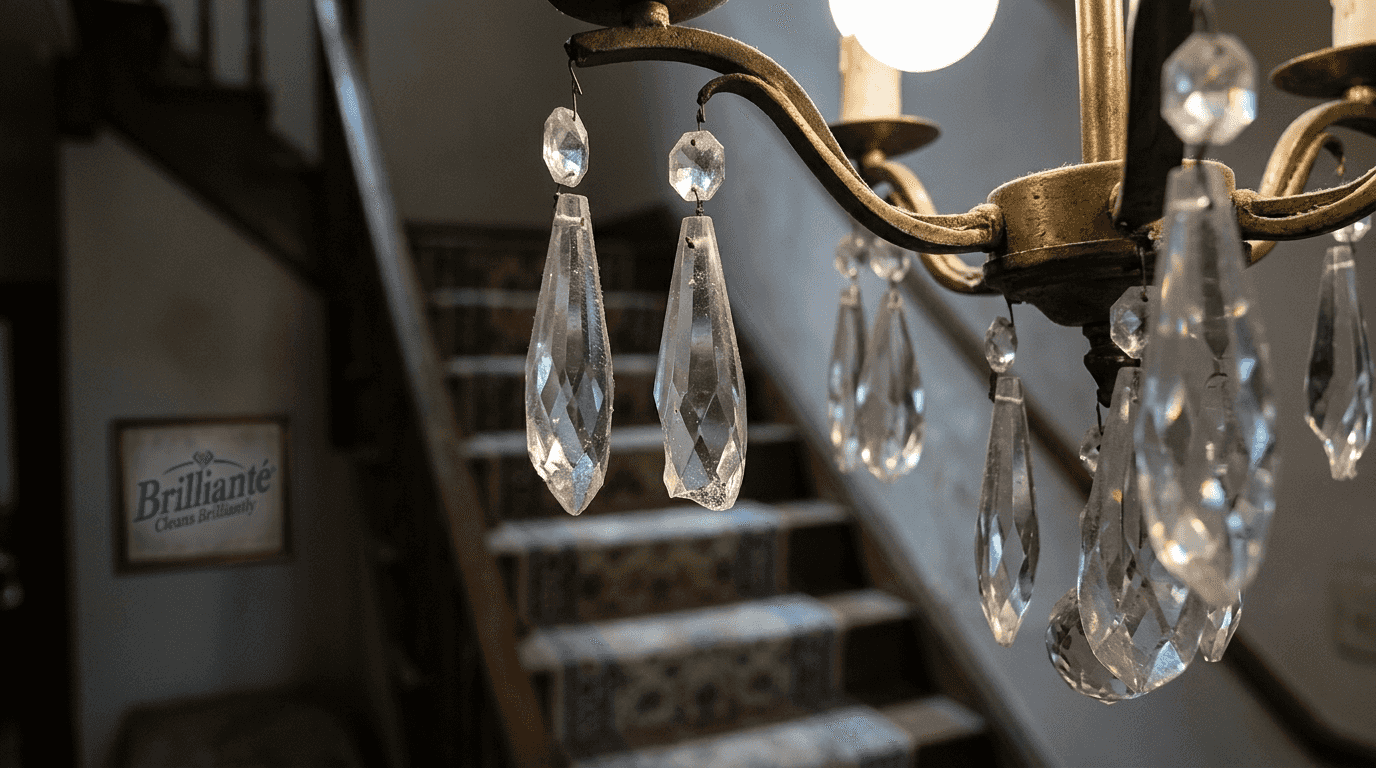
Swarovski crystals contain approximately 32% lead oxide, giving them exceptional optical properties. This high lead content increases light bending, acting as tiny prisms that maximize both illumination and sparkle. K9 crystal, a popular alternative, contains less lead but still outperforms basic glass in creating diffusion effects.
Facets multiply the diffusion effect exponentially. A single crystal pendant might have 12 to 20 precisely cut facets, each catching and redirecting light at different angles. More facets create more scattering points, intensifying the sparkle and subtle color separation that produces rainbow effects on nearby surfaces.
| Crystal Type | Lead Content | Refractive Index | Diffusion Quality |
|---|---|---|---|
| Swarovski | 32% | 1.545 | Exceptional sparkle with vivid rainbows |
| K9 Crystal | 10-12% | 1.520 | Good clarity with moderate color dispersion |
| Standard Glass | 0% | 1.520 | Basic diffusion with minimal rainbow effects |
| Acrylic | 0% | 1.490 | Lightweight but reduced brilliance |
Bulb choice significantly impacts diffusion outcomes. Clear bulbs create sharper light rays that show more dramatic rainbow effects through crystals. Frosted bulbs pre-diffuse light before it reaches the crystals, producing softer overall illumination with less color separation.
Pro Tip: LED bulbs with high Color Rendering Index (CRI above 90) reveal the full spectrum of colors in crystal diffusion, making rainbows more vibrant and true to life.
The combination of material purity, facet precision, and bulb selection determines whether your chandelier creates magical light diffusion or merely provides basic illumination. Proper chandelier cleaning preserves these optical surfaces so they continue performing at peak efficiency.
Maintaining your crystal chandelier to preserve optimal light diffusion
Dust and grime accumulation directly impacts how effectively crystals scatter light. Even a thin film reduces transparency and dulls the refractive surfaces that create sparkle. Monthly cleaning prevents this buildup from compromising your chandelier’s diffusion quality.
For monthly maintenance:
- Turn off power at the circuit breaker and allow bulbs to cool completely
- Mix one part white vinegar with three parts distilled water in a spray bottle
- Lightly mist each crystal, avoiding electrical components
- Wipe gently with lint-free microfiber cloth using circular motions
- Dry thoroughly to prevent water spots that scatter light unevenly
Safety considerations matter as much as cleaning effectiveness. Use a sturdy ladder with a stable base, never a chair or stool. Work during daylight hours when you can see clearly without relying on the chandelier itself for illumination. Have someone nearby to hand you supplies and steady the ladder.
Compressed air dusters work excellently for quick dust removal between deeper cleanings. Hold the can upright to prevent propellant residue and use short bursts from 6 inches away. This method removes surface particles without touching delicate crystals.
Pro Tip: Never use ammonia-based glass cleaners or abrasive compounds on crystal surfaces, as microscopic scratches permanently reduce light diffusion and create dull spots that interrupt sparkle patterns.
Deep cleaning neglected chandeliers requires more intensive work. Remove crystals one section at a time, photographing the arrangement first for reassembly reference. Wash each piece individually in warm soapy water using gentle dish soap. Rinse thoroughly in distilled water and dry with lint-free cloths to prevent mineral deposits.
Recognize when professional help becomes necessary. If crystals show yellowing, metal fittings have significant tarnish, or the fixture hasn’t been cleaned in years, professional chandelier specialists have tools and expertise to restore optimal diffusion without damage risk. Check your maintenance checklist regularly to stay on schedule.
Comparing faux crystal versus glass prisms: impact on light diffusion
Faux crystal prisms use acrylic or polycarbonate materials instead of glass or leaded crystal. These plastics offer lightweight, shatter-resistant alternatives at lower price points. However, their optical properties differ significantly from traditional glass, affecting how they diffuse and disperse light.
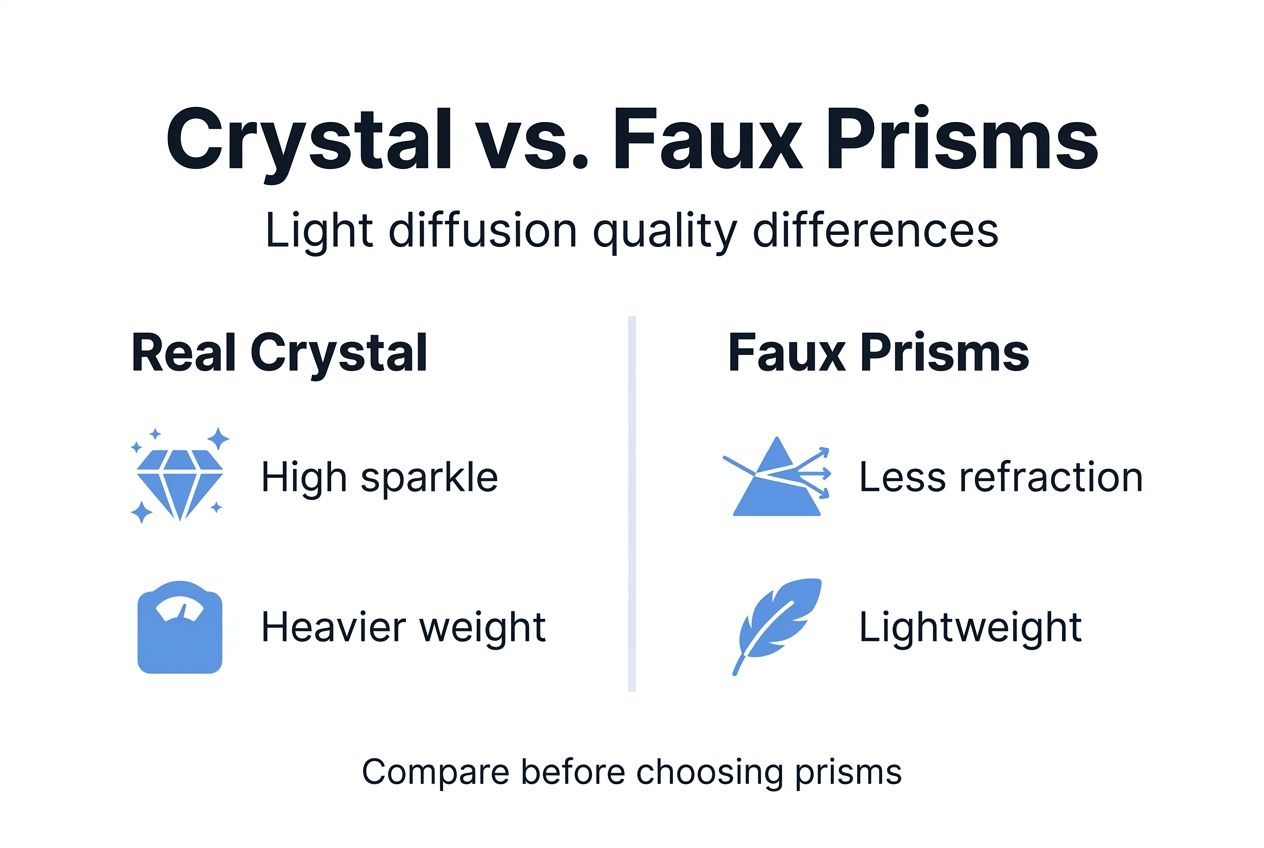
The refractive index determines light bending intensity. Acrylic measures 1.49 while polycarbonate reaches 1.586, compared to standard glass at 1.52 and leaded crystal at 1.545. The Abbe number indicates dispersion, how much a material separates white light into rainbow colors. Lower Abbe numbers create more vivid color separation.
| Material | Refractive Index | Abbe Number | Rainbow Intensity | Clarity |
|---|---|---|---|---|
| Acrylic | 1.490 | 57.2 | Moderate | Good but scratches easily |
| Polycarbonate | 1.586 | 30.0 | High | Excellent impact resistance |
| Borosilicate Glass | 1.517 | 64.2 | Low | Superior optical clarity |
| Flint Glass (Leaded) | 1.545 | 37.0 | Very High | Exceptional brilliance |
These differences create noticeable visual effects in chandeliers:
- Acrylic produces softer rainbow effects with less color saturation
- Polycarbonate generates intense color dispersion but may show slight yellowing over time
- Glass maintains consistent optical performance without degradation
- Leaded crystal creates the most dramatic sparkle with vivid, sharp rainbow prisms
Marketing terms can mislead buyers. “Crystal clear acrylic” refers to transparency, not actual crystal composition. “Optical grade” simply means the material meets minimum standards for light transmission, not that it matches glass performance. Understanding these distinctions helps you evaluate chandelier quality accurately.
Weight tells an immediate story. Genuine glass and crystal feel substantially heavier than plastic alternatives. While faux materials reduce installation stress on ceiling mounts, they compromise the light diffusion quality that makes crystal chandeliers special.
Discover easy ways to keep your chandelier sparkling with Brilliante
Maintaining the brilliant light diffusion your chandelier was designed to create doesn’t require professional services or risky crystal removal. Brilliante Crystal Chandelier Cleaner offers a spray and drip solution that simplifies the entire process while protecting those delicate optical surfaces.

Our specially formulated, non-abrasive cleaner removes dust and grime without scratching faceted surfaces. The drip dry formula means no wiping required, eliminating the risk of accidentally damaging crystals or leaving lint behind. Made in the USA with environmentally friendly ingredients, Brilliante won’t tarnish metal fixtures while restoring your chandelier’s full sparkle potential. Hundreds of satisfied customers rate us number one for preserving light diffusion and brilliance. Discover how simple chandelier care can be with Brilliante’s proven cleaning system and follow our step by step guide for professional results at home.
Frequently asked questions
What is light diffusion in crystal chandeliers?
Light diffusion is the scattering and refraction of light rays through crystal facets, creating soft, even illumination instead of harsh direct beams. This process transforms bright bulb light into gentle ambient glow with reduced shadows and glare. Crystal chandeliers achieve superior diffusion compared to standard fixtures because each faceted surface acts as a miniature prism, redirecting light in multiple directions simultaneously.
How does light diffusion affect the look of my crystal chandelier?
Diffused light softens shadows and spreads illumination evenly throughout your space, creating welcoming ambiance rather than stark brightness. The crystal facets scatter light into subtle rainbow hues and sparkling points that dance across ceilings and walls. This effect makes rooms feel larger, more elegant, and visually interesting compared to flat overhead lighting.
What is the best way to clean a crystal chandelier without damaging it?
Use pH neutral, non-abrasive cleaners like vinegar water solutions or specialized products designed specifically for crystal. Avoid harsh chemicals, abrasive scrubbers, or rough cloths that create microscopic scratches. Always use lint-free microfiber materials and work with the power turned off. Spray gently and wipe in circular motions, or choose drip-dry formulas that require no wiping at all.
Can I use faux crystal prisms instead of glass in my chandelier?
Faux crystal prisms made from acrylic or polycarbonate offer lightweight, affordable alternatives to glass. However, they typically provide different optical performance with variations in rainbow brightness and overall clarity. Glass prisms generally deliver higher refractive indices and richer light dispersion, creating more dramatic sparkle and color effects that enhance diffusion quality.
How often should I clean my chandelier to maintain light diffusion?
Monthly dusting with compressed air or gentle wiping maintains optimal light diffusion by preventing buildup that blocks light transmission. Deep cleaning every three to six months removes accumulated grime that dulls crystal surfaces. Regular maintenance preserves up to 95% of your chandelier’s original diffusion efficiency, keeping sparkle and brilliance at peak levels year round.