
Energy efficient lighting for crystal chandeliers in 2026
Many homeowners worry that switching to energy efficient lighting will strip their crystal chandeliers of their signature sparkle and warmth. The truth is, modern LED and halogen bulbs can actually enhance your chandelier’s beauty while slashing energy bills. This guide walks you through selecting the right bulbs, maintaining that luxurious glow, and installing smart controls that preserve elegance without compromise. You’ll discover how to balance efficiency with aesthetics, save money, and reduce your environmental footprint in 2026.
Key takeaways
| Point | Details |
|---|---|
| LED bulbs enhance beauty | Modern LEDs with high color rendering index preserve crystal sparkle while cutting energy use by up to 80%. |
| Compatibility matters | Matching bulb base size, wattage limits, and color temperature ensures seamless integration with existing fixtures. |
| Smart controls boost savings | Dimmers and timers can reduce energy consumption by an additional 30% while adding ambiance flexibility. |
| Financial and environmental wins | Upgrading saves an average of $1,700 annually and significantly reduces your carbon footprint. |
Understanding energy efficient lighting options for crystal chandeliers
Choosing the right bulb transforms your chandelier from an energy drain into an efficient showpiece. LED bulbs lead the pack with 75 to 80% less energy consumption than traditional incandescent bulbs, lifespans exceeding 25,000 hours, and minimal heat output that protects delicate crystal. They come in various color temperatures, allowing you to replicate the warm glow of incandescent lighting or experiment with cooler tones for modern spaces.
Halogen bulbs offer a middle ground for homeowners who prefer traditional warmth. They use about 25% less energy than incandescent bulbs and produce light that closely mimics natural sunlight. While their lifespan is shorter than LEDs (typically 2,000 to 4,000 hours), halogens provide instant full brightness and excellent color rendering without the initial cost of premium LEDs.
| Bulb Type | Energy Use | Lifespan | Heat Output | Color Quality |
|---|---|---|---|---|
| LED | 75-80% less | 25,000+ hours | Very low | Excellent with high CRI |
| Halogen | 25% less | 2,000-4,000 hours | Moderate | Natural, warm |
| Incandescent | Baseline (100%) | 1,000 hours | High | Warm, traditional |
The advantages stack up quickly. LEDs slash energy bills, last decades instead of years, and generate almost no heat that could damage crystal or metal fixtures. LED and certain halogen bulbs balance efficiency and glow ideal for chandeliers, making them perfect for homeowners who refuse to compromise on style. Halogens shine in dimmable applications where instant brightness matters, though they require more frequent replacement.
Pro Tip: Choose bulbs with a CRI (color rendering index) of 90 or higher to maximize crystal sparkle and ensure colors appear vibrant and true to life.
Maintaining the aesthetic and sparkle of your crystal chandelier
Preserving your chandelier’s stunning appearance starts with matching the brightness of your original bulbs. Lumens measure actual light output, while wattage only indicates energy consumption. A 60-watt incandescent bulb produces about 800 lumens, so you’d need an LED bulb rated at 800 lumens (typically 8 to 12 watts) to achieve the same brightness. This distinction prevents the common mistake of installing bulbs that are too dim or overpoweringly bright.
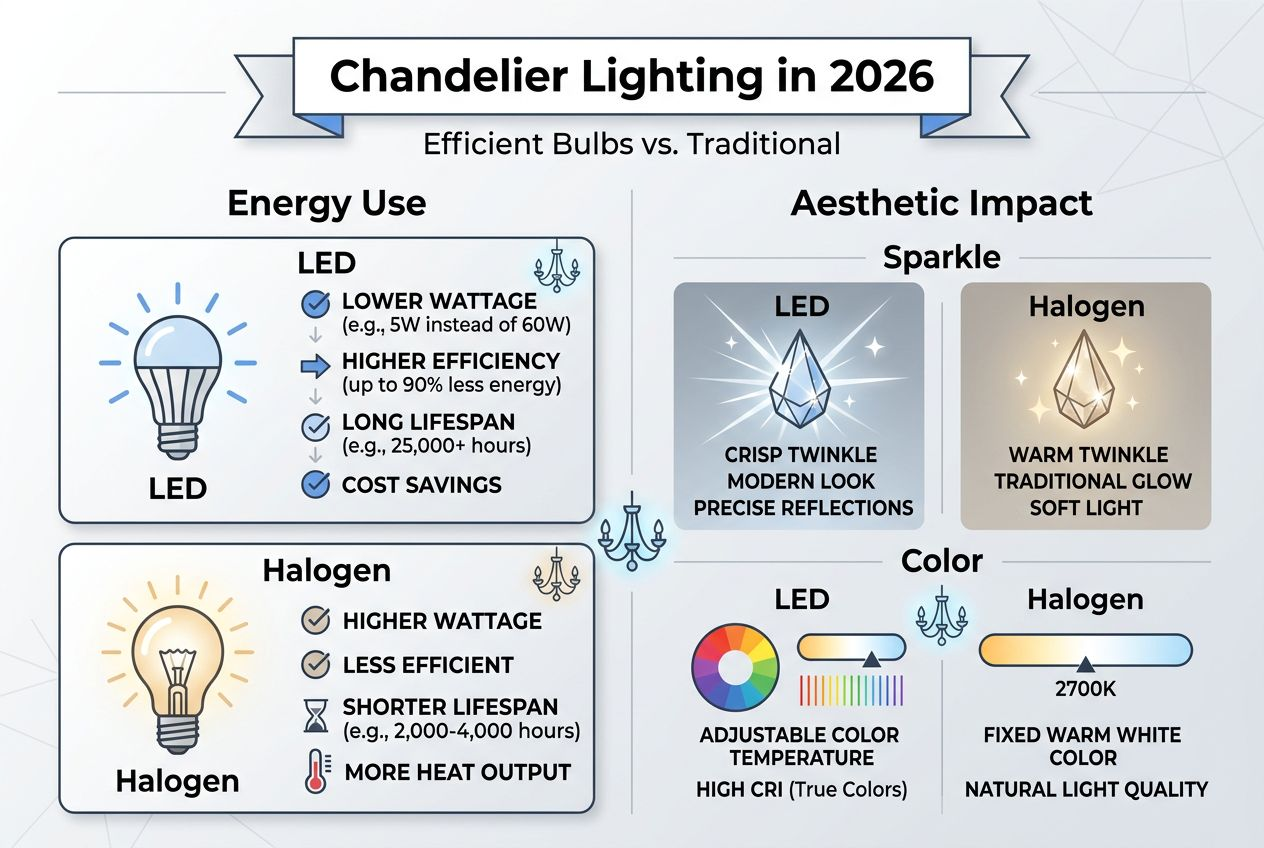
Color temperature dramatically affects ambiance. Measured in Kelvin, this specification determines whether light appears warm or cool. For crystal chandeliers, stick with 2700K to 3000K, which replicates the cozy, golden glow of traditional incandescent bulbs. Anything above 3500K starts looking clinical and cold, diminishing the romantic elegance that makes chandeliers special. Proper bulb selection preserves the chandelier’s sparkle and ambiance while delivering energy savings.
Bulb shape and size matter more than most people realize. Candelabra bases (E12) are standard in many chandeliers, but some use medium bases (E26) or specialty sizes. Measure your existing bulbs or check the fixture specifications before purchasing replacements. Flame-tip or globe-shaped LED bulbs often look more authentic in decorative fixtures than standard A-shaped bulbs, maintaining the visual harmony of your chandelier design.
Dimmable bulbs unlock both energy control and mood flexibility. Not all LEDs dim smoothly, so look for bulbs specifically labeled as dimmable and compatible with your existing dimmer switch. Some older dimmers cause LEDs to flicker or buzz, requiring an upgrade to LED-compatible dimmers. The investment pays off through extended bulb life and the ability to adjust lighting intensity for different occasions.
Pro Tip: Clean your crystal regularly with a quality cleaner to maximize light refraction and maintain that dazzling brilliance, as even energy efficient bulbs can’t overcome the dulling effect of dust and grime.
Installation tips and smart controls for enhanced efficiency
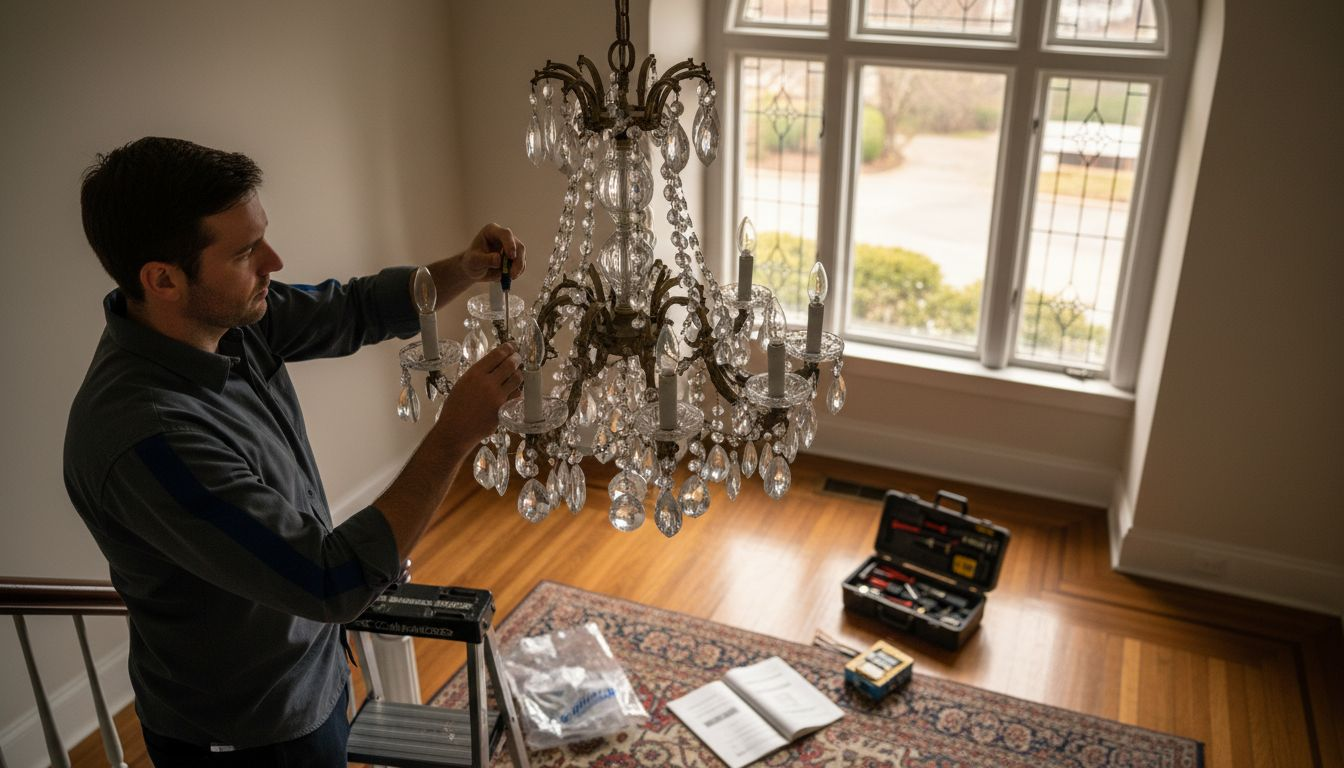
Safe installation begins with turning off power at the circuit breaker, not just the wall switch. Verify the power is off using a voltage tester before touching any wiring or sockets. Chandeliers often hang in hard-to-reach locations, so gather a stable ladder, work gloves, and a helper to steady the ladder and hand you bulbs as needed.
Follow these steps for a smooth upgrade:
- Remove old bulbs carefully, allowing halogen bulbs to cool for at least 15 minutes first.
- Check each socket for corrosion, damage, or loose wiring before installing new bulbs.
- Verify that replacement bulbs match the fixture’s maximum wattage rating, typically printed on a label near the socket.
- Install new bulbs by screwing them in gently until snug, avoiding overtightening that could crack the base.
- Restore power and test each bulb, checking for flickering or dimming issues that signal compatibility problems.
Socket compatibility extends beyond base size. Some older chandeliers have wattage limits as low as 40 watts per socket due to heat concerns with incandescent bulbs. LEDs generate far less heat, but you should still respect these limits to avoid damaging wiring insulation. When in doubt, consult the fixture’s manual or contact the manufacturer for guidance on maximum safe wattage.
Integrating dimmers and timers amplifies your energy savings. Install timers to automatically turn chandeliers off during daylight hours or when rooms are typically empty. Photocell sensors can adjust brightness based on natural light levels, ensuring your chandelier only uses as much energy as needed. Smart lighting can reduce energy use by up to 30% while adding convenience, making these upgrades worthwhile investments.
Smart lighting systems take control to the next level. Platforms like Philips Hue, LIFX, or Lutron Caseta let you adjust brightness, set schedules, and even change color temperature from your smartphone. Voice control through Alexa or Google Assistant adds hands-free convenience, while geofencing automatically turns lights off when you leave home. These systems work seamlessly with dimmable LED bulbs designed for smart home integration.
Up to 30% additional energy savings: Combining energy efficient bulbs with smart controls and timers can reduce lighting energy consumption by 30% or more compared to using efficient bulbs alone.
Cost savings and environmental benefits of upgrading in 2026
The financial case for upgrading becomes crystal clear when you examine actual energy consumption. An incandescent bulb uses about 60 watts per hour, while an equivalent LED uses just 8 to 10 watts. Multiply this across a 12-bulb chandelier running four hours daily, and you’re looking at annual savings of roughly $150 to $200 on that single fixture alone. Scale this across your entire home, and switching to energy efficient lighting saves an average of $1,700 annually.
| Metric | Incandescent | LED | Annual Savings |
|---|---|---|---|
| Watts per bulb | 60W | 9W | N/A |
| 12-bulb chandelier (4 hrs/day) | 1,051 kWh | 158 kWh | $107-$178 |
| Bulb lifespan | 1 year | 22+ years | Replacement costs |
| Heat generation | High (90% energy as heat) | Minimal (10% as heat) | Cooling cost reduction |
Environmental impacts extend far beyond your electricity bill. LED manufacturing has become significantly cleaner in recent years, and the long lifespan means fewer bulbs ending up in landfills. Each LED bulb prevents approximately 1,000 pounds of carbon dioxide emissions over its lifetime compared to incandescent alternatives. Reduced energy demand also decreases the strain on power grids, lowering the need for fossil fuel-based peak generation.
Incentives and rebates make 2026 an ideal year to upgrade. Many utility companies offer instant rebates on LED bulbs, sometimes reducing costs by 50% or more. Federal tax credits may apply to whole-home energy efficiency improvements that include lighting upgrades. Local programs vary widely, so check with your utility provider, state energy office, or visit ENERGY STAR’s rebate finder to discover available savings in your area.
- Utility rebates can cut LED bulb costs by 30 to 70%
- Some programs offer free energy audits identifying additional savings opportunities
- Federal tax credits may apply when lighting upgrades are part of comprehensive home efficiency projects
- Bulk purchase programs through utilities or community groups offer additional discounts
Upgrading to energy efficient chandelier lighting delivers immediate financial returns through lower electricity bills while contributing to a healthier planet for future generations. The combination of personal savings and environmental responsibility makes this one of the easiest green home improvements to justify.
Explore professional crystal chandelier care and lighting upgrades
Now that you’ve upgraded to energy efficient lighting, maintaining that brilliant sparkle becomes even more important. Clean crystals refract light more effectively, maximizing the visual impact of your new LED or halogen bulbs. Specialized cleaning services ensure every prism shines without risking damage to delicate components or metal finishes.
Expert guidance on lighting upgrades helps you navigate the expanding world of smart controls, color-tunable LEDs, and fixture compatibility. Whether you need advice on selecting the perfect bulbs or want to explore professional cleaning solutions that complement your efficiency upgrades, visit Brilliante Crystal Cleaner for products and expertise that keep your chandelier looking stunning while your energy bills stay low.
FAQ
What type of LED bulbs work best for crystal chandeliers?
Warm white LEDs with color temperatures between 2700K and 3000K work best for crystal chandeliers, preserving the cozy ambiance of traditional lighting. Choose bulbs with a CRI of 90 or higher to ensure crystal sparkle and accurate color rendering. Dimmable LEDs offer the most flexibility for adjusting brightness and mood.
Can I retrofit my existing chandelier with energy efficient bulbs?
Yes, most chandeliers accept LED or halogen bulbs as long as you match the base size (typically E12 candelabra or E26 medium base). Check your fixture’s maximum wattage rating and select bulbs that stay within this limit. LEDs generate less heat than incandescent bulbs, making them safe for even heat-sensitive fixtures.
How does lighting color temperature affect chandelier appearance?
Warmer color temperatures (2700K to 3000K) enhance crystal sparkle and create inviting, elegant atmospheres similar to candlelight or traditional incandescent bulbs. Cooler temperatures above 3500K produce harsh, clinical light that diminishes the romantic quality of crystal chandeliers. Matching the color temperature of your original bulbs ensures a seamless visual transition.
Are there any energy savings incentives for upgrading lighting in 2026?
Many utility companies offer rebates on LED bulbs in 2026, sometimes covering 30 to 70% of purchase costs. Federal tax credits may apply when lighting upgrades are part of comprehensive home energy efficiency improvements. Check with your local utility provider or visit ENERGY STAR’s website to find programs available in your area.