
History of chandeliers: preserve crystal elegance
Your sparkling crystal chandelier could lose its brilliance forever with one common cleaning mistake. Many homeowners reach for everyday glass cleaners without realizing these products contain ammonia or acids that permanently cloud delicate crystal surfaces. Understanding how chandeliers evolved from simple candleholders to intricate works of art reveals why they demand specialized care. This guide explores chandelier origins, materials, and expert cleaning techniques to help you maintain your fixture’s beauty and function for decades.
Key takeaways
| Point | Details |
|---|---|
| Historical evolution | Chandeliers originated as wooden or iron candleholders in Anglo-Saxon churches before 1066 and evolved into elaborate crystal fixtures by the 18th century. |
| Material sensitivity | Lead crystal’s fragility requires gentle cleaning using alcohol-distilled water solutions instead of harsh chemicals. |
| Cleaning approach | In-place drip-dry spray cleaning balances safety and effectiveness while avoiding damage from excessive wiping. |
| Maintenance priority | Regular care and professional deep cleaning preserve chandelier brilliance and extend lifespan over 20 years. |
Historical origin and evolution of chandeliers
Chandeliers have transformed dramatically since their humble beginnings. Early chandeliers appeared in Anglo-Saxon churches as simple wooden or iron candleholders, serving purely functional roles before 1066. These basic fixtures provided essential light in vast religious spaces where candles needed elevation to illuminate large congregations.
The 17th and 18th centuries brought revolutionary changes. Glassmaking advancements enabled artisans to craft intricate crystal components that transformed lighting into artistic statements. Wealthy households commissioned elaborate fixtures featuring hundreds of faceted crystals that refracted candlelight into dazzling displays. These crystal chandeliers became powerful symbols of status and sophistication in European palaces and grand estates.
Several distinct design styles emerged across different periods:
- Baroque chandeliers featured ornate metalwork with heavy crystal drops and elaborate candle arms
- Rococo designs emphasized lighter, more delicate scrollwork with pastel-colored crystals
- Neoclassical fixtures incorporated symmetrical lines and geometric crystal arrangements
- Victorian styles combined gas lighting technology with traditional crystal embellishments
- Art Deco pieces introduced angular shapes and streamlined crystal patterns
This evolution from utilitarian candleholders to precious decorative art explains why crystal chandeliers require such careful handling. The same delicate materials that create stunning light displays also demand gentle cleaning methods. Understanding your chandelier’s heritage helps you appreciate why protecting these fixtures matters beyond simple maintenance.
Materials and craftsmanship of crystal chandeliers
Lead crystal became the premier material for chandelier construction due to its exceptional light-refracting properties. The addition of lead oxide to glass creates superior brilliance and clarity compared to standard glass. However, this same composition makes crystals surprisingly fragile and vulnerable to chemical damage.
Seventeenth and eighteenth-century glassmaking innovations revolutionized chandelier production. Master craftsmen developed techniques to cut precise facets into crystal drops, creating prisms that scattered light into rainbow spectrums. Each crystal component required individual hand-cutting and polishing to achieve perfect clarity. These labor-intensive processes produced the stunning fixtures we admire today.
Crystal chandeliers face several vulnerability points:
- Surface cloudiness develops when ammonia or acids react with lead crystal composition
- Micro-scratches accumulate from abrasive cleaning cloths or rough handling
- Chips and cracks occur easily if crystals bump together during cleaning
- Tarnish appears on metal frames when harsh chemicals make contact
- Moisture damage weakens crystal-to-metal connections over time
The delicate nature of these materials makes selecting appropriate crystal chandelier cleaning solutions essential. Traditional cleaning products designed for modern glass windows contain chemicals that destroy the very qualities making lead crystal special. You need specialized formulas that clean effectively without compromising crystal integrity or metal finishes.
Preserving your chandelier’s craftsmanship requires understanding what makes these fixtures both beautiful and fragile. The same lead content producing brilliant light refraction also creates sensitivity to common household cleaners. This knowledge guides you toward safer cleaning choices.

Safe and recommended cleaning methods for crystal chandeliers
Proper cleaning starts with essential safety steps. Turn off power at the circuit breaker and allow all bulbs to cool completely for at least 30 minutes. Hot bulbs can shatter if cleaning solution contacts them, creating dangerous situations.
Prepare an effective, non-abrasive cleaning solution by following these steps:
- Combine 1 part isopropyl alcohol with 3 to 4 parts distilled water in a clean spray bottle
- Test the solution on one inconspicuous crystal to verify compatibility
- Gather white cotton gloves, microfiber cloths, and a stable ladder
- Place drop cloths below the chandelier to catch drips and protect flooring
- Work systematically from top to bottom to avoid re-cleaning areas
Wearing white cotton gloves while cleaning prevents fingerprints and oils from transferring to crystal surfaces. Your bare hands leave residue that attracts dust and dulls brilliance. White gloves also make it easier to spot any dirt remaining on crystals.
Avoid these harmful cleaning agents completely:
- Ammonia-based window cleaners that cause permanent cloudiness
- Acidic solutions including vinegar that etch crystal surfaces
- Abrasive powders or scouring pads that create scratches
- Dish soap that leaves streaky residue requiring excessive wiping
- Tap water containing minerals that deposit spots on crystals
The safest approach uses spray-on formulas specifically designed for crystal fixtures. These recommended crystal chandelier cleaning methods let you clean without disassembly or excessive handling.
Pro Tip: Always work during daylight hours when you can see dust and spots clearly. Natural light reveals streaks and missed areas that artificial lighting might hide, ensuring thorough cleaning results.
Common misconceptions in chandelier cleaning
Many homeowners believe all glass cleaners work equally well on chandeliers. This dangerous assumption leads to permanent damage because standard window cleaners contain ammonia or acids that react chemically with lead crystal. These ingredients create irreversible cloudiness that no amount of polishing can fix.
Another widespread myth suggests frequent wiping maintains crystal brilliance. The opposite proves true in practice. Each wiping session introduces micro-scratches that accumulate over time, gradually dulling the crystal’s reflective surfaces. Even soft cloths create tiny abrasions when rubbed repeatedly across delicate facets.
Some people think complete disassembly represents the only thorough cleaning method. While detailed cleaning has merit for neglected fixtures, regular maintenance rarely requires removing every crystal. In-place cleaning protects against common mistakes to avoid when cleaning crystal chandeliers like losing small parts or incorrect reassembly.
Additional misconceptions include:
- Rushing through cleaning saves time without consequences
- Hot water cleans better than room temperature solutions
- More cleaning solution produces superior results
- Any microfiber cloth works equally well for crystal
- Professional cleaning wastes money for simple fixtures
Understanding these myths protects your investment. Quick cleaning attempts often result in dropped crystals, scratched surfaces, or incomplete work requiring repetition. Temperature extremes can crack crystals, while excessive solution creates stubborn drips and streaks. Not all microfiber cloths offer the same quality, and some shed fibers that stick to wet crystals.
The truth is that patience and appropriate products deliver better outcomes than aggressive scrubbing or frequent handling. Correcting these misconceptions helps you develop cleaning habits that preserve rather than damage your chandelier’s beauty.
Cleaning methods comparison: in-place vs. disassembly
Choosing between cleaning approaches depends on your chandelier’s condition, size, and your comfort level. Each method offers distinct advantages and challenges worth considering carefully.
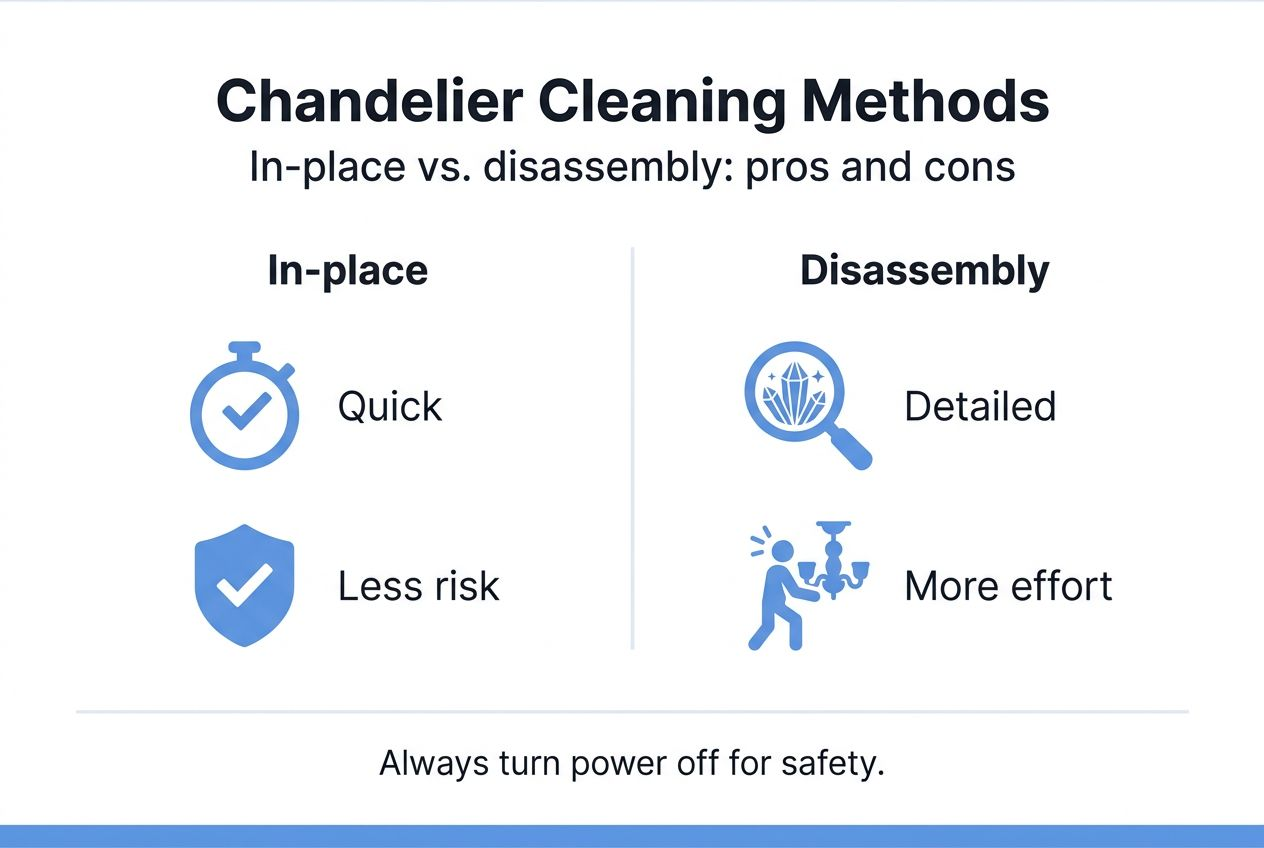
| Method | Advantages | Disadvantages | Best For |
|---|---|---|---|
| In-place drip-dry | Faster completion, minimal handling, reduced damage risk, no reassembly needed | Limited access to hidden areas, requires ladder work, may miss heavily soiled spots | Regular maintenance, smaller fixtures, homeowners seeking convenience |
| Full disassembly | Thorough cleaning of all surfaces, access to frame and wiring, deep restoration possible | Time-consuming, requires documentation, risk of losing parts, demands technical skill | Neglected chandeliers, large fixtures, annual deep cleaning |
In-place drip-dry cleaning works exceptionally well for routine maintenance. Spray-on drip dry chandelier cleaner formulas let solution evaporate naturally without wiping, eliminating scratch risks. You simply spray each crystal systematically and allow gravity to remove dissolved dirt. This approach keeps your chandelier assembled and functional throughout the process.
Disassembly enables detailed cleaning but requires careful labeling and photographing to prevent reassembly errors. Take multiple photos from different angles before removing any crystals. Number or tag each crystal strand to track original positions. Store removed pieces in separate containers organized by location on the fixture.
Safety considerations apply equally to both methods. Use stable ladders with non-slip feet and have someone spot you during overhead work. Never stand on furniture or reach beyond comfortable balance points. Keep electrical components dry regardless of which cleaning approach you choose.
Pro Tip: Schedule in-place cleaning every three to six months to maintain sparkle without major effort. This regular care prevents heavy soil buildup that might eventually require full disassembly, saving you significant time and reducing handling risks.
Maintenance and longevity tips for crystal chandeliers
Regular cleaning using non-abrasive methods maintains chandelier shine and extends lifespan significantly beyond fixtures receiving sporadic or improper care. Consistent maintenance prevents dirt accumulation that becomes increasingly difficult to remove over time.
Inspect your chandelier monthly for developing issues:
- Check crystal attachments for looseness or missing pins
- Examine wiring for fraying, discoloration, or exposed conductors
- Look for tarnish on metal components requiring gentle polishing
- Identify any crystals showing chips, cracks, or cloudiness
- Test bulb sockets and switches for proper electrical function
Avoid these harmful practices during routine care. Never use abrasive cleaners containing grit or harsh chemicals near delicate crystals. Limit moisture exposure by using minimal cleaning solution and ensuring thorough drying. Excess water can seep into electrical connections or loosen crystal adhesives.
Schedule professional cleaning for large or complex chandeliers every two to three years. Professional services have specialized equipment and expertise for intricate fixtures that challenge typical homeowners. They can also assess structural integrity and perform minor repairs during cleaning visits.
Implement these longevity strategies:
- Dust crystals gently with microfiber dusters between deep cleanings
- Replace burned-out bulbs promptly to prevent electrical issues
- Maintain consistent indoor humidity levels to protect metal and crystal
- Keep cleaning supplies specifically designated for chandelier use
- Document all maintenance activities for future reference
Proper care can extend your chandelier’s lifespan by over 20 years compared to neglected fixtures. The investment in quality cleaning products and regular attention pays dividends through sustained brilliance and functionality.
Pro Tip: Create a simple cleaning log noting dates, methods used, and any observations about your chandelier’s condition. This record helps you track what works best and alerts you to gradual changes requiring professional attention.
Discover easy crystal cleaning solutions for your chandelier
Maintaining your chandelier’s sparkle becomes effortless with products designed specifically for delicate crystal surfaces. Brilliante offers specially formulated spray cleaners that align perfectly with the expert recommendations throughout this guide. Our drip-dry solution eliminates risky wiping while delivering professional results.

The chandelier crystal cleaner spray requires no complicated mixing or measuring. Simply spray and let the formula work its magic as it drips away dirt and grime. This no wipe drip dry crystal glass cleaner protects against scratches while restoring brilliant clarity to every facet.
Our environmentally friendly, non-abrasive formula won’t tarnish metal frames or damage electrical components. Proudly made in the USA and rated number one by hundreds of satisfied customers, Brilliante makes professional chandelier care accessible for every homeowner. Protect your investment with cleaning solutions that preserve beauty and extend your fixture’s lifespan.
Frequently asked questions about cleaning and maintaining crystal chandeliers
How often should I clean my crystal chandelier?
Clean your chandelier every six months for regular maintenance, or more frequently if you notice visible dust accumulation. Homes in dusty environments or near kitchens may require quarterly cleaning. Avoid excessive wiping between scheduled cleanings, as frequent handling causes more harm than occasional dust.
Are ammonia-based cleaners safe for chandeliers?
No, ammonia-based products cause permanent cloudiness and surface damage to lead crystal. These harsh chemicals react with crystal composition, creating irreversible etching. Always use pH-neutral solutions or alcohol-distilled water mixtures recommended by chandelier care experts.
What precautions ensure electrical safety during cleaning?
Turn off power at the circuit breaker and wait 30 minutes for bulbs to cool completely before starting. Use stable ladders with someone spotting you during overhead work. Keep all cleaning solutions away from electrical sockets, wiring, and bulb bases to prevent short circuits or shock hazards.
Can I clean a chandelier with a regular glass cleaner?
Regular glass cleaners contain ammonia or acids that permanently damage crystal surfaces. These products work fine for modern windows but destroy the delicate composition of lead crystal chandeliers. Use specialized crystal cleaning solutions formulated without harsh chemicals.
Is professional cleaning necessary for chandeliers?
Professional cleaning benefits large, intricate chandeliers or situations where you feel uncomfortable with disassembly. Annual or biennial professional service complements regular at-home maintenance. Consistent home care using proper methods reduces how often you need expensive professional cleanings.