
How to Tell Crystal from Glass at Home
TL;DR:
- Many home items mistaken for crystal are actually ordinary glass, a common error confirmed by collectors and studies. Simple tests involving weight, light dispersion, sound, and cut edges help distinguish crystal from glass accurately. For definitive identification, professional laboratory analysis like XRF testing provides conclusive results, essential for valuable or safety-sensitive pieces.
Most people have at least one piece in their home they assume is crystal, but it might be ordinary glass. Surprisingly, studies and collectors confirm that misidentifying the two is incredibly common, even among people who have lived with these items for years. The good news is that you don’t need a science lab or an antique dealer on speed dial. A few simple observations about weight, light, and sound can point you toward a confident answer. This guide walks you through everything from the material basics to professional testing options, so you can care for your pieces the right way.
Key Takeaways
| Point | Details |
|---|---|
| Crystal is heavier and rings | Compared to glass, crystal feels heavier and makes a distinct ringing sound. |
| Look for prism flashes | Crystal splits light into rainbows, a quick visual cue to distinguish it from glass. |
| Combine several tests | No single test is perfect—use weight, light, and sound together for best results. |
| Consider expert testing for certainty | Professional labs can verify precious or unclear items with non-destructive methods. |
Crystal vs. glass: What’s really different?
Before learning how to spot the difference, it’s helpful to understand what distinguishes crystal from ordinary glass at a material level. Once you know what sets them apart on the inside, the outward clues start to make much more sense.
At its core, crystal is regular glass plus added metal oxides, most often lead oxide, which changes its optical behavior, density, and characteristic ringing acoustics compared with soda-lime glass. That addition of metal oxides is the defining factor, and it’s what creates the stunning sparkle you see in a fine chandelier or a vintage wine glass.
Traditional, high-end crystal contains at least 24% lead oxide by weight. That concentration is not incidental. It’s the ingredient that gives crystal its heavier feel, its ability to refract (bend and scatter) light into rainbow colors, and that resonant, bell-like tone when tapped. Ordinary glass, by contrast, is made mostly from silica sand, soda ash, and limestone. It’s functional, durable, and perfectly useful for everyday life, but it lacks those distinctive qualities.
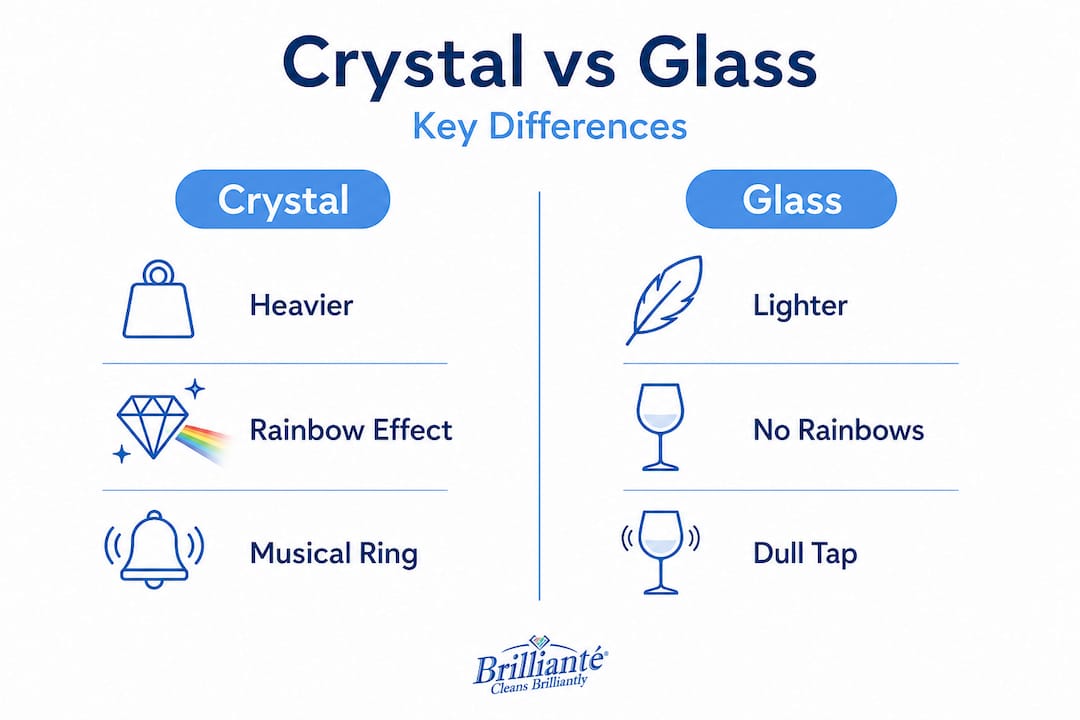
Here’s a quick side-by-side comparison to anchor the differences:
| Property | Crystal | Ordinary Glass |
|---|---|---|
| Composition | Glass + metal oxides (often lead) | Silica, soda ash, limestone |
| Weight | Noticeably heavier | Lighter |
| Light refraction | Strong rainbow “flash” | Minimal sparkle |
| Sound when tapped | Sustained, musical ring | Short, dull thud |
| Cut precision | Sharp, detailed edges | Softer, less intricate |
| Typical use | Decor, heirlooms, chandeliers | Everyday tableware |
“The addition of metal oxides fundamentally changes how the material interacts with light and sound, which is why the differences between crystal and glass are detectable by sight, touch, and hearing.”
Understanding this material difference matters well beyond curiosity. Crystal and glass respond differently to cleaning products, temperatures, and handling. Our homeowner’s guide to identifying crystal goes deeper into practical recognition strategies, and the identify and care guide covers the full picture from recognition to safe maintenance.
The main tests: Visual and physical clues
With the science in mind, let’s turn to hands-on signs you can use instantly with the items already in your home. These methods work for wine glasses, vases, chandelier pendants, and almost any decorative piece.
Weight and heft
Pick up the piece and compare it to something you know is regular glass. Crystal pieces feel more substantial and heavy than standard glass of a similar size, and the difference is often obvious once you’ve felt it. A crystal wine glass feels solid in your hand. A glass one feels noticeably lighter. This is one of the fastest, most reliable first steps.
The prism effect under light
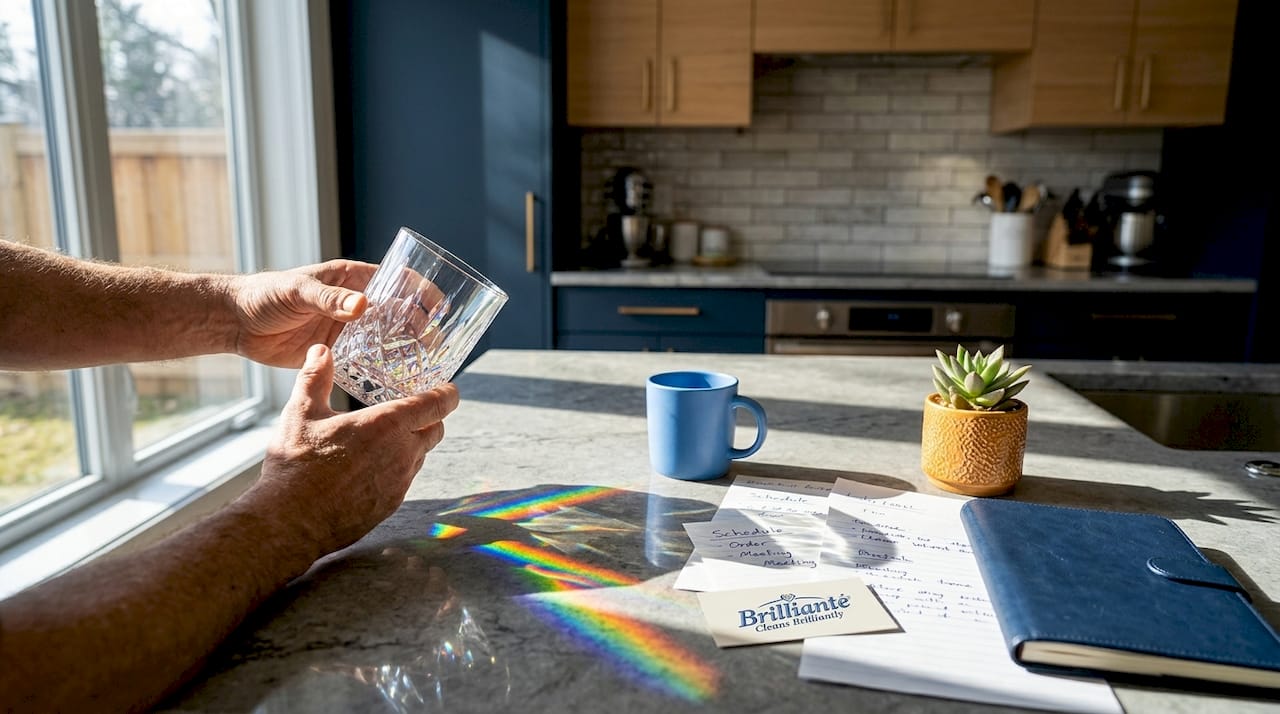
Hold the item near a window or a bright lamp and tilt it gently. Crystal splits light into rainbow flashes far more vividly than ordinary glass. You’ll see distinct, colorful spectral patterns dancing across nearby surfaces. Glass may produce a faint shimmer, but it won’t throw those bold, defined rainbow arcs that crystal does.
The sound test
Wet your fingertip slightly and gently run it around the rim of the piece. Or simply give the side of the piece a very gentle tap with a fingernail. Crystal produces a clear, sustained, almost musical ring that lingers for a second or two. Ordinary glass makes a shorter, duller sound that fades almost immediately. This is one of the most beloved tests among collectors because it’s surprisingly reliable and satisfying to perform.
Edge and cut clarity
Look closely at any decorative cuts or edges on the piece. Crystal tends to have sharper, crisper edges in its faceted cuts because it’s a harder, denser material. The facets on cut crystal often look almost laser-precise. Glass cuts are usually softer and less defined. If the piece has no decoration, look at the rim edge under bright light. Crystal will show a clean, almost glass-like sharpness.
Here’s a quick rundown of what to check:
- Weight: Does it feel heavier than you’d expect for its size?
- Light: Does it project rainbow colors, not just a faint shimmer?
- Sound: Does tapping produce a sustained, musical tone?
- Cut edges: Are the decorative details crisp and precise?
- Clarity: Does the material look almost water-clear, with depth?
Pro Tip: Don’t rely on just one method. A piece could be thick glass that feels heavier than usual, or thin crystal that sounds less resonant. When you combine weight, light, and sound observations together, your accuracy goes way up. Check our crystal and glass cleaning tips and the care and cleaning guide for what to do once you’ve made your identification.
Why some tests fail: Myths and edge cases
Even with these practical tests, there are gray areas where crystal and glass are hard to separate. Here’s what you should know about where common tests fall short.
The biggest complication in modern times is lead-free crystal. Many manufacturers today produce pieces they legitimately call crystal because they use alternative metal oxides like barium oxide or zinc oxide instead of lead. These pieces share many characteristics with traditional leaded crystal, but they’re lighter than lead crystal, and their acoustic and visual properties can vary. This means some modern “crystal” pieces could easily be mistaken for good-quality glass using standard at-home tests.
Shape and thickness matter more than most people realize. A thick-walled glass goblet can sound surprisingly resonant when tapped. A very thin piece of crystal might produce a shorter, less dramatic tone than you’d expect. The way you tap, how hard, with what material, on what part of the piece, also changes what you hear.
Here’s a structured way to think about potential test failures:
- Lead-free crystal shares optical properties with leaded crystal but may feel lighter, confusing the weight test.
- Thick glass can mimic the heavier feel of crystal, especially if the piece is large.
- Cut glass (regular glass with decorative cuts) can produce sharper edges and more sparkle than plain glass, pushing it into crystal territory visually.
- Tapping technique varies by person, so two people testing the same piece might hear different results.
- Unmarked antiques give you no brand clue, so you’re entirely relying on physical observation.
No single at-home test is perfectly reliable. High-quality lead-free crystal exists, and the thickness, cut, and shape of a piece, as well as how hard you tap, can change the perceived sound and sparkle. The most reliable approach is to combine multiple observations including sound, weight, prism effect, and any marks or branding.
If a piece has a maker’s mark or brand name etched into the base, search that name. Renowned crystal houses like Waterford, Baccarat, or Riedel have well-documented product lines, and identifying the brand can confirm material instantly. For pieces that might contain lead, you’ll also want to read our care for lead crystal guide, which covers safe handling and storage.
When certainty is essential: Laboratory and professional options
For those items where confidence really counts, whether for family history or investment, sometimes you need to go beyond DIY clues. There are situations where at-home tests simply won’t give you the level of certainty a piece deserves.
The gold standard for identifying lead content in crystal is X-ray fluorescence, commonly called XRF testing. XRF is a definitive approach for determining lead content because it uses X-rays to excite atoms in the material and reads the energy signatures they emit. It’s completely non-destructive, meaning your piece comes out of the test looking exactly as it went in. No scratching, no drilling, no risk.
Here’s when you should seriously consider professional or laboratory testing:
- Family heirlooms with unknown origin: If a piece has been passed down and no one knows its history, professional testing can establish whether it’s lead crystal and confirm its approximate age in some cases.
- Antique pieces being considered for resale: If you’re planning to sell or appraise a collection, having documented confirmation of material adds real market value and buyer trust.
- Large chandelier investments: If you’re purchasing or inheriting a chandelier and want to verify the type of crystal before committing to a cleaning or restoration method, a professional assessment protects your investment.
- Health-related concerns about lead: If family members, particularly young children, regularly handle old crystal pieces, knowing the lead content is a legitimate safety concern worth confirming definitively.
Pro Tip: For any piece with significant monetary, sentimental, or historical value, don’t rely on guesses made in the kitchen. Invest in an XRF test through a local jeweler, appraiser, or materials testing service. The peace of mind is worth it, and the information will guide you toward the right care and storage approach for years.
A seasoned collector’s perspective: Why the little clues matter most
Here’s something most identification guides won’t tell you: even experienced collectors almost never rely on a single test. After years of handling pieces from estates, markets, and inherited collections, the real skill isn’t knowing which test is “best.” It’s learning to read several subtle clues simultaneously and form a picture.
We’ve encountered heirloom pieces that passed the weight test but failed the sound test, and only a closer look at the cut edges revealed they were exceptionally thick decorative glass, not crystal at all. We’ve also seen unmarked vases dismissed as plain glass that turned out to be valuable antique lead crystal once a simple XRF test was run. The lesson? Don’t let any single clue make your final decision.
There’s also something worth considering about attitude. When you handle a piece carefully because you suspect it might be crystal, you’re actually protecting it regardless of what it turns out to be. Rough handling, harsh cleaners, and extreme water temperatures can damage both glass and crystal. The respectful approach wins either way.
One practical philosophy we always return to: if you genuinely can’t tell whether something is crystal or glass, treat it like it’s crystal. Use gentle cleaning methods. Keep it away from the dishwasher. Avoid dramatic temperature changes. This habit protects both your valuable pieces and your decorative glass, and it builds a kind of care instinct that makes you a better custodian of everything in your home.
The difference for chandeliers is especially worth understanding if you have a statement light fixture, because the correct care approach for crystal pendants versus glass pendants is meaningfully different, and getting it wrong can dull the very sparkle that made you love the piece in the first place.
Keep your pieces sparkling: Trust the safest cleaning for both crystal and glass
Having learned how to recognize your crystal and glass, here’s how to protect their appearance for years to come.
Knowing what you have is only half the story. The other half is keeping it beautiful. Whether your chandelier holds genuine lead crystal pendants or elegant glass drops, they deserve a cleaning method that matches their delicacy.
Brilliante Crystal Chandelier Cleaner makes proper care effortless. Our specially formulated Drip-Dry solution, proudly made in the USA, is designed for exactly these situations. You simply spray it on and let it drip dry, no wiping, no buffing, no risk of scratching. It’s non-abrasive, environmentally friendly, and safe for metal fixtures too. Whether you’ve just confirmed you have genuine crystal or you’re treating glass with the care it deserves, Brilliante protects the brilliance. Check out our full proper cleaning for crystal and glass resource to see exactly how to maintain every piece in your home.
Frequently asked questions
How can I quickly check if an item is crystal or glass?
Look for increased weight, vivid rainbow sparkle under light, and a sustained musical ring when gently tapped. Crystal pieces feel more substantial than glass of a similar size, and rainbow light dispersion is much stronger in crystal than in ordinary glass.
Are all crystal items made with lead?
No. Many modern crystal pieces are lead-free but still labeled crystal because they use alternative metal oxides that produce similar optical and acoustic qualities to traditional leaded crystal.
Can professional testing confirm if my glassware is crystal?
Yes. X-ray fluorescence testing is a non-destructive laboratory method that definitively identifies whether a piece contains lead or other metal oxides associated with crystal production.
Why does it matter if something is crystal or glass?
Crystal typically requires gentler cleaning methods, responds differently to lighting in your decor, and can carry significantly higher sentimental or monetary value than standard glass pieces.
Is it safe to use old crystal for food and drink?
Antique leaded crystal should not be used for storing or regularly serving food or drinks, since lead can leach from the material into liquids over time, particularly acidic beverages like wine or juice.