
Laundry room organization: 5 zones cut clutter by 60%
Laundry rooms often become chaotic catch-alls where piles of clothes, cleaning supplies, and forgotten items compete for space. This clutter creates stress, wastes time, and makes basic tasks feel overwhelming. Organizing your laundry room using clear principles transforms it into a functional, efficient space that streamlines your routine. This article guides you through essential criteria for effective organization and presents top solutions to optimize your laundry room’s layout, storage, and workflow. You’ll discover practical strategies tailored to various room sizes and lifestyles, helping you reclaim this vital space.
Key Takeaways
| Point | Details |
|---|---|
| Organize by zones | Establish dedicated zones for sorting, washing, drying, folding, and storing to create a smooth workflow and minimize wasted steps. |
| Vertical and closed storage | Use vertical shelves and overhead cabinets with a mix of open and closed storage to maximize space while keeping clutter hidden. |
| Folding counters and lighting | Install countertop folding stations at comfortable heights with bright overhead and task lighting to improve comfort and accuracy. |
| Declutter and label bins | Declutter regularly and label bins or shelves to maintain order and help family members sort items correctly. |
| Ventilation and clearance | Ensure adequate ventilation and space around appliances to reduce moisture, odors, and safety hazards. |
Establishing your laundry room organization criteria
Effective laundry room organization starts with understanding core principles that guide your design decisions. Core laundry room organization methodology follows a logical workflow: sort, wash, dry, fold, store with dedicated zones for each step. This approach minimizes unnecessary movement and prevents clutter from accumulating in random spots. When you establish clear zones, every item and activity has its designated place, creating a natural flow that makes laundry less tedious.
Storage type selection balances accessibility with visual cleanliness. Open shelving offers quick access to frequently used items and creates an airy feel, while closed cabinets conceal cleaning products, protect supplies from moisture, and hide bulky items that create visual chaos. Most homeowners benefit from a hybrid approach: open storage for everyday essentials like detergent and dryer sheets, closed cabinets for seasonal items and chemicals.
Accessibility and ergonomic design directly impact how comfortable and efficient your laundry routine becomes. Position folding counters at comfortable heights (typically 36 inches) to reduce back strain during extended folding sessions. Place frequently used items within easy reach, between waist and shoulder height, to eliminate unnecessary bending or stretching. Consider household members’ heights and mobility needs when planning storage placement.
Lighting and flooring complete the functional foundation. Install bright overhead lighting for general visibility, plus focused task lighting above folding areas and sorting stations. This combination reduces eye strain and helps you spot stains or sorting errors. Choose water-resistant, durable flooring like vinyl or tile that withstands spills and humidity while providing easy cleanup. These elements might seem secondary, but they significantly affect daily comfort and safety.
Pro Tip: Label bins and shelves clearly with simple text or picture labels to maintain order and help all family members stay organized. This small step prevents the common problem of items migrating to wrong zones. Explore home lighting trends 2025 for ideas on enhancing your laundry room’s illumination.
Top laundry room storage solutions to maximize space and function
Vertical storage solutions transform wasted wall space into highly functional organization zones. Vertical storage solutions like adjustable shelving, cabinets above appliances, and pull-out hampers maximize space, especially in small rooms. Adjustable shelving adapts as your storage needs change, accommodating everything from detergent bottles to folded towels. Overhead cabinets utilize the often-ignored space above washers and dryers, perfect for storing seasonal items or bulk supplies you don’t access daily.
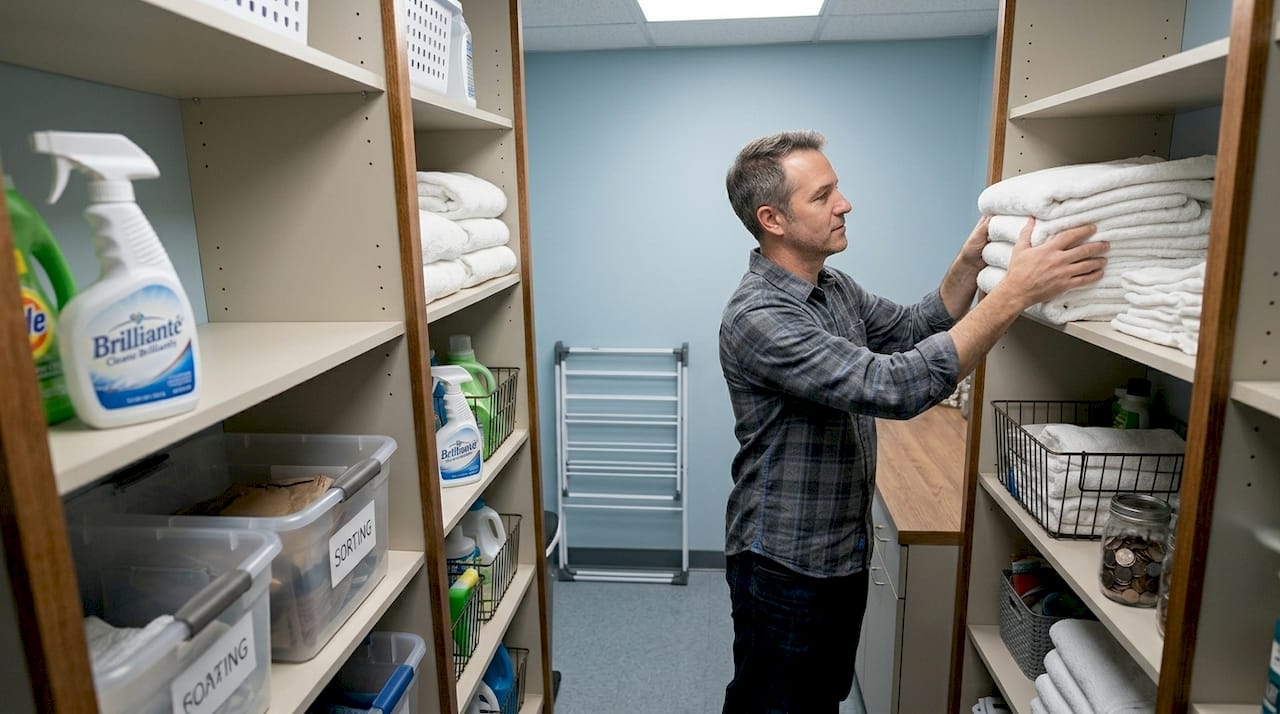
Deep drawers outperform traditional shelving for storing linens, towels, and folded clothes. Unlike shelves where stacked items easily topple over when you remove something from the middle, drawers keep contents secure and visible. You can install drawer dividers to create sections for different fabric types or family members, maintaining organization even when you’re in a hurry.
Pull-out hampers revolutionize the sorting process by providing designated bins for lights, darks, and towels right where you need them. These hampers hide inside cabinets when not in use, keeping your laundry room looking tidy while making it effortless to pre-sort laundry. Family members can toss clothes directly into the correct bin, eliminating the sorting bottleneck that often delays wash day.
Counter space above front-load washers/dryers serves as folding station, essential for efficiency and reducing back strain. This simple addition transforms your laundry workflow by creating a dedicated workspace at the perfect height. You can fold clothes immediately after removing them from the dryer, preventing wrinkles and eliminating the need to transport laundry elsewhere for folding. The continuous surface also provides staging space for sorting and treating stains.
Pro Tip: Incorporate baskets or canisters to contain smaller items like stain removers, dryer balls, and sewing supplies. These containers prevent small items from cluttering counters and make it easy to grab what you need quickly. Check out energy efficient home design strategies that complement your organized laundry space.
Comparing storage and layout options for different laundry room sizes
Different room sizes demand distinct storage strategies and layout approaches. Understanding the pros and cons of each option helps you make informed decisions that match your space constraints and lifestyle needs.
| Storage solution | Space requirement | Best for | Pros | Cons |
|---|---|---|---|---|
| Vertical shelving | Minimal floor space, 6-8 ft wall height | Small to medium rooms | Maximizes vertical space, adjustable, affordable | Items at top may be hard to reach, can look cluttered if not maintained |
| Deep drawers | 24-30 inches depth | Medium to large rooms | Prevents toppling, keeps items secure, easy access | More expensive than shelves, requires proper installation |
| Stackable units | 2-3 ft width, 5-6 ft height | Closets and tiny spaces | Saves floor space, fits tight areas | Requires bending for bottom unit, needs vibration pads |
| Folding station counter | 3-4 ft width, 24 inches depth | Rooms with front-load machines | Ergonomic height, immediate folding space | Takes up floor space, not ideal for top-loaders |
| Pull-out hampers | 18-24 inches cabinet width | Any size with base cabinets | Hidden when closed, encourages pre-sorting | Requires cabinet installation, limited capacity |
Stackable machines offer the most dramatic space savings but come with specific requirements. For small spaces/edge cases like closets: use stackable units, recess into niches, bi-fold/pocket doors, ensure proper ventilation to avoid mold/vibration. Leave one to two inches of side clearance and four feet of front clearance for loading, unloading, and maintenance access. Install vibration pads under the bottom unit to minimize noise and prevent the stack from walking across the floor during spin cycles.
Recessing laundry units into niches or closets works brilliantly in homes where dedicating an entire room isn’t possible. This approach tucks appliances out of sight, reducing noise in living areas and improving aesthetics. Bi-fold or pocket doors complete the concealment while saving the swing space that traditional doors require. This solution works particularly well in hallways, bathrooms, or kitchen adjacencies where space is at a premium.
Larger laundry rooms allow for dedicated zones with separate folding tables, open storage for bulkier items like laundry baskets and ironing boards, and even seating areas for hand-washing delicates. You can create a U-shaped or L-shaped layout that positions the washer, dryer, sink, and folding station within easy reach of each other. This generous spacing reduces the feeling of being cramped and makes it pleasant to spend time completing laundry tasks. Consider enhance natural light home 2026 techniques if your larger laundry room has windows.
Choosing the right laundry room organization strategy for your home
Selecting and implementing an organization strategy requires matching solutions to your specific circumstances. Follow these steps to create a system that works for your household and actually stays organized over time.
-
Start by decluttering ruthlessly. Declutter first via zones/sorting bins for lights, darks, and towels, label everything, maintain with weekly resets to prevent pileups. Remove expired products, donate duplicate items, and discard broken hangers or worn-out supplies. This creates a clean slate and reveals how much storage you actually need.
-
Establish your five core zones based on your workflow. Designate specific areas for sorting (near the entry), washing (around machines), drying (by the dryer or drying rack), folding (at your counter), and storing (in cabinets or on shelves). Mark these zones visually with labels or color-coded bins so everyone in your household understands the system.
-
Install storage solutions that fit your space constraints and budget. Prioritize the solutions that address your biggest pain points first. If you constantly lose small items, start with canisters and drawer dividers. If clothes pile up on the floor, install pull-out hampers or sorting bins immediately.
-
Optimize your washing routine to balance efficiency with environmental responsibility. Optimized washing parameters, particularly load size, can reduce environmental impact significantly while maintaining cleaning performance. Full loads use water and energy more efficiently than multiple small loads, but avoid overloading, which prevents proper cleaning and increases wear on your machine. Learn more about energy efficient home design to complement your laundry efficiency.
-
Schedule weekly maintenance to sustain your organization. Set aside 15 minutes each week to wipe down surfaces, return misplaced items to their zones, and check that sorting bins haven’t overflowed. This small time investment prevents the gradual chaos that undoes your organizational efforts.
Consistent maintenance and clear labeling are the difference between an organized laundry room and one that slides back into chaos within weeks. The system only works if everyone in your household can easily understand and follow it.
Use baskets and canisters strategically to contain small items that otherwise migrate across counters. Group related items together: stain treatments in one basket, sewing supplies in another, and specialty detergents in a third. This containment strategy keeps surfaces visually clean and makes it obvious where items belong when you’re putting things away.
Simplify your laundry routine with Brilliante Crystal Cleaner
Maintaining a clean and organized laundry room extends beyond smart storage solutions. It includes keeping all areas of your home sparkling and well-maintained. Brilliante Crystal Cleaner specializes in products that make home care effortless, from our signature drip-dry crystal chandelier cleaner to comprehensive maintenance solutions that complement your newly organized spaces.

Our environmentally friendly, non-abrasive formulas work quickly without damaging surfaces or tarnishing metal, perfect for homeowners who value both efficiency and quality. Explore our energy efficient home design tips to reduce utility costs while maintaining a beautiful home, or discover home lighting trends that can enhance your laundry room’s comfort and functionality. Visit our homepage to find cleaning supplies and maintenance tools that support your organized lifestyle.
Frequently asked questions
How often should I declutter my laundry room to keep it organized?
Weekly decluttering is recommended to keep sorting zones and storage neat and manageable. Set aside 15 minutes each week to return misplaced items, wipe surfaces, and check that bins haven’t overflowed. This regular maintenance prevents the gradual accumulation that leads to major cleanups later.
What is the best type of storage for small laundry rooms?
Vertical shelving, stackable units, and recessed niches maximize space while maintaining accessibility in small rooms. Focus on utilizing wall height rather than floor space, and consider bi-fold or pocket doors that don’t require swing clearance. Pull-out hampers hidden in base cabinets also work well for tight spaces.
How can I make my laundry room more energy efficient?
Use appropriately sized laundry loads to maximize efficiency and reduce energy use rather than relying solely on high-efficiency appliances. Full loads use resources more effectively than multiple small loads, but avoid overloading, which compromises cleaning performance. Pair this with cold water washing when appropriate and air-drying options to further reduce energy consumption. Discover more energy efficient home design strategies for your entire home.
Should I choose open shelving or closed cabinets for laundry storage?
A hybrid approach is ideal: open shelving for items you use daily, closed cabinets to conceal chemicals and bulky supplies. Open storage offers quick access and an airy feel but can collect dust and look cluttered if not maintained. Closed cabinets hide visual mess and protect items from moisture, though they’re less convenient for frequently accessed supplies. Combining both gives you the benefits of each approach.