
Bright Ideas: Stylish Small Space Lighting Solutions
TL;DR:
- Proper layered lighting creates space and dimension in small rooms.
- Slim fixtures like wall sconces and LED strips maximize space and style.
- Strategic placement and choosing the right fixtures can transform cramped areas without renovation.
A cramped, dimly lit room can make even a beautifully decorated home feel smaller than it actually is. The good news? You don’t need to knock down walls or renovate to fix it. The right lighting choices can visually open up a space, set the perfect mood, and double as stunning decor all at once. Whether you’re working with a studio apartment, a narrow hallway, or a cozy bedroom, smart lighting is the most affordable design move you can make. This guide walks you through exactly how to choose, compare, and use small space lighting ideas that work hard and look great.
Key Takeaways
| Point | Details |
|---|---|
| Prioritize multi-functional lighting | Choose fixtures that save space, add style, and serve more than one purpose. |
| Layer light sources | Combine task, ambient, and accent lighting to transform even the smallest spaces. |
| Reflect and amplify | Use mirrors and reflective elements to make your space brighter with fewer fixtures. |
| Go energy efficient | Select modern LEDs and low-wattage bulbs to save power and avoid overheating in compact rooms. |
How to choose lighting for small spaces
To start making the most of your available area, let’s identify what matters most when picking lighting for tight spots. Not all fixtures are created equal, and in a small room, every inch of visual space counts. The wrong choice can make a room feel busier and more cluttered. The right one can make it feel twice as large.
First, think about what each zone in your home actually needs. A reading nook needs focused task lighting. A living room benefits from warm ambient light that sets a relaxed tone. A kitchen counter needs bright, clear illumination for prep work. Matching the light type to the activity prevents that harsh, one-size-fits-all overhead glare that flattens a small room.
Next, consider how the fixture itself looks in the space. As minimalist lighting tips point out, light fixtures should enhance both function and design in a compact area. A chunky chandelier in a tiny dining nook adds visual weight. A slim wall sconce or a recessed spot does the same job while disappearing into the background.
Here are the key criteria to evaluate when shopping for small space lighting:
- Function first: Match the light type to the task (ambient, task, or accent).
- Low visual weight: Choose slender profiles, wall-mounted options, or flush-mount fixtures.
- Doubles as decor: Look for fixtures with interesting shapes, finishes, or materials.
- Energy efficiency: LEDs run cooler and use less power, which matters in small, enclosed areas. Explore choosing energy-saving lighting for practical examples.
- Layering capability: Combine at least two or three light sources per room for depth and flexibility.
Pro Tip: Before buying any fixture, tape a piece of paper the same size to your wall or ceiling. Live with it for a day. If it feels too large or too small, adjust. This saves you from expensive returns.
The biggest mistake most homeowners make is relying on a single overhead light. That one source casts shadows everywhere and makes a room feel flat and heavy. Layering ambient, task, and accent lighting creates dimension, which tricks the eye into perceiving more space.
Top small space lighting ideas and products
With your priorities in focus, it’s time to explore lighting ideas and solutions tailored for smaller homes and apartments. The market has never offered more creative options for compact living, and the best picks serve more than one purpose.
Here are the top lighting types worth considering for small spaces:
- Wall sconces: Mounted flush against the wall, these free up floor and surface space entirely. They work beautifully in bedrooms, hallways, and bathrooms.
- Slim floor lamps: A narrow, arc-style floor lamp adds height and drama without taking up square footage. Look for models under 10 inches wide at the base.
- Pendant lights: Hung from the ceiling, pendants draw the eye upward and create a focal point. In a small kitchen or dining area, a single pendant over the table is a bold, space-smart choice.
- Under-cabinet LED strips: These are a game-changer in kitchens and home offices. They illuminate work surfaces without any fixture sitting on the counter.
- Mirror-integrated lighting: Backlit or front-lit mirrors in bathrooms and entryways serve double duty, reflecting light and visually extending the wall.
- Plug-in fixtures: No electrician, no holes in the wall. Plug-in sconces and pendants are perfect for renters or anyone who wants flexibility.
Eco-friendly fixture ideas suggest that multi-functional fixtures can reduce clutter and maximize floor space, which is exactly why products like lamps with built-in USB ports or small shelves are worth seeking out.
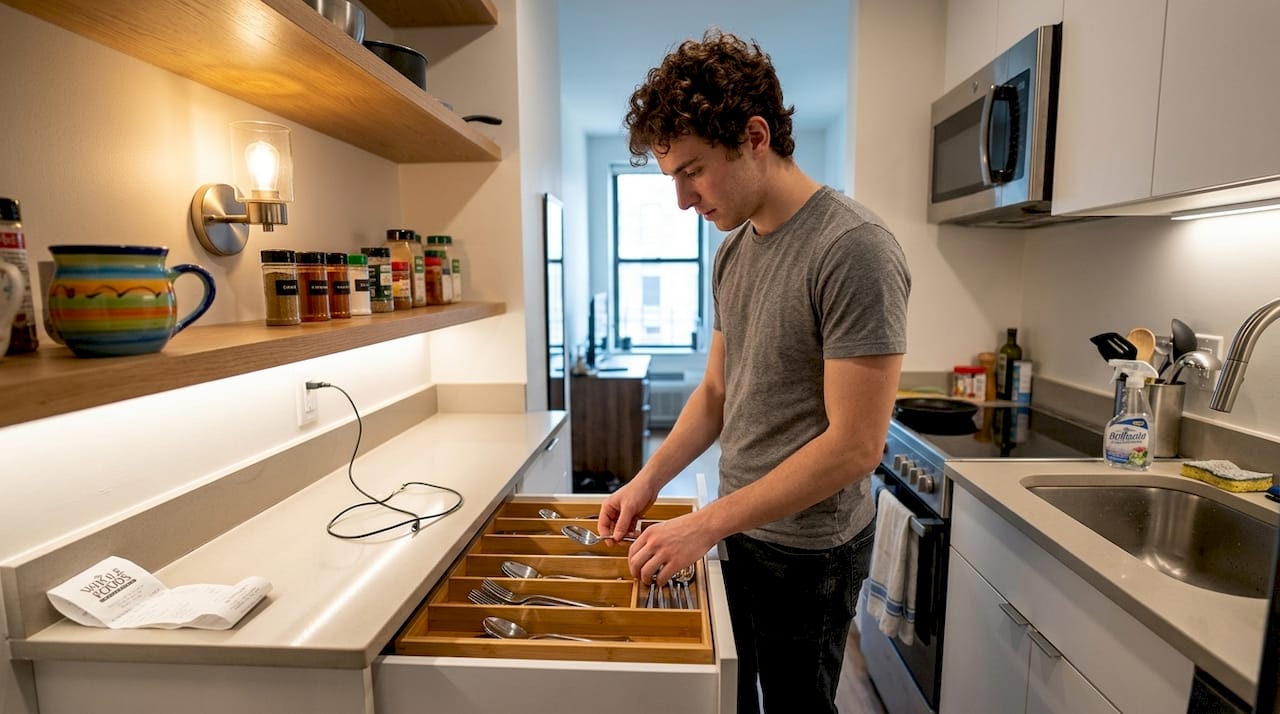
When evaluating any fixture, pay attention to color temperature. Bulbs around 2700K to 3000K emit a warm, inviting glow that suits living rooms and bedrooms. Spaces like kitchens or home offices benefit from a cooler 4000K light that keeps you alert and makes surfaces easier to see.
Pro Tip: Dimmable fixtures are one of the smartest investments for small spaces. One room can shift from bright and functional to soft and cozy with a single slide, eliminating the need for multiple separate setups.
Battery-powered and cordless options have improved dramatically. Rechargeable LED puck lights, for example, can be mounted inside closets, on bookshelves, or under kitchen cabinets without any wiring at all.
Comparison: Small space lighting solutions at a glance
You’ve seen individual options. Here’s how they stack up head-to-head, helping you compare and choose with confidence.
| Lighting type | Avg. cost | Installation ease | Space-saving | Design impact | Best use |
|---|---|---|---|---|---|
| Wall sconces | $40-$150 | Moderate | High | High | Bedrooms, hallways |
| Pendant lights | $50-$200 | Moderate | High | Very high | Kitchens, dining areas |
| LED strip lights | $15-$60 | Very easy | Very high | Medium | Cabinets, shelves, stairs |
| Portable/plug-in lamps | $25-$120 | Very easy | Medium | Medium | Living rooms, desks |
A few important trade-offs to keep in mind:
- Wall sconces and pendants make the biggest design statement but require some wiring work unless you choose plug-in versions.
- LED strips are the easiest to install and the most flexible, but they work best as accent or task lighting rather than a primary source.
- Portable lamps offer maximum flexibility and zero commitment, but they do occupy floor or surface space.
Home energy savings confirm that LED technology offers durability and savings in compact homes, which makes LED-based options the smart financial choice across nearly every category above.
For most small spaces, the best strategy is to combine at least two types. Pair under-cabinet LED strips with a wall sconce, or use a pendant light alongside a portable task lamp on a desk. This layered approach eliminates dark corners without crowding the room with hardware.
Expert tips for maximizing light and style
After choosing and comparing, the right arrangement and maintenance seal the deal for a stunning small-space glow.
Here are the strategies that separate a well-lit small room from a truly spectacular one:
- Layer all three light types: Ambient light sets the overall tone, task light handles specific activities, and accent light highlights shelves, art, or architectural features. Miss any one of these and you’ll have dark corners.
- Place mirrors opposite windows: A mirror facing a natural light source can essentially double the brightness of a room. The effect is immediate and costs nothing if you already own one.
- Keep your fixtures clean: Dust and grime on bulbs and shades can reduce light output by up to 30%. Proper placement and cleaning of fixtures maximizes both brightness and style in compact areas.
- Choose translucent or open shades: Solid, opaque lampshades trap light. Glass, linen, or open-cage designs allow light to spill in all directions, filling more of the room.
- Go vertical: Uplights on the floor aimed at the ceiling, or tall, narrow floor lamps, draw the eye upward and make ceilings feel higher. This is one of the fastest ways to make a small room feel less boxy.
“The rooms that feel largest aren’t always the biggest. They’re the ones where the light has somewhere to go.”
Reflective surfaces beyond mirrors also help. Glossy tiles, metallic finishes, and even high-gloss paint on a single accent wall can bounce light around a space effectively. Combine that with minimalist style lighting and you have a formula that genuinely transforms how a room feels.
Finally, don’t ignore the temperature and placement of natural light. If your windows face north, they’ll produce cool, consistent light all day. South-facing windows flood rooms with warm afternoon sun. Match your artificial lighting color temperature to your natural light for a cohesive, calming effect.
Our perspective: Why small space lighting is design’s secret weapon
Looking beyond fixtures and bulbs, let’s consider the bigger impact thoughtful lighting brings to any compact home. Most people think of lighting as a last step, something you sort out after the furniture is placed and the paint is dry. We think that’s exactly backwards.
Lighting is the single most transformative, budget-friendly change you can make to a small space, and it doesn’t require a contractor or a weekend of heavy lifting. A well-placed wall sconce or a pair of under-cabinet LEDs can do more for a room’s feel than a new sofa ever could.
The uncomfortable truth is that most homeowners dramatically underuse their vertical and wall space. Floors and surfaces get crowded, but walls stay bare. That’s where inspiring lighting solutions can genuinely reclaim lost potential. Mount a light on the wall, hang a pendant, aim an uplight at the ceiling, and suddenly a cramped room breathes again.
You don’t have to overhaul everything at once. Pick one idea from this guide and try it. That first change is often enough to shift how the entire space feels and to give you the confidence to keep going.
Brighten up your home with expert lighting advice
Ready to put these small space lighting ideas to work in your home? Here’s how we can help.

At Brilliante Crystal Cleaner, we know that beautiful lighting only stays beautiful when it’s properly cared for. Dusty bulbs, grimy shades, and smudged crystal fixtures quietly rob your space of the glow you worked hard to create. Our Drip-Dry Crystal Chandelier Cleaner is proudly made in the USA, non-abrasive, and environmentally friendly. Just spray and let it drip. No scrubbing, no streaks, no fuss. Whether you’re maintaining a petite pendant or a statement chandelier, keeping your fixtures clean is the simplest step to making your small space shine at its very best.
Frequently asked questions
What is the best type of lighting for small rooms?
Wall sconces and recessed lights are ideal for compact living areas because they free up floor space and reduce visual clutter. Combining them with a portable lamp gives you flexible, layered light without overcrowding the room.
How can I make a small space look brighter?
Layer different light sources and position mirrors to face windows or light fixtures. Mirrors paired with strategic lighting amplify brightness and visually expand any space.
Are LED lights good for small spaces?
Absolutely. LEDs are durable and efficient, delivering bright light with minimal heat output, which is especially important in compact, enclosed rooms where warmth can build up fast.
What is the easiest lighting upgrade for renters?
Plug-in solutions suit renters perfectly because they require no hardwiring and leave no permanent marks. Battery-powered puck lights and plug-in sconces are quick to install and easy to take with you when you move.