
Smart home solutions for sparkling chandeliers
TL;DR:
- Smart home solutions can assist in maintaining chandelier cleanliness through sensors, automated sprays, and remote monitoring, but they supplement rather than replace manual cleaning. Regular firmware updates, network checks, and personal inspections are essential to ensure these systems perform effectively. Combining automated routines with periodic hands-on maintenance results in consistently brilliant crystals and optimal chandelier appearance.
Your chandelier is a centerpiece, not just a light fixture. But somewhere between the promise of smart home technology and the reality of dust-coated crystals, a lot of homeowners end up frustrated. The idea that gadgets alone will keep your chandelier gleaming without any hands-on effort is one of the most common misconceptions in modern home care. The truth is more interesting: when you pair smart automation with a thoughtful maintenance routine and the right cleaning products, keeping your crystals brilliant becomes genuinely easier without being fully hands-off.
Key Takeaways
| Point | Details |
|---|---|
| Automation is a helper | Smart devices reduce effort but can’t fully replace hands-on care for chandeliers. |
| Maintenance is essential | Updating firmware, ensuring stable connections, and manual checks are key to smart system effectiveness. |
| Best results blend tech and touch | Combining automated schedules with scheduled manual cleaning delivers real, long-lasting brilliance. |
| Routines simplify upkeep | Weekly, monthly, and seasonal tasks make chandelier care easy and prevent major cleaning jobs. |
What are smart home solutions for chandelier care?
Smart home solutions for chandelier care cover a range of tools and systems designed to reduce how often you need to get out a ladder and start wiping. At the core, smart home system basics include sensors, connected apps, automated schedules, and remote monitoring that work together to alert you when cleaning is needed and, in some cases, handle light cleaning automatically.
For a crystal chandelier specifically, these tools translate into real benefits. Dust sensors can detect when particulate levels in the room have reached a threshold that’s likely coating your crystals. App-based alerts let you know when a cleaning cycle has run or when it’s been skipped due to a power issue. And scheduling features mean your system doesn’t rely on you to remember when the last cleaning happened.
Smart home solutions for cleanliness rely on automation, sensors, and remote monitoring to reduce maintenance burden for homeowners. But notice the phrase “reduce burden,” not “eliminate it.” That distinction is what separates realistic expectations from disappointment.
Here’s what smart chandelier care tools typically offer:
- Dust detection sensors that monitor air quality and particulate levels near the fixture
- Automated spray or mist systems mounted near the chandelier to apply cleaning solution on a schedule
- Connected apps that log cleaning history, alert you to missed cycles, and let you trigger manual runs
- Smart lighting integration that dims or powers down the fixture before a cleaning cycle begins
- Remote cameras for visual monitoring without needing to climb up for an inspection
| Feature | What it does | Benefit for your chandelier |
|---|---|---|
| Dust detection sensor | Monitors air quality near fixture | Alerts you before heavy buildup occurs |
| Automated spray system | Applies mist cleaning solution | Reduces hands-on cleaning frequency |
| App scheduling | Sets and logs cleaning cycles | Keeps routine consistent |
| Smart lighting link | Powers down before cleaning | Protects crystals and bulbs |
| Remote monitoring camera | Visual check via smartphone | Saves time on inspections |
You can explore more automation ideas for your home that go beyond chandelier care and help maintain your entire living space more efficiently. The key takeaway here is that smart tools are best understood as systems that shorten your to-do list, not eliminate it.
The tech behind automated chandelier cleaning
With a clear sense of what smart home cleaning means, let’s explore the tech options that do the work for you.
The most common automated options fall into three broad categories: self-cleaning chandeliers built with the tech already integrated, add-on smart spray systems, and app-controlled monitoring tools you pair with manual cleaning.
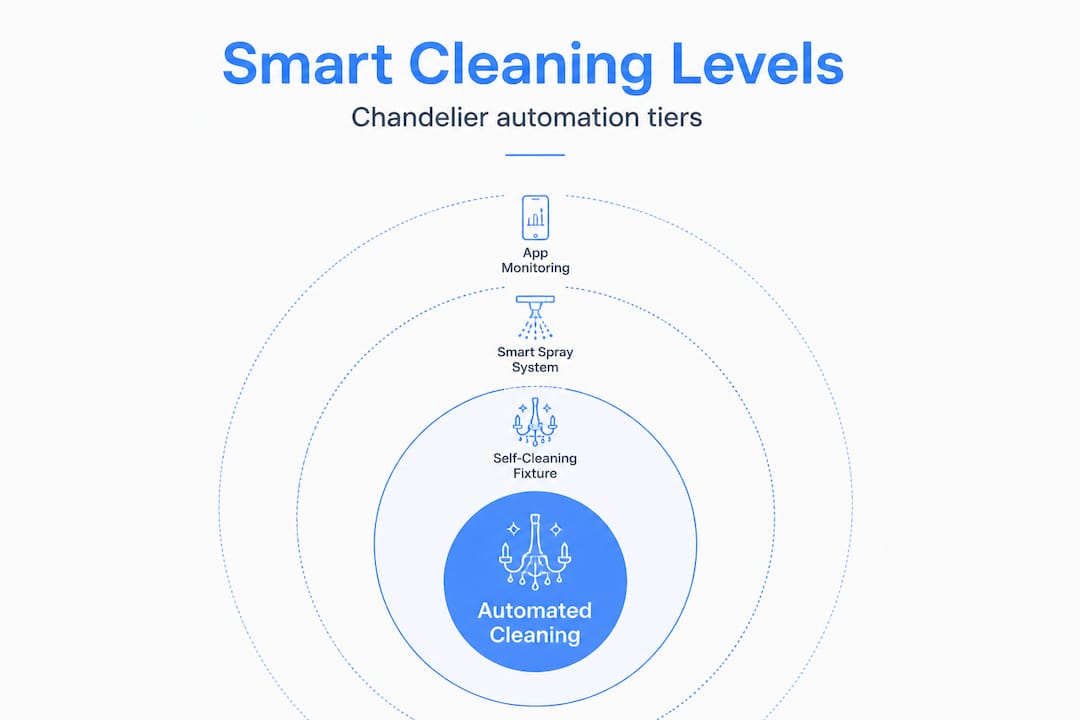
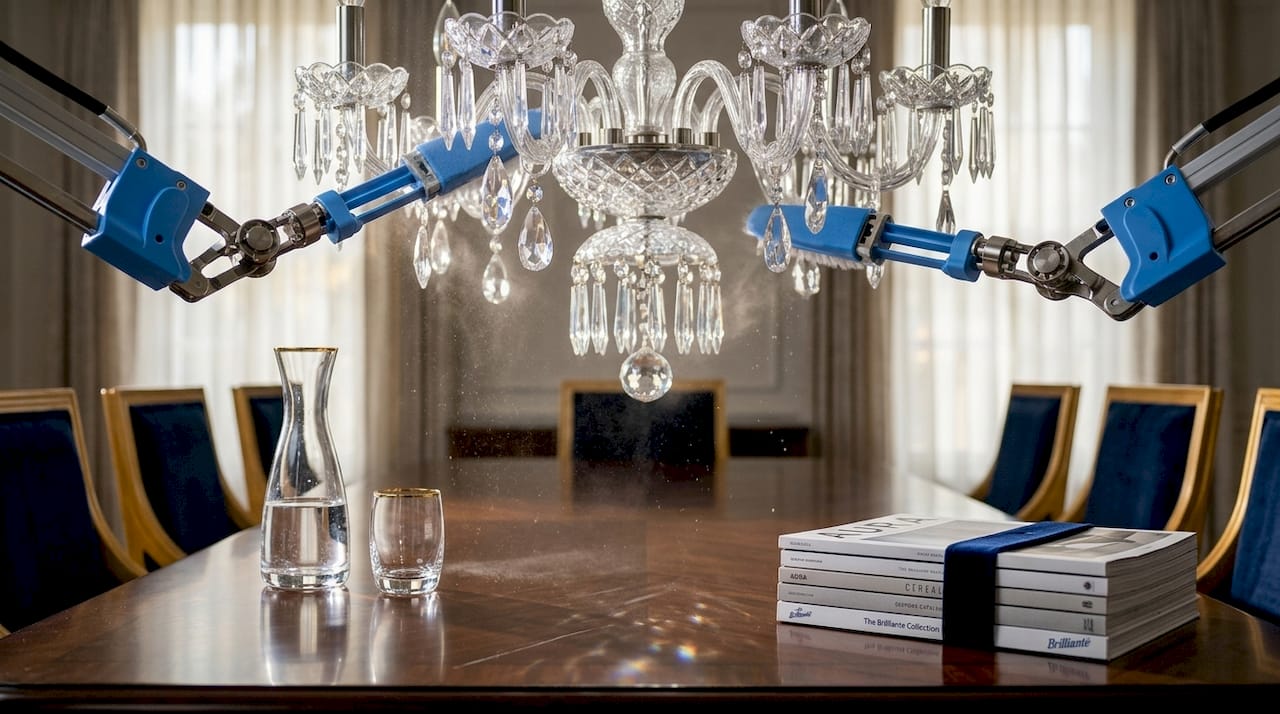
Self-cleaning chandeliers are high-end fixtures engineered with rotating arms or misting nozzles built directly into the design. When a cycle activates, the arms rotate slowly while a fine cleaning mist is released across the crystals. The liquid drip-dries, carrying dust and residue away without streaks. These fixtures are impressive, but they come with a premium price tag and require professional installation. They also still need periodic deep cleans.
Add-on smart spray systems are more accessible. You mount a spray head near the chandelier and connect it to your home’s smart hub. From there, you control timing, frequency, and spray volume through an app. The cleaning solution you use matters enormously here. A non-abrasive, drip-dry formula is essential so residue doesn’t cling to the metal or fog up the crystal surfaces.
App-controlled monitoring is the entry-level option. No automatic spraying, but smart cameras and sensors help you track dust buildup and schedule reminders. You still do the cleaning manually, but the system ensures you never miss a cycle or let buildup get out of hand.
Smart homes are interconnected networks that still require ongoing maintenance of cloud and app updates, power protection, firmware, and network stability. This is especially true for automated spray systems, which can malfunction or under-deliver if the app controlling them is running outdated software. See reliable cleaning automation tech and how integration works in real home setups.
Here’s how to choose based on your situation:
- Budget under $500: Start with app-controlled monitoring plus a quality drip-dry spray cleaner for manual use
- Budget $500 to $2,000: Consider an add-on smart spray system with scheduling and alerts
- Budget $2,000 and above: Explore self-cleaning chandelier models with integrated cleaning arms
- Rental or temporary home: Stick with monitoring tools and manual spray cleaning to avoid permanent installation
- Large or complex fixtures: Combine monitoring sensors with semi-automated spray, and plan seasonal manual deep cleans
| Tech option | Cost range | Installation needed | Best for |
|---|---|---|---|
| App monitoring only | Under $200 | Minimal | Budget-conscious homeowners |
| Add-on smart spray | $500 to $2,000 | Moderate | Mid-range automation seekers |
| Self-cleaning fixture | $2,000 and above | Professional | Full automation enthusiasts |
Pro Tip: Whatever system you choose, always test your cleaning solution on a small section of the chandelier first. Even a product labeled safe can react unexpectedly with certain metal finishes or crystal coatings. A drip-dry, non-abrasive formula is your safest bet for regular automated use. You can also look at professional automation in action to see how scheduling and monitoring tools are deployed in demanding environments.
Maintenance secrets: Keeping your smart cleaning system effective
Even the smartest tech needs a little attention. Here’s how to keep your setup running flawlessly.
Many homeowners set up an automated chandelier cleaning system, enjoy it for a few months, then notice the crystals getting dull again. The culprit is almost always a neglected system update, a weak network signal, or a depleted cleaning solution reservoir. Ongoing reliability requires network, app, and cloud stability along with firmware updates and power protection. Without these, automation becomes less effective and less trustworthy over time.
Here’s what a solid maintenance checklist for your smart cleaning system looks like:
- Update firmware every 60 to 90 days to ensure your spray system or sensors are running the latest software
- Check app notifications regularly and make sure push alerts are enabled so you never miss a malfunction warning
- Inspect the cleaning solution reservoir monthly and refill before it runs empty
- Test the spray cycle manually once a month to confirm nozzles aren’t clogged or misdirected
- Verify network connectivity for your hub and any connected cleaning devices, especially after internet outages
- Use a surge protector or UPS backup for the smart hub that controls your cleaning schedule
“Think of your smart cleaning system the way you think of a car. You wouldn’t skip oil changes just because the engine is running today. Regular small checks prevent big failures down the road.”
For keeping smart tech efficient in the long run, energy stability and consistent network conditions are just as important as the devices themselves. A power surge or dropped connection can interrupt a scheduled cleaning cycle, and if you’re not monitoring the system, you may not notice for weeks.
Pro Tip: Set a recurring calendar reminder on your phone every 60 days to run through your maintenance checklist. It takes under 15 minutes and prevents months of preventable buildup on your crystals.
Manual inspections are also irreplaceable. Even with the most reliable automated system, you should walk a chandelier cleaning checklist once a month. Look for any crystals that seem cloudy or have visible residue, check for any components that may have shifted, and wipe down any areas the spray may have missed.
Smart cleaning routines: How to blend automation and manual care
Now that you know how to maintain your system, here’s how to build a routine that brings everything together for unbeatable shine.
A well-designed cleaning routine does two things: it keeps the automated system doing most of the heavy lifting, and it ensures your personal attention catches what the tech cannot. Scheduled upkeep and remote monitoring reduce the maintenance burden for homeowners while ensuring consistent results. Here’s how to structure yours.
Weekly tasks:
- Open your smart home app and review the cleaning log to confirm cycles ran as scheduled
- Check any alerts or error messages from connected sensors
- Do a quick visual scan of the chandelier from below, looking for visible dust or dull spots
- Activate a manual cleaning cycle if the automatic one was missed
Monthly tasks:
- Check for firmware or app updates and install them
- Inspect the spray nozzle or cleaning arm for buildup or blockages
- Refill the cleaning solution reservoir if needed
- Do a closer manual inspection from a ladder, checking crystal clarity and metal finish
- Wipe down any areas that appear cloudy using a drip-dry spray cleaner
Seasonal tasks (every 3 to 4 months):
- Perform a full manual deep clean of the entire fixture
- Run a complete system diagnostic through the app
- Check hardware connections and mounting for any loosening caused by vibration or use
- Evaluate whether your cleaning schedule frequency needs adjusting based on results
Pro Tip: Use your phone’s built-in reminder feature or a free app like Google Calendar to set recurring alerts for weekly, monthly, and seasonal tasks. Tying these tasks to an existing habit, like the first Monday of each month, makes them far easier to remember and stick to.
Here’s a quick summary of what to prioritize at each level:
- Weekly: Review, confirm, spot-check
- Monthly: Update, inspect, refill, detail-clean
- Seasonal: Deep clean, diagnose, adjust schedule
For daily chandelier care habits that make the bigger cleanups easier, small consistent actions add up fast. Even just reducing traffic or airflow disruption near the fixture can meaningfully extend the time between full cleaning cycles.
A smarter mindset: Why tech can’t fully replace your eye for detail
Here’s the honest truth that most smart home marketing glosses over. Automation is genuinely helpful, sometimes transformative, but it has real blind spots. A spray system doesn’t notice the one crystal that’s slightly tilted and catching grease from a nearby vent. A sensor doesn’t flag the single fingerprint left behind after a holiday guest reached up out of curiosity. Only you can catch those things.
Proper maintenance of smart home systems is essential for reliability and not just relying on tech alone. That sentence isn’t a warning against automation. It’s actually an invitation to use technology the right way: as a capable assistant that handles the predictable, repetitive work while freeing your attention for the details that matter most.
What we’ve seen working with homeowners over the years is that the ones who get the best results from their smart cleaning setups are the ones who stay engaged, not the ones who step back entirely. They use the app data. They glance up at the fixture when walking by. They still do a hands-on check every month. And as a result, their chandeliers look consistently better than those maintained by fully automated systems running without human oversight.
There’s also something worth saying about aesthetics. A sparkling chandelier isn’t just clean in a technical sense. It glows. It catches light in a way that makes a room feel special. That quality requires judgment that no sensor can quantify. Knowing when a crystal has just enough film to look slightly flat compared to its neighbors is the kind of observation that comes from actually looking at your fixture, not reading an app log.
For energy-smart cleaning strategies that complement your chandelier’s visual performance, think about how smart lighting settings can actually reveal cleaning quality. Dimmer settings or warmer tones can hide dust. Bright, cool lighting is your best diagnostic tool when doing a visual inspection.
Think of your smart home system as a highly competent team member, not a replacement for your own involvement. The best results come from that collaboration.
Discover crystal-clear results with expert support
You’ve now got a complete picture of how to pair smart automation with smart manual habits for chandeliers that sparkle year-round. But great routines work best with great products backing them up.

Brilliante Crystal Chandelier Cleaner was designed precisely for this kind of routine. Our specially formulated drip-dry solution means you or your automated spray system can apply it and walk away. No rinsing, no wiping, no residue. It’s non-abrasive, environmentally friendly, and won’t tarnish metal finishes, making it the perfect companion for both hands-on and automated cleaning cycles. Made proudly in the USA and rated number one by hundreds of satisfied homeowners, Brilliante is the product your chandelier and your smart cleaning system deserves. Visit our website to find the right solution for your fixture and get started.
Frequently asked questions
Does a smart chandelier cleaning system replace manual cleaning entirely?
No, even with smart automation, periodic manual cleaning is needed to catch details like fingerprints, misaligned crystals, and spots the spray may miss. Ongoing reliability requires both automation and manual monitoring for consistently brilliant results.
What maintenance do smart chandelier solutions require?
You should keep firmware and apps updated every 60 to 90 days, ensure stable network and power conditions, refill solution reservoirs monthly, and inspect hardware for signs of wear. Smart home networks require regular app, cloud, and firmware updates along with power protection to stay reliable.
How do I choose the best smart cleaning routine for my chandelier?
Combine automated spray or monitoring cycles with monthly manual inspections and a full seasonal deep clean, adjusting frequency based on your home’s dust levels and chandelier size. Scheduled upkeep reduces maintenance burden while keeping crystals consistently sparkling.
What should I do if my smart cleaning device malfunctions?
Check for pending app or firmware updates first, reboot the device and hub, and verify your network connection is stable. If the issue continues, network and firmware stability is critical, so contact the manufacturer’s support team for hardware diagnostics.