
What the difference between crystal and glass means for your chandelier
TL;DR:
- Crystal is a specialized type of glass containing added metal oxides, primarily lead oxide, which enhances its brilliance and density. This distinct composition makes crystal more delicate and prone to damage, requiring gentle cleaning methods with distilled water and pH-neutral solutions. Proper care involves minimal handling, targeted cleaning, and understanding crystal’s unique properties to maintain its sparkle and longevity.
If you’ve ever wondered what the difference between crystal and glass is while staring up at your chandelier, you’re not alone. Most homeowners assume they’re completely different materials, but the truth is more interesting. Crystal is actually a type of glass, just one with a specific chemical makeup that changes everything about how it looks, how much it weighs, and how you need to care for it. Get this distinction wrong and you risk dulling your chandelier’s sparkle or, worse, damaging its finish with the wrong cleaner.
Key Takeaways
| Point | Details |
|---|---|
| Crystal is modified glass | Crystal is a type of glass with added metal oxides like lead oxide, giving it enhanced brilliance and weight. |
| Optical and physical differences | Crystal shines brighter and rings clearly but is more delicate; glass is more durable but less dazzling. |
| Cleaning methods differ | Use mild detergents and distilled water for crystal; glass cleaning is more forgiving but avoid abrasives. |
| Avoid mineral deposits | Hard water causes haze on crystals; always rinse with distilled water and dry immediately to keep sparkle. |
| Handling precautions matter | Minimize touching crystal to prevent chips and fingerprints, using soft cloths and gentle care techniques. |
What crystal and glass really are: understanding the difference between crystal and glass
At their core, both crystal and glass start from the same basic formula: silica sand, soda ash, and limestone melted together. What separates them is what gets added next. Crystal is a specific kind of glass with added metal oxides, most commonly lead oxide, that increase its optical brilliance and density. Standard glass stays simple. Crystal gets upgraded.
Lead crystal contains at least 24% lead oxide, which is what pushes its refractive index (the measure of how strongly a material bends light) well above regular glass. That’s why crystal catches light and throws it across your ceiling in ways plain glass simply can’t match.
There are also important variations within each category. The main types of glass and crystal you’ll encounter in chandeliers include:
- Lead crystal: The traditional benchmark. At least 24% lead oxide, heavy, brilliant, and the most light-reactive of all chandelier materials.
- Lead-free crystal: Also called “eco-crystal,” this uses barium oxide or zinc oxide in place of lead. It’s slightly less brilliant but still far superior to standard glass.
- Optical glass: A high-clarity glass used in precision optics that mimics crystal’s sparkle without metal oxide additives. Common in modern chandeliers marketed as “crystal look.”
- Standard glass: The everyday material made from sand, soda ash, and limestone. Heavier for the same thickness than crystal, more durable, but far less brilliant.
- Borosilicate glass: A type of glass resistant to thermal shock. Used in some contemporary designs but rare in traditional chandeliers.
One quick test at home: tap the piece gently with your fingernail. Crystal responds with a clear, bell-like ring. Glass gives a flat, dull thud. It sounds minor, but it tells you exactly what you’re working with before you reach for a cleaner.
Having clarified what crystal and glass are, let’s explore their practical differences in appearance and durability relevant to chandeliers.
Appearance and durability differences you should know
Here’s where the rubber meets the road for chandelier owners. The chemical differences above aren’t just trivia. They directly affect what you see every day and how careful you need to be during cleaning.
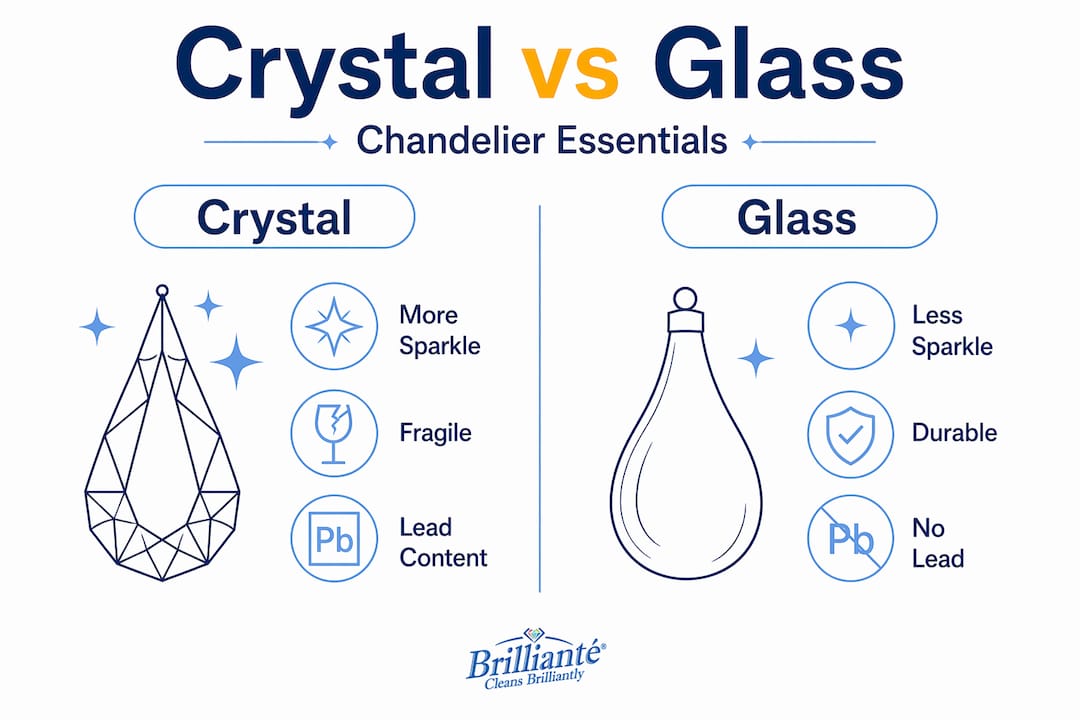
Crystal offers clearer sparkle and light play but is more delicate, requiring careful handling and cleaning. Because it can be molded thinner and hand-cut with intricate facets, crystal chandeliers catch and refract light with a precision that glass fixtures can’t replicate. That same thinness, though, is also a vulnerability.
Crystal’s lead-containing formulations can be more delicate while glass is generally more forgiving for everyday use. You’ll notice this if you’ve ever accidentally nicked a crystal pendant. It chips more easily than a glass one of the same apparent size.
Here’s a direct comparison to keep on hand:
| Feature | Crystal | Glass |
|---|---|---|
| Composition | Glass plus metal oxides (lead, barium, zinc) | Silica sand, soda ash, limestone |
| Brilliance | High (higher refractive index) | Moderate |
| Weight | Heavier for same size | Lighter (though thicker pieces weigh more) |
| Thickness | Can be cut very thin | Generally thicker for structural integrity |
| Durability | More fragile, chips easily | More impact-resistant |
| Fingerprints/smudges | Shows more readily | Less noticeable |
| Cleaning sensitivity | High. needs gentle, pH-neutral cleaners | More tolerant of general cleaning |
| Sound when tapped | Clear ring | Dull thud |
One thing many owners overlook: crystal’s brilliance is also its curse when it comes to smudges. The same optical quality that makes fingerprints vanish in plain glass makes them glaringly visible on crystal. That’s not a flaw in the material. It’s proof you have the real thing.
Understanding these differences helps determine the best cleaning and maintenance approaches for each material.
Cleaning your chandelier: methods tailored to crystal and glass
The single most costly mistake homeowners make is treating both materials the same way. Crystal is not just “fancy glass” in terms of cleaning. It’s a chemically distinct material that reacts badly to the wrong products.
Follow these steps for safe, effective chandelier cleaning:
- Turn off the power and let bulbs cool completely. Heat plus sudden moisture equals cracked components.
- Dust first. Use a soft microfiber cloth or a clean, dry paintbrush to remove loose dust before any liquid touches the fixture.
- Mix your cleaning solution. For crystal, a 4:1 ratio of distilled water to isopropyl alcohol works well. For glass, warm water with a small amount of mild dish soap is fine.
- Avoid spraying cleaners directly on crystal. Instead, soak heavy strands and rinse with distilled water to reduce spotting. For in-place cleaning, lightly mist a soft cloth, not the chandelier itself.
- Rinse with distilled water only. Tap water carries minerals that leave white deposits on crystal surfaces, dulling the very sparkle you’re trying to restore.
- Dry immediately and completely. Air drying is the enemy of crystal. Water left sitting, even clean water, will leave spots.
- For glass components, warm soapy water and a soft cloth do the job. Avoid abrasive scrubbers. Glass scratches more easily than it looks.
What you should never use on crystal: ammonia-based cleaners, white vinegar, acidic solutions, or anything marketed as a heavy-duty degreaser. These strip the surface and can react with metal fittings, causing cobwebs and debris to become even harder to remove after the residue builds up.
Crystal requires distilled water rinses and mild detergents; glass tolerates more aggressive cleaning but can scratch easily.
Pro Tip: Lay a folded towel or soft blanket on the floor directly beneath your chandelier while cleaning. Dropped pieces land softly instead of shattering, and you’ll feel less anxious about the whole process.
With proper cleaning techniques established, let’s look at some subtleties and common pitfalls that separate good chandelier care from great chandelier care.
Expert insights: nuances and pitfalls in chandelier care
One of the most overlooked steps in chandelier maintenance is simply knowing what you have before you clean it. Manufacturers’ specifications on lead content affect cleaning choices since lead-free and leaded crystals may react differently to the same cleaner. A product safe for standard glass could still damage a leaded crystal surface. Always check the manufacturer’s documentation or contact them directly if you’re unsure.
Here are the key pitfalls to avoid:
- Handling pieces too often. Every time you touch a crystal component, you leave oils from your skin that attract dust and eventually etch the surface. Use cotton gloves when removing or replacing pieces.
- Using tap water for rinsing. Hard-water mineral deposits cause chandelier clarity loss and distilled water helps prevent haze and spotting. This is not optional for crystal.
- Mixing cleaners for different parts. If your chandelier has both metal arms and crystal pendants, use separate cloths and solutions for each. Metal cleaners can streak or etch crystal if they make contact.
- Cleaning in humid conditions. High humidity slows drying, which increases the risk of water spots and mineral deposits settling onto the surface before you can wipe them away.
- Skipping regular dusting. Light, frequent dusting prevents the buildup that forces you into aggressive wet cleaning later. Monthly dry dusting is far gentler than quarterly deep cleaning.
Pro Tip: If you’re not sure whether your chandelier uses lead crystal, lead-free crystal, or optical glass, the safely cleaning chandeliers rule of thumb is to always start with the gentlest possible cleaner. You can always increase strength. You cannot un-etch a crystal surface.
Why understanding crystal versus glass can transform your chandelier care
Here’s what most chandelier guides won’t tell you: the majority of homeowners who complain about a “dull” chandelier haven’t bought a bad fixture. They’ve been cleaning it with the wrong product for years.
Knowing the benefits of crystal over glass goes beyond aesthetics. It changes your entire maintenance approach. When you understand that crystal has a chemically altered structure with a higher refractive index, you realize why distilled water isn’t just a preference. It’s the only rinse that won’t slowly coat your crystals in an invisible mineral film.
The “minimal handling” rule is another insight most guides gloss over. Chandeliers aren’t meant to be taken apart every few months for deep cleaning. The more you handle individual crystals, the more chances you create for chips, hairline cracks, and permanent smudging from skin oils. A well-maintained chandelier cleaned in place with the right spray cleaner will outlast one that gets enthusiastically disassembled twice a year.
There’s also a financial argument here. A quality crystal chandelier is a real investment. The removing crystal chandelier film process, when done wrong, can permanently damage the surface. Replacing individual crystal pendants is expensive. Replacing an entire fixture is even more so. Spending fifteen minutes learning the difference between how crystal and glass behave is worth hundreds of dollars in avoided damage.
The final shift in thinking: stop treating chandelier cleaning as a chore and start treating it as maintenance. The same way you wouldn’t use dish soap on a leather couch, you wouldn’t use an all-purpose cleaner on lead crystal. Match the product to the material, and the fixture will reward you with decades of brilliant light.
Keep your chandelier shining with our expert cleaning solutions
You now know exactly what separates crystal from glass and why that distinction matters every time you reach for a cleaning product. The next step is making sure you have the right tools for the job.

Brilliante Crystal Chandelier Cleaner is proudly made in the USA and specially formulated for exactly this kind of delicate work. Our Drip-Dry formula means you simply spray and let it drip dry, no scrubbing, no rinsing, no risk of scratching. It’s non-abrasive, environmentally friendly, and won’t tarnish your metal fittings. Hundreds of satisfied customers have rated it #1 for a reason. Explore our crystal cleaning solutions and pair them with our detailed removing crystal film guide and chandelier cobweb removal tips to keep every piece of your fixture looking its absolute best.
Frequently asked questions
What exactly makes crystal different from regular glass?
Crystal contains added metal oxides like lead oxide that increase its brilliance, weight, and refractive index compared to regular glass. Lead crystal contains at least 24% lead oxide, boosting refractive index and density.
Can I use the same cleaner for my crystal and glass chandeliers?
No. Crystal needs gentle, pH-neutral cleaners and distilled water rinses, while glass is more tolerant but can still be scratched by harsh abrasives. Crystal requires distilled water rinses and mild detergents to stay brilliant without damage.
Why does my crystal chandelier lose sparkle even after cleaning?
Hard-water mineral deposits and water spots create an invisible haze on crystal surfaces. Hard-water mineral deposits cause clarity loss over time, so switching to distilled water and drying immediately after cleaning makes a visible difference.
How can I prevent damage while cleaning fragile crystal chandelier pieces?
Minimize handling, wear cotton gloves, use soft cloths, avoid harsh chemicals, and dry each piece immediately after cleaning. Avoid over-handling crystal parts to reduce chips and fingerprints, and soak and dry immediately to prevent spotting.