
Glass vs crystal: key differences and care for chandeliers
TL;DR:
- Most homeowners cannot distinguish between glass and crystal chandeliers, yet care techniques vary significantly for each. Crystal has a higher refractive index, produces rainbow effects, and is heavier and more delicate than glass, requiring gentle, material-specific cleaning. Proper identification and maintenance ensure your chandelier remains dazzling and enhances your home’s ambiance for years.
Most homeowners stare up at their chandelier and genuinely cannot tell whether it’s glass or crystal. That uncertainty isn’t trivial. Picking the wrong cleaner, using the wrong cloth, or skipping the right technique can leave your fixture looking flat, cloudy, or streaked instead of brilliant. If your chandelier isn’t throwing light across the room the way it once did, the problem might not be dust. It might be that you’ve been caring for crystal as if it were ordinary glass, or vice versa. This guide cuts through that confusion so you can identify your material, care for it correctly, and enjoy every drop of sparkle your fixture has to offer.
Key Takeaways
| Point | Details |
|---|---|
| Crystal vs glass basics | Crystal is known for its intense sparkle and rainbow effects, while glass offers a softer glow. |
| Identification tips | Simple tests like observing light refraction and sound can help tell crystal from glass. |
| Care matters | Crystal needs gentle cleaning, while glass is more forgiving but still needs proper care. |
| Ambiance impact | Crystal creates dazzling visual effects, whereas glass lends subtle elegance to spaces. |
| Proper products | Choosing safe, material-specific cleaners preserves the beauty of both glass and crystal chandeliers. |
What makes crystal and glass different?
Glass and crystal may look similar in a store or from across a room, but they are fundamentally different materials with different chemical compositions, different weights, and completely different interactions with light.
Glass is made primarily from silica (silicon dioxide), combined with soda ash and limestone. It’s produced in massive quantities, is relatively inexpensive, and has a smooth, uniform appearance. Crystal, on the other hand, traditionally contains lead oxide mixed into the silica base. That addition of lead or other minerals like barium or zinc is what gives crystal its legendary sparkle, weight, and brilliance.
The most measurable difference between the two is something called the refractive index. This number tells us how much a material bends light as it passes through. According to lead crystal vs glass composition differences, crystal reaches a refractive index of 1.56 to 1.70, while standard glass sits at just 1.50 to 1.52. That gap produces prismatic rainbow effects and intense sparkle in crystal, while glass gives off a softer, more diffused glow. In simpler terms, light bends dramatically through crystal and creates the rainbow effects you see dancing on walls and ceilings. Glass scatters light more gently without the same punch.
When it comes to telling crystal from glass in a chandelier, the visual difference is most obvious in sunlight or direct lamp exposure. Crystal throws vivid, colored light. Glass glows warmly but stays mostly white or faint yellow in its reflections.
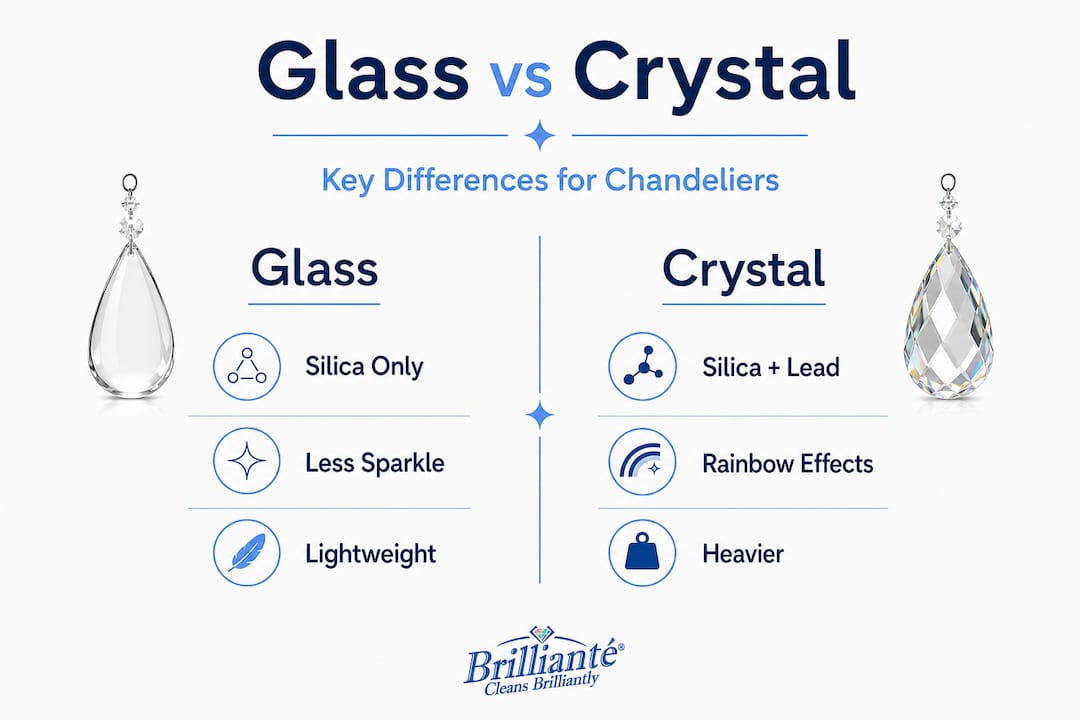
| Feature | Crystal | Glass |
|---|---|---|
| Main material | Silica + lead or mineral | Silica only |
| Refractive index | 1.56 to 1.70 | 1.50 to 1.52 |
| Light effect | Prismatic rainbows | Soft, diffused glow |
| Weight | Heavier | Lighter |
| Sound when tapped | Clear, bell-like ring | Dull thud |
| Cleaning sensitivity | High | Moderate |
Understanding this difference for chandeliers is the first step toward giving your fixture the right care. Using harsh cleaners on crystal dulls its surface. Using overly gentle products on glass may leave residue behind. The material dictates the method.
How to identify glass vs crystal in your home
Knowing the technical differences, you’re ready to spot them in your own lighting features. You don’t need a chemistry lab or special equipment. A few simple tests done right at home will tell you what you’re working with.
1. Try the tap test. Gently tap a pendant or drop on your chandelier with your fingernail. Crystal produces a clear, bell-like ring that lingers for a moment. Glass gives a short, dull sound without much resonance. This is one of the oldest and most reliable identification methods.
2. Check the weight. Hold a single pendant in your palm if you can safely remove one. Crystal is noticeably heavier than glass of the same size, thanks to its mineral content. If the piece feels surprisingly heavy for its size, you’re likely holding crystal.
3. Look at the cut patterns. Crystal is often faceted with sharp, precise cuts. Those cuts serve a functional purpose by directing and bending light. Glass pieces tend to have rounder edges and less complex patterns because they don’t need the geometry to maximize light refraction.
4. Hold it up to sunlight. Take a pendant outside or hold it near a sunny window. Crystal will scatter visible rainbow colors across nearby surfaces. Glass may show a faint glow but will not produce a true rainbow spectrum.
5. Examine the shine. Crystal has an almost wet-looking brilliance even when clean and dry. Glass looks bright but has a flatter sheen in comparison.
Pro Tip: Use your smartphone flashlight in a dimly lit room and hold it close to a pendant. If you see vivid color play shooting out to the sides, that’s the signature of true crystal. A glass piece will mostly pass the light straight through with minimal rainbow effect.
Once you learn to identify and care for your specific material, maintenance becomes much more intentional and effective. Guessing is what leads to the streaks, cloudiness, and dulling that homeowners often mistake for irreversible damage.
Cleaning and caring for crystal and glass chandeliers
Correctly identifying your chandelier material prepares you to clean and care for it properly. The approach you take directly affects how brilliant your fixture looks every day.
Crystal’s higher refractive index means it interacts dramatically with light, which also means any residue, water spots, or chemical film is highly visible. Harsh cleaners, ammonia-based sprays, or abrasive cloths will cloud the surface and reduce that sparkle within a few cleanings. Glass is more forgiving but still deserves thoughtful care to avoid buildup and streaking.
Cleaning crystal chandeliers, step by step:
- Turn off the chandelier and allow bulbs to cool completely before touching anything.
- Lay a soft drop cloth or towels beneath the fixture to catch any drips.
- Use a specially formulated crystal cleaner. Spray directly onto each pendant or section of the chandelier.
- Allow the solution to drip dry without wiping. This prevents micro-scratches from cloth contact.
- For stubborn dust, use a clean, dry microfiber cloth with the lightest possible touch.
- Avoid paper towels, which can scratch crystal surfaces.
Cleaning glass chandeliers, step by step:
- Power off and allow the fixture to cool fully.
- Use a mild glass-safe spray or a diluted gentle cleanser.
- Wipe with a lint-free microfiber cloth using smooth, circular motions.
- Buff dry immediately to prevent water spots.
- Check for residue in cut grooves or ornamental details and clean gently with a soft brush if needed.
| Chandelier type | Recommended cleaner | Method | Frequency |
|---|---|---|---|
| Lead crystal | Specialty crystal spray | Drip dry | Every 3 to 6 months |
| Modern crystal | Specialty crystal spray | Drip dry | Every 3 to 6 months |
| Glass | Mild glass cleaner | Wipe and buff | Every 2 to 4 months |
Pro Tip: Never let water or cleaning solution sit on crystal without drying completely. Water spots etch into the surface over time and become far harder to remove than regular dust. The clean and preserve chandeliers method that works best is letting the right solution do the work without friction.
You can also explore a complete cleaning checklist for crystal chandeliers to stay on schedule and protect your investment through every season. For more detailed comparison guidance on both materials, our chandeliers care and cleaning resource walks through common mistakes and easy fixes.
The impact of crystal vs glass on home ambiance
Once your chandelier sparkles, it’s worth considering how your choice of material shapes your entire room’s feel. The material you hang from your ceiling doesn’t just reflect light. It sets a mood, defines a space, and communicates a design intention.

Crystal chandeliers are bold. Their prismatic rainbow effects and intense sparkle turn a plain ceiling into something theatrical. On a sunny afternoon, a crystal chandelier can cast hundreds of small moving rainbows across your walls, floors, and furniture. That dynamic quality gives formal dining rooms, entryways, and master bedrooms a sense of grandeur that glass simply cannot replicate.
Glass chandeliers work differently but no less beautifully. They produce a consistent, even warmth that feels inviting rather than dramatic. In kitchens, casual dining rooms, or spaces with modern or rustic decor, a glass chandelier complements the surroundings without competing with them. The glow is steady and soft, making it an excellent choice for rooms where you want light to feel effortless.
Here’s how each material supports different design goals:
- Crystal suits traditional, glamorous, or formal spaces where you want maximum visual impact.
- Crystal works beautifully in rooms with white or light-colored walls, which amplify the rainbow reflections.
- Glass suits contemporary, farmhouse, industrial, or transitional styles.
- Glass is ideal in rooms with warmer color palettes or textured walls where diffuse light creates a cozy atmosphere.
- Crystal increases perceived luxury and can raise the visual value of a space, especially in foyers and formal living rooms.
- Glass offers versatility and easier maintenance, fitting a wider range of everyday spaces.
“A chandelier isn’t just a light fixture. It’s a statement about how you want a room to feel every time someone enters it.”
How you care for your fixture directly affects how well it performs its role in the room. A dirty crystal chandelier loses its drama. A streaky glass one loses its warmth. Exploring thoughtful guidance on interior lighting with crystal can help you make sure your fixture always delivers the ambiance you selected it for.
What most guides miss about glass vs crystal chandeliers
Most articles on this topic tell you the same thing: crystal costs more, sparkles more, and needs more careful cleaning. That’s all true. But it misses the bigger point.
The real issue isn’t what material you buy. It’s whether you’re willing to maintain it properly. We’ve heard from countless homeowners who invested in stunning crystal chandeliers and then watched them go dull over a few years because they didn’t know what cleaner to use, or they assumed a quick spray of whatever was under the sink would do the job. Others bought glass chandeliers thinking they’d be low maintenance and then stopped cleaning them entirely, which led to a yellowish film and a room that never felt quite right.
The debate around insights on chandelier material tends to focus on cost and aesthetics. But from our experience, the one factor that most determines how good your chandelier looks five years after you install it is the quality and consistency of your cleaning routine.
The biggest mistake people make is assuming that one cleaner works for everything. Ammonia destroys crystal over time. Hard water residue builds up on glass faster than most people realize. And wiping either material with a rough cloth introduces tiny surface scratches that scatter light in the wrong direction and kill brilliance permanently.
Crystal preserves its value and its visual power for decades when cared for correctly. A well-maintained crystal chandelier in a 30-year-old home can still look like the day it was installed. Neglected chandeliers of any material, glass or crystal, go flat within a few years and give the whole room a tired, uninviting feeling that no amount of furniture or paint can fix.
Good maintenance isn’t expensive or complicated. It just has to be intentional and material-specific. That’s the truth most guides skip over.
Find the right products for crystal and glass care
To help you put your knowledge into action, here are tools designed for crystal and glass fixture care.
Now that you know what your chandelier is made of and how to clean it right, the next step is having the right product ready when you need it. Brilliante Crystal Chandelier Cleaner is the no-effort solution thousands of homeowners across the United States rely on to keep their fixtures stunning.
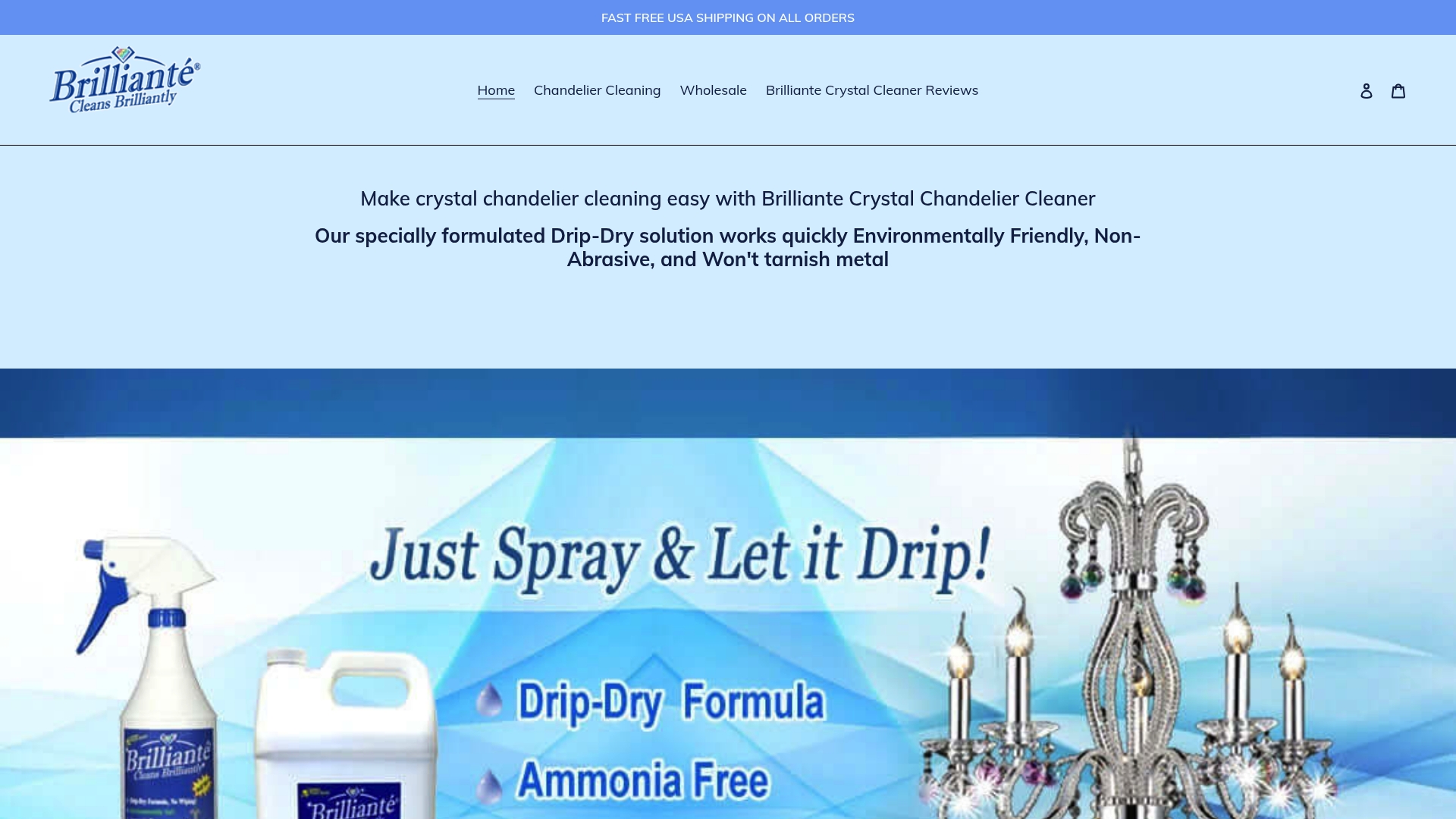
Brilliante’s specially formulated Drip-Dry solution is designed specifically for crystal chandeliers. You simply spray it on and let it do the work. No wiping, no ladder gymnastics, no risk of scratching. It’s non-abrasive, environmentally friendly, and safe for metal hardware so your chandelier stays as polished as the day you hung it. Proudly made in the USA and rated number one by hundreds of satisfied customers, Brilliante takes the stress out of chandelier cleaning so your fixture can do what it was built to do: fill your home with light and beauty.
Frequently asked questions
How can I tell if my chandelier is made of crystal or glass?
Look for prismatic rainbow effects and intense sparkle cast on nearby walls and ceilings. According to lead crystal vs glass composition differences, crystal has a refractive index of 1.56 to 1.70, which produces vivid color play that glass with its 1.50 to 1.52 index simply cannot match.
Is crystal harder to clean than glass?
Crystal requires gentler, purpose-made cleaning methods to protect its brilliant surface, while glass can handle standard cleaning techniques with less risk. Using the wrong product on crystal can cause cloudiness that permanently reduces sparkle.
Why does crystal sparkle more than glass?
Crystal bends light at a steeper angle due to its higher refractive index, which separates white light into its color components and creates those vivid rainbow spectrums. The prismatic rainbow effects are a direct result of that material property, not just the way pieces are cut.
Do all crystals contain lead?
Not all crystal contains lead. Traditional lead crystal uses lead oxide to achieve its optical properties, but modern crystal often uses barium, zinc, or other minerals to create similar brilliance without the health concerns associated with lead.
Will using the wrong cleaner damage my chandelier?
Harsh chemicals, especially ammonia-based sprays, can cloud or chemically etch crystal surfaces over time, permanently reducing brilliance. Always use a cleaner formulated specifically for the material you’re working with to protect your fixture and keep it performing at its best.