
Lead crystal vs glass: choose right for your home decor
TL;DR:
- Lead crystal differs from glass by containing at least 24% lead oxide, making it denser, softer, and more brilliant. It refracts light into rainbows, produces a sustained ringing sound when tapped, and allows intricate cutting, but requires gentle cleaning and careful handling. Testing weight, sound, cut quality, and UV glow helps identify high-lead crystal at home for informed purchasing decisions.
Walk into any lighting showroom or antique market and you’ll find stunning chandeliers and decorative pieces labeled “crystal” sitting right next to items that are simply glass. Most buyers assume the difference is just about price. It isn’t. The gap between lead crystal and glass goes deeper than the price tag, touching everything from the way light dances across your ceiling to how you clean and protect your pieces for years to come. This guide breaks down exactly what sets these two materials apart, gives you practical tests to use at home, and helps you make a confident, informed choice.
Key Takeaways
| Point | Details |
|---|---|
| Crystal sparkles more | Lead crystal refracts light better, giving chandeliers and decor more brilliance than plain glass. |
| Crystal is softer and heavier | It’s easier to cut into intricate shapes, but scratches more easily and weighs more than glass. |
| Sound is a giveaway | Tap real crystal to hear a sustained, bell-like ring—glass sounds dull and short. |
| Maintenance matters | Crystal and glass require different care—gentle cleaning preserves sparkle and prevents damage. |
| Test at home | Simple tests for weight, ring, and clarity can help you identify genuine lead crystal from standard glass. |
What makes lead crystal different from glass?
The distinction starts at the molecular level, but don’t worry, you don’t need a chemistry degree to understand it. Standard soda-lime glass is made primarily from silica, soda ash, and limestone. Lead crystal, on the other hand, swaps out the calcium oxide for lead oxide. According to lead crystal composition research, lead crystal contains at least 24% lead oxide (PbO), replacing calcium oxide found in standard soda-lime glass. That single substitution changes everything about how the material looks, sounds, and behaves.
Higher lead content makes the material denser and much more refractive. Refraction is simply the way light bends when it enters a material, and a higher refractive index means the material bends light more dramatically. More bending means more brilliance, more prisms, and more of that iconic sparkle that makes crystal chandeliers so breathtaking. You can learn more about what is lead crystal and why it matters for elegant chandeliers if you want to go deeper on the material itself.
Lead content also makes the material softer and more workable. Artisans can cut incredibly intricate facets into lead crystal that would be far more difficult to achieve in standard glass. This is why antique crystal pieces often feature such elaborate geometric patterns. The density and softness work together to make the final product both more beautiful and, frankly, more demanding to care for.
Here’s a quick breakdown of the core composition differences:
| Property | Soda-lime glass | Lead crystal (24%+ PbO) |
|---|---|---|
| Primary modifier | Calcium oxide | Lead oxide (PbO) |
| Density | ~2.5 g/cm³ | ~3.0 g/cm³ or higher |
| Hardness | Higher (harder) | Lower (softer, easier to cut) |
| Brilliance | Moderate | High |
| Workability | Less intricate | Highly intricate cuts possible |
Key characteristics that define lead crystal for decorative use:
- Density: Noticeably heavier than glass of the same size
- Workability: Accepts deep, precise cuts for facets and patterns
- Brilliance: Refracts light into vivid rainbow prisms
- Sound: Produces a sustained, musical ring when lightly tapped
- Clarity: Exceptional optical clarity with minimal distortion
Pro Tip: When shopping for chandelier parts or replacement drops, always ask specifically for the PbO percentage. A piece labeled “crystal” legally only needs to contain some lead oxide, but the real sparkle starts at 24% and gets even better above 30%.
Comparing the sparkle: Light, brilliance, and sound
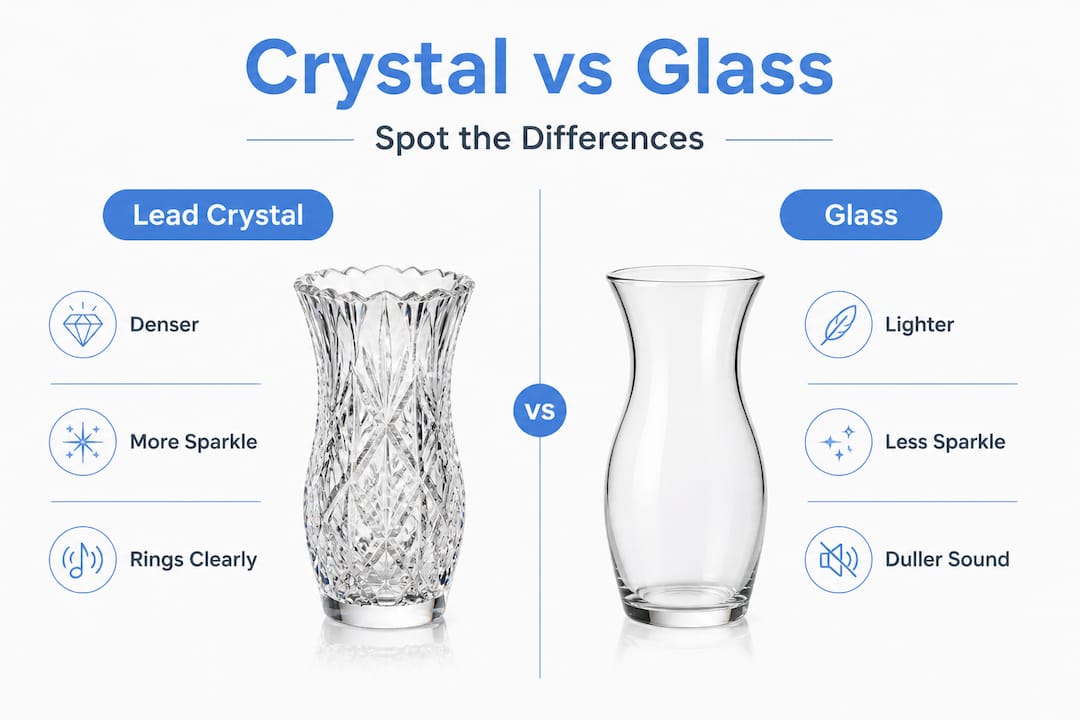
Now that you understand the chemistry, let’s talk about what you actually notice when you walk into a room. The most dramatic difference between lead crystal and regular glass is how each material handles light. Regular soda-lime glass has a refractive index of 1.50 to 1.52, while lead crystal ranges from 1.56 to 1.70 or higher depending on PbO content. That gap might sound small in numbers, but the visual effect is enormous.
Think of it this way: soda-lime glass will reflect light and let it pass through reasonably well. Lead crystal actively breaks white light into its component colors, scattering tiny rainbows across your walls and ceiling. This is the effect you see in high-end chandeliers, where a single source of light seems to multiply into a hundred points of color and shine. The higher the lead content, the more intense this effect. If you want to understand how this difference for chandeliers plays out in real lighting design, the impact on room ambiance is significant and worth understanding before you invest.
The sound test is one of the most reliable non-destructive ways to tell the two materials apart. Lead crystal produces a sustained bell-like ring when lightly tapped, while glass produces a short, dull thud due to its higher elasticity and lower damping properties. Gently tap the rim of a wine glass or a chandelier drop with your fingernail. If it sings and holds the note for a moment, you’re likely holding crystal. If the sound dies almost immediately, it’s almost certainly standard glass.
“The ring test is the quickest way to feel the difference. Crystal wants to sing. Glass just taps back.”
Here’s how these properties compare across the most important visual and sensory categories:
| Category | Regular glass | Lead crystal |
|---|---|---|
| Refractive index | 1.50 to 1.52 | 1.56 to 1.70+ |
| Light behavior | Reflects and transmits | Refracts and disperses color |
| Sound when tapped | Short, dull sound | Sustained, bell-like ring |
| Appearance | Clear but flat | Brilliant, prismatic sparkle |
| Visual weight | Appears lighter | Appears richer and deeper |
For a chandelier hanging in a dining room or entryway, this difference in light behavior is not subtle. A glass chandelier illuminates the space. A lead crystal chandelier transforms it.
Durability and care: Is one easier to live with?
Here’s where things get practical. Lead crystal is softer than regular glass, which is great for artisans cutting facets but not ideal if you’re rough with your decorative items. Lead crystal is more prone to scratching due to its lower hardness, while standard glass is harder and more resistant to surface damage. This matters when you think about how you handle, clean, and store these pieces over years of daily living.
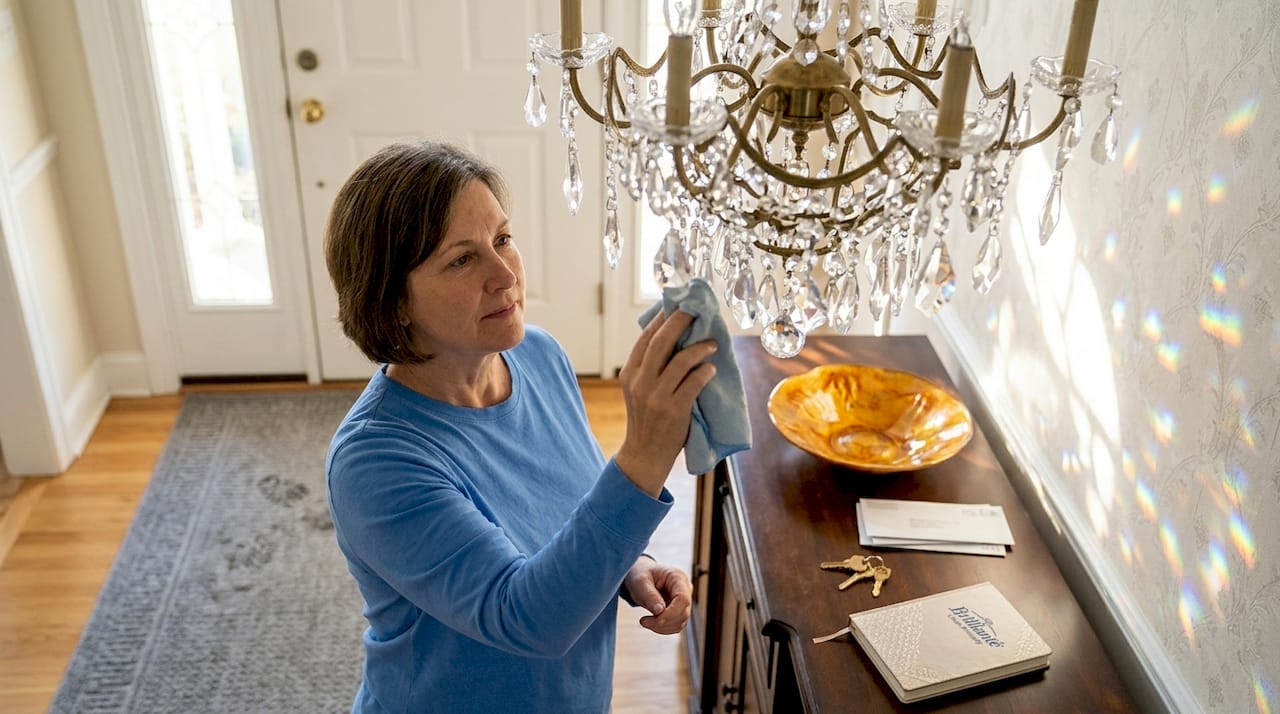
Crystal’s greater density also means weight. A crystal chandelier with dozens of drops can weigh significantly more than a comparable glass fixture. This affects ceiling mounting requirements, the strength of the hardware you use, and even how much the fixture sways or vibrates if you live in a region with occasional seismic activity. Always check your ceiling box’s weight rating before installing a crystal chandelier.
For cleaning, the softness of lead crystal means you should never use abrasive cleaners, rough cloths, or harsh chemical solvents. Regular glass cleaning sprays often contain ammonia or other chemicals that can cloud crystal and dull its facets over time. Proper lead crystal care means using gentle, specialized solutions. Similarly, if you own a mixed-material piece with marble accents or stone decorative elements nearby, knowing how to clean marble accessories properly prevents cross-contamination of cleaners.
Practical maintenance considerations for both materials:
- Lead crystal: Clean with a non-abrasive, pH-neutral crystal cleaner; never use rough cloths; store away from items that could scratch it
- Regular glass: More tolerant of mild glass cleaners but still avoid abrasives; less prone to scratching but can still cloud with the wrong products
- Both materials: Avoid extreme temperature changes; do not soak in very hot water; dust regularly to prevent grime buildup that dulls sparkle
- Chandelier-specific: Turn off the fixture and let bulbs cool before cleaning; always clean in place when possible to avoid dropping pieces
The best approach to clean and preserve chandeliers made of either material is a consistent routine rather than an intense annual scrub. Dust monthly, deep clean seasonally, and your piece will maintain its brilliance for decades.
Pro Tip: Lead crystal can develop a gray haze after repeated contact with hard water. This is calcium buildup from tap water mineral deposits, not permanent damage. A quality crystal cleaner dissolves this buildup without scratching.
How to tell lead crystal from glass at home
Ready to test what you already own? You don’t need any special equipment. These four methods work in your living room or at an antique shop without damaging the piece.
Step-by-step identification guide:
- The weight test. Hold the piece and compare it to what you’d expect from its size. Lead crystal is noticeably denser. A small decorative pendant that feels surprisingly heavy is a good sign of high lead content.
- The ring test. Gently tap the rim or body of the piece with your fingernail. Lead crystal will ring with a clear, sustained tone for at least one or two seconds. Standard glass gives a flat, short click.
- The clarity and cut test. Look closely at any cut facets. Lead crystal allows artisans to create sharp, deep, precise cuts with well-defined edges. Glass cuts tend to be shallower and less crisp.
- The UV light test. Under an ultraviolet (black light) flashlight, lead crystal glows with a subtle blue-white luminescence. Standard glass does not react the same way. This is one of the most reliable tests for identifying high-lead content.
Additional visual clues to watch for:
- Thickness: Crystal pieces often have thinner walls because the material’s higher clarity compensates for less bulk
- Color depth: True lead crystal appears colorless with exceptional depth; standard glass can have a faint greenish or gray tint
- Prismatic effects: Hold the piece near a light source. Crystal will throw rainbow prisms visibly; glass will not
- Lead percentage matters: Higher PbO content above 30% maximizes sparkle but also increases leaching risk; the 24% threshold balances optical properties with safety
If you want a complete guide to tell crystal from glass at home, the weight and ring tests together will get you the right answer almost every time. And if you’re assessing stemware or drinking glasses as part of a larger decorating plan, understanding crystal vs glass wine glasses will help you match your tabletop to your lighting fixtures for a cohesive interior.
Our take: Choosing beauty, value, and peace of mind
After spending years helping homeowners care for their chandeliers and decorative pieces, we’ve noticed a pattern. Most people spend a lot of time choosing the look they want and very little time thinking about what owning that piece actually requires day to day. Then reality sets in at the first cleaning session.
Here’s the honest truth: lead crystal is objectively more beautiful in the right light. Nothing else throws rainbows around your dining room the way a well-cut lead crystal chandelier does. The brilliance is real, it’s earned through physics and craftsmanship, and it’s worth paying for if that visual experience matters to you. But it also needs more thoughtful handling. The same softness that lets artisans cut those gorgeous facets means your piece will scratch if you wipe it down with the wrong cloth or spray it with a harsh cleaner.
What most buyers overlook is that the investment doesn’t end at purchase. A stunning crystal chandelier that gets cleaned improperly twice a year will look worse than a glass fixture that’s maintained consistently. The material is only as good as the care behind it. We genuinely believe that matching your choice to your lifestyle is more important than choosing the most expensive option. If you travel often and rarely maintain your fixtures, a high-quality glass piece might serve you better than a 30% lead crystal chandelier you can’t keep clean.
When you’re ready to think through the full picture, our guide on how to choose and care for chandeliers walks through both the aesthetic and practical sides of the decision together. The goal is a piece you love and can actually maintain with confidence.
Enhance your crystal and glass decor
When you’ve selected the perfect chandelier or decorative piece, keeping it brilliant over time is what separates a stunning centerpiece from a dusty fixture you stop noticing.
Brilliante Crystal Chandelier Cleaner makes that ongoing care simple and effective. Our specially formulated Drip-Dry solution is proudly made in the USA and designed specifically for crystal and glass surfaces. Just spray it on and let it drip dry, no wiping, no scrubbing, no risk of scratching delicate facets. It’s environmentally friendly, non-abrasive, and won’t tarnish your metal fixtures. Whether you own lead crystal drops or high-quality glass pendants, Brilliante keeps them looking showroom-fresh year-round. Rated number one by hundreds of satisfied customers, it’s the maintenance step your beautiful piece deserves. Visit brilliantecrystalcleaner.com to learn more and order today.
Frequently asked questions
Does lead crystal pose health risks if used as tableware?
Prolonged food or drink storage in lead crystal can increase lead leaching, but leaching risk increases with PbO above 30%, so brief use such as serving wine carries minimal risk for most people.
Why is lead crystal more expensive than glass?
Lead crystal requires skilled artisans to cut intricate facets, and because the material is softer and more workable than glass, that craftsmanship takes more time, labor, and skill to execute correctly.
How can I distinguish crystal from glass without damaging the item?
Check the weight for noticeable density, then try the ring test: lead crystal rings like a bell while glass gives a flat, quick sound, and look for sharp, deep facet cuts as a visual confirmation.
Will sunlight damage my lead crystal chandelier?
Direct, prolonged sunlight won’t shatter either material, but both crystal and glass can accumulate grime and develop a dull film over time, so regular dusting and periodic cleaning protect their long-term brilliance.
Is it safe to clean lead crystal with regular household glass cleaner?
Regular glass cleaners often contain ammonia or harsh detergents that can cloud lead crystal’s surface and dull its facets over time, so a specialized crystal cleaner formulated for delicate surfaces is always the safer and more effective choice.