
Energy Efficient Home Design: Save $1,700 Annually
Rising energy bills keep climbing, but what if your home could slash those costs by thousands each year? Recent building code updates demonstrate that energy efficient home design can save homeowners an average of $1,700 annually while cutting energy consumption by up to 30%. This guide explores proven strategies, financial incentives, cutting edge technologies, and practical steps to transform your home into a cost saving, environmentally friendly space that delivers comfort without the hefty utility price tag.
Key Takeaways
| Point | Details |
|---|---|
| Energy Savings Potential | Efficient homes reduce energy use by up to 30%, dramatically lowering monthly utility bills through smart design and technology integration. |
| Financial Incentives Available | Federal tax credits cover up to 30% of improvement costs (max $3,200 annually), with new builds eligible for up to $5,000 in credits. |
| Building Code Impact | Oregon’s updated codes improve efficiency by 27%, translating directly to $1,700 average annual savings for homeowners. |
| Technology and Behavior Balance | Combining heat pumps, smart thermostats, and LED lighting with conscious energy habits maximizes savings beyond equipment alone. |
| Envelope vs Appliance Priority | Building envelope improvements often deliver greater cost effective savings than simply upgrading appliances. |
Understanding Energy Efficient Home Design
Energy efficiency means using advanced materials and thoughtful design to maintain comfort while consuming less power. This differs from energy conservation, which focuses on behavioral cutbacks. Understanding this distinction helps homeowners make informed decisions about improvements that genuinely reduce consumption without sacrificing lifestyle quality.
Historically, energy efficiency has been a powerhouse for sustainability. Since 1950, it contributed to 67% of total U.S. energy demand savings, avoiding approximately 82% of global carbon emissions reductions between 2010 and 2022. These numbers reveal efficiency as the most practical tool for both environmental responsibility and economic benefit.
Modern energy efficient building technologies like high performance insulation, low emissivity windows, and LED lighting can reduce household energy consumption by up to 30%. These technologies work together as a system, creating homes that naturally maintain comfortable temperatures while using minimal heating and cooling energy. The investment in quality materials pays dividends through decades of reduced utility costs.
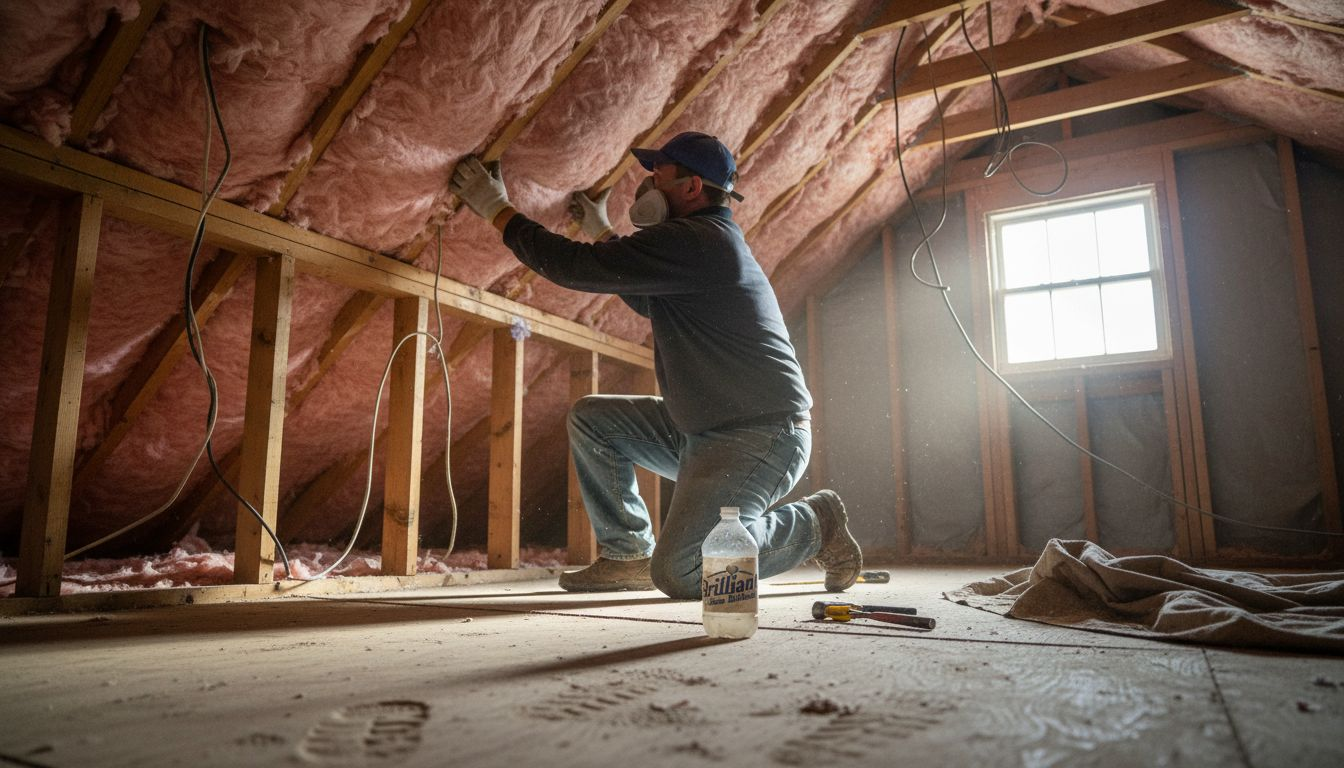
Energy efficient design balances environmental stewardship with financial pragmatism. Homeowners benefit from lower bills while contributing to broader carbon reduction goals. Modern home lighting trends reflect this shift toward efficiency without compromising aesthetics or functionality.
Key components of energy efficient home design include:
- Building envelope: Insulation, windows, doors, and air sealing that minimize heat transfer
- Mechanical systems: High efficiency HVAC, water heaters, and ventilation equipment
- Lighting and appliances: LED fixtures and ENERGY STAR certified products
- Smart controls: Programmable thermostats and home automation systems
- Behavioral practices: Conscious energy usage patterns that complement technology
- Regulatory compliance: Meeting or exceeding current building codes and standards
Government Incentives and Tax Credits for Homeowners
Federal and state programs dramatically reduce the financial barrier to energy efficient improvements. The Energy Efficient Home Improvement Credit allows homeowners to claim up to 30% of qualified improvement costs, with annual caps reaching $3,200 until 2025. This substantial credit applies to windows, heat pumps, insulation, and other envelope upgrades that meet efficiency standards.
For new construction, the new energy efficient home credit provides incentives up to $5,000 for qualifying homes built to high efficiency standards. This credit rewards builders and buyers who prioritize energy performance from the ground up, making newly constructed efficient homes more financially accessible.
Qualified improvements typically include exterior doors, windows and skylights, insulation materials, air sealing equipment, heat pumps for heating and cooling, heat pump water heaters, biomass stoves, and home energy audits. Each category has specific efficiency requirements that products must meet to qualify for credits.
Homeowner eligibility generally requires that improvements be made to your primary residence. Research both federal programs and state or local incentives, as regional utilities and governments often provide additional rebates and financing options. Some states offer property tax exemptions for renewable energy systems, while utilities provide cash back for specific equipment upgrades.
Top federal incentives for 2024 and 2025:
- 30% tax credit on windows and doors (annual cap $600)
- 30% credit on insulation and air sealing (annual cap $1,200)
- 30% credit on heat pumps and biomass stoves (annual cap $2,000)
- $150 credit for qualified home energy audits
- Up to $5,000 credit for certified new energy efficient homes
- Credits apply to labor costs for installation in addition to equipment
These incentives transform expensive upgrades into manageable investments. A $10,000 heat pump installation becomes $7,000 after credits, while improved comfort and lower bills provide ongoing returns. The financial math strongly favors action, especially when incentives combine with energy savings.
Technological Innovations Driving Energy Efficiency
Heat pumps represent a quantum leap in home climate control. These systems can be three times more efficient than traditional electric heaters while providing both heating and cooling capability. By moving heat rather than generating it through combustion or resistance, heat pumps achieve efficiency ratios that seemed impossible a generation ago.
High performance insulation and low emissivity windows form the foundation of the building envelope. Quality insulation in walls, attics, and foundations prevents thermal bridging, while low E windows reflect heat back into rooms during winter and block solar heat gain in summer. These passive improvements require no energy to operate yet deliver continuous savings.
LED lighting uses up to 90% less energy than incandescent bulbs and lasts at least 15 times longer. This simple upgrade offers immediate returns through reduced electricity consumption and nearly eliminated replacement costs. Modern LEDs provide excellent color rendering and dimming capability, making them superior to older technologies in every measurable way.
Smart thermostats and home automation reduce heating and cooling energy use by approximately 10 to 15% through intelligent scheduling and learning. These devices adapt to occupancy patterns, weather forecasts, and user preferences to optimize comfort while minimizing waste. Remote control via smartphone apps adds convenience while enabling energy conscious decisions from anywhere.
Energy resilience and passive survivability gain importance as climate patterns shift. Homes with superior envelopes maintain safe temperatures longer during power outages, protecting occupants and preventing pipe freezing. This resilience provides security beyond monthly utility savings, offering peace of mind during extreme weather events.
Key technologies transforming home efficiency:
- Air source heat pumps for heating, cooling, and domestic hot water
- Spray foam and rigid board insulation for superior thermal performance
- Triple pane windows with argon or krypton gas fills
- Smart thermostats with occupancy sensors and weather integration
- Whole home energy monitoring systems providing real time consumption data
- Energy recovery ventilators maintaining indoor air quality efficiently
Pro tip: Combine envelope upgrades with smart technology for maximum impact. Insulation and windows reduce the energy needed, while smart controls optimize what remains. This one two approach delivers savings that exceed either strategy alone.
New Building Codes and Their Impact
The 2024 International Energy Conservation Code improves residential energy efficiency by about 7% on average compared to previous standards. This update allows builder flexibility for cost effective measures rather than mandating specific technologies, encouraging innovation while ensuring measurable efficiency gains across new construction.
Oregon’s updated energy code demonstrates the real world impact of progressive standards. The state’s new requirements increase home efficiency by 27%, saving homeowners $1,700 annually on utility bills. This case study proves that ambitious codes deliver tangible economic benefits while reducing environmental impact at scale.
New codes offer builders multiple compliance paths. Prescriptive approaches specify minimum insulation values and equipment efficiencies, while performance based paths allow trade offs as long as overall energy consumption meets targets. This flexibility accommodates regional climate differences, local material availability, and builder expertise.
Implications extend beyond new construction. Homeowners considering additions or major renovations often trigger code compliance requirements for affected areas. Understanding current standards helps plan projects that meet regulations while maximizing efficiency gains. Some jurisdictions offer expedited permitting for projects exceeding minimum code requirements.
| Metric | Pre 2024 Code | 2024 IECC | Oregon 2026 Code |
|---|---|---|---|
| Efficiency Improvement | Baseline | 7% better | 27% better |
| Estimated Annual Savings | Baseline | $300 to $500 | $1,700 |
| Key Requirements | Basic insulation | Enhanced envelope | Advanced systems |
| Builder Flexibility | Limited options | Multiple paths | Performance based |
Key changes in the 2024 IECC affecting homeowners:
- Increased insulation requirements for walls, ceilings, and foundations
- Stricter air leakage limits requiring blower door testing
- Higher efficiency minimums for HVAC equipment and water heaters
- Enhanced fenestration standards for windows and doors
- Provisions for electric vehicle charging infrastructure in new homes
- Energy rating and labeling requirements for transparency
Codes promote sustainability while maintaining practical implementation. They establish minimum standards that protect homeowners from substandard construction, ensuring that energy efficiency becomes the default rather than an expensive option. As codes evolve, the baseline for acceptable home performance continues rising.
Common Misconceptions about Energy Efficient Homes
Many homeowners believe upgrading appliances produces the largest energy savings. However, building envelope improvements often yield greater and more cost effective results. A new refrigerator might save $50 annually, while proper attic insulation can save $500 by reducing heating and cooling loads that represent the majority of home energy consumption.
Another myth suggests energy efficiency automatically guarantees substantial savings without lifestyle adjustment. The rebound effect causes some saved energy to be offset by increased usage or comfort expectations. When heating becomes cheaper, people may raise thermostat settings, consuming 10 to 30% of potential savings. Behavioral awareness remains essential for realizing full benefits.
Some believe energy efficient lighting costs too much upfront. LEDs now cost less than $2 per bulb in many cases, and their 90% energy savings plus 15 year lifespan create immediate positive returns. The payback period typically runs under one year, making lighting the easiest and most profitable efficiency upgrade available to any homeowner.
Top misconceptions and realities:
- Myth: New appliances save the most energy; Reality: Envelope improvements typically deliver greater savings per dollar invested
- Myth: Efficiency upgrades alone guarantee maximum savings; Reality: Behavior changes must accompany technology to avoid rebound effects
- Myth: LED lighting remains prohibitively expensive; Reality: Low upfront costs and massive energy savings create rapid payback
- Myth: Energy efficient homes feel cold or uncomfortable; Reality: Better envelopes maintain more consistent temperatures and comfort
- Myth: Solar panels are necessary for efficiency; Reality: Envelope and system upgrades often provide better returns than renewable generation
- Myth: Efficiency only matters in extreme climates; Reality: Every climate benefits from reduced heating, cooling, or both
Pro tip: Integrate conscious energy habits with technology upgrades. Set thermostats to reasonable temperatures, use natural ventilation when weather permits, and turn off lights in unoccupied rooms. These zero cost behaviors compound technology savings for maximum impact.
Holistic design combining envelope, systems, and behavior delivers results exceeding any single approach. Homeowners who address all three areas report the highest satisfaction and largest utility bill reductions, while those focusing narrowly often feel disappointed by modest improvements.
Practical Strategies for Homeowners to Improve Energy Efficiency
Simple behavioral changes like adjusting thermostats, using natural ventilation, and managing window coverings can save up to 20% on energy bills without spending anything. Lowering heat by three degrees in winter and raising cooling by three degrees in summer makes minimal comfort impact but substantial cost difference over time.
Selecting ENERGY STAR certified products ensures appliances and equipment meet strict efficiency standards verified by independent testing. These products use less energy while delivering equal or superior performance compared to standard models. Certification simplifies decision making by identifying top performers across every category from refrigerators to furnaces.
Installing smart thermostats reduces heating and cooling energy use by 10 to 15% through automated scheduling and adaptive learning. These devices cost $100 to $250 installed but typically pay for themselves within two years through utility savings. Many utilities offer rebates that further reduce upfront costs.
Stepwise approach for maximum impact:
- Conduct a home energy assessment to identify biggest opportunities and establish baseline consumption
- Research available federal, state, and utility incentives applicable to your planned improvements
- Prioritize building envelope upgrades like insulation, air sealing, and window improvements first
- Upgrade HVAC systems and water heaters to high efficiency models when replacement becomes necessary
- Install smart thermostats and lighting controls to optimize system operation automatically
- Adopt energy conscious behaviors that complement technology upgrades for compounding savings
Simple changes delivering immediate results:
- Replace incandescent bulbs with LEDs throughout the home
- Install low flow showerheads and faucet aerators to reduce hot water consumption
- Use programmable power strips to eliminate phantom loads from electronics
- Seal obvious air leaks around windows, doors, and penetrations with caulk or weatherstripping
- Clean or replace HVAC filters monthly to maintain system efficiency
- Open curtains for passive solar gain in winter; close them to block heat in summer
Pro tip: Prioritize building envelope improvements for maximum cost effective impact in existing homes. Insulation and air sealing reduce the work your HVAC system must perform, allowing smaller, less expensive equipment to maintain comfort while using less energy. For those interested in minimalist lighting design, efficient fixtures can enhance aesthetics while cutting consumption.
Balance cost and impact by starting with quick payback measures like lighting and thermostats, then tackling larger envelope projects as budget permits. This staged approach maintains momentum through visible early results while building toward comprehensive efficiency over time.
Cost Benefit Framework: Retrofit vs New Builds
Evaluating retrofit improvements versus new construction requires analyzing upfront investment, available incentives, savings potential, and implementation complexity. Each approach offers distinct advantages depending on homeowner circumstances, timeline, and energy goals.
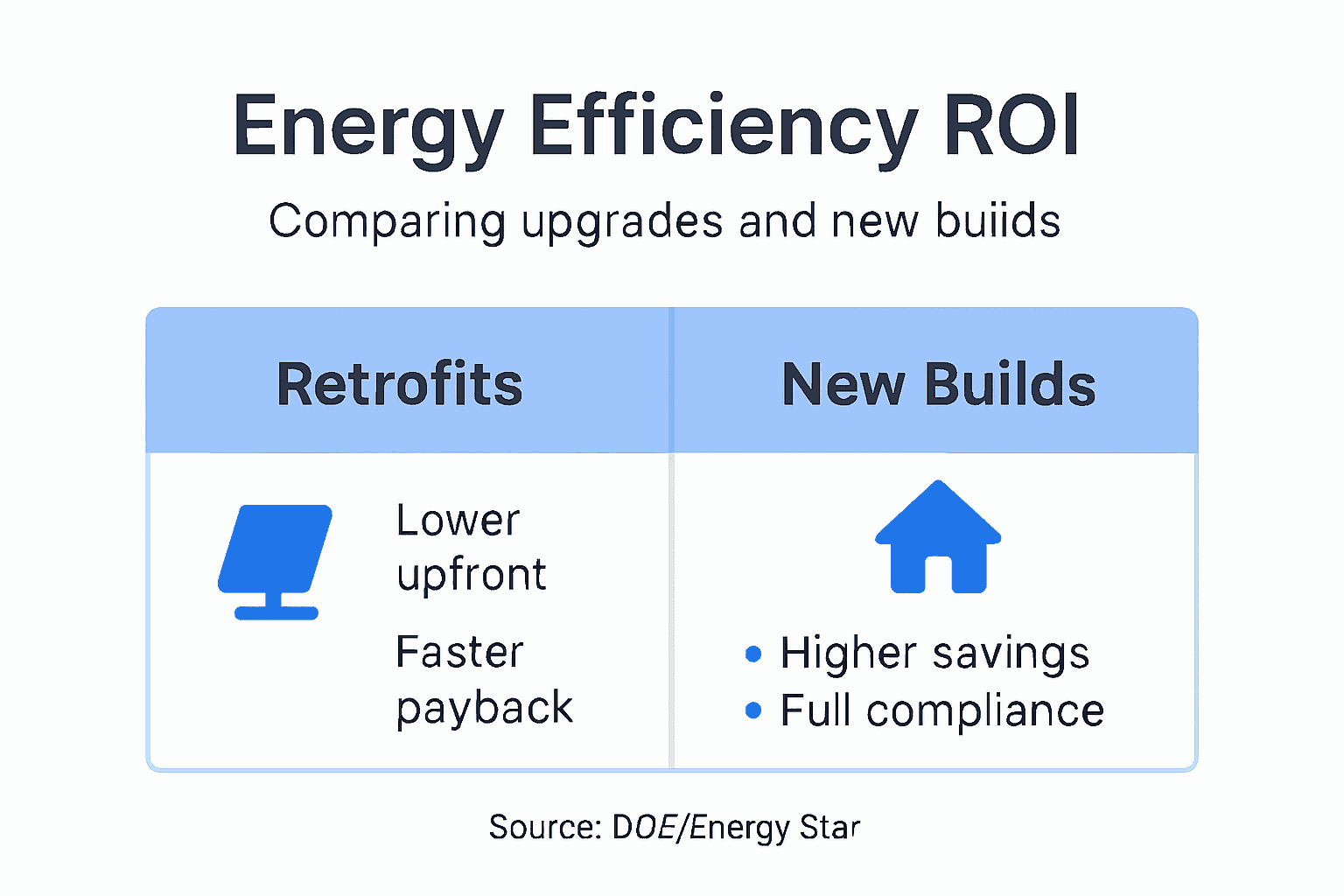
| Factor | Retrofit Improvements | New Energy Efficient Build |
|---|---|---|
| Upfront Cost | $5,000 to $25,000 typical | $250,000+ total construction |
| Federal Incentives | Up to $3,200 annual credit | Up to $5,000 one time credit |
| Energy Savings | 15% to 30% reduction | 30% to 50%+ vs standard code |
| Implementation Time | Weeks to months | 6 to 12 months construction |
| Design Flexibility | Limited by existing structure | Complete control over layout |
| Disruption Level | Moderate during work | High during build, none after |
Retrofits require less capital upfront but may achieve lower efficiency gains due to structural limitations. Existing homes have fixed orientations, window placements, and framing that constrain improvements. However, targeted envelope upgrades combined with system replacements deliver meaningful savings without the commitment and cost of new construction.
New builds allow holistic system integration from the foundation up. Optimal orientation for passive solar gain, advanced framing techniques, and continuous insulation create performance impossible to achieve through retrofitting. The tax credit structure recognizes this difference, offering larger one time incentives for certified new construction compared to annual caps on improvements.
Deciding factors for choosing your approach:
- Current home condition and remaining useful life of major systems
- Available capital and financing options for either path
- Timeline urgency and ability to manage construction or renovation
- Long term occupancy plans and expected return on investment period
- Personal energy goals and commitment to sustainability
- Local real estate market and comparable home values
Prioritization differs by strategy. Retrofits should address envelope first to reduce loads, then upgrade systems to efficiently serve reduced demand. New builds integrate advanced envelopes with right sized, high efficiency systems from day one, avoiding the oversized equipment common in standard construction.
Leveraging incentives maximizes return regardless of path. The 30% federal credit substantially reduces retrofit costs, while the $5,000 new home credit helps offset premium construction expenses. Combining federal programs with state and utility incentives creates compelling economics for either approach.
Summary and Next Steps for Energy Efficient Homeowners
Energy efficient home design delivers proven financial savings, enhanced comfort, and meaningful environmental impact. Recent code updates demonstrate that well designed homes can slash utility costs by $1,700 annually while reducing consumption by up to 30%, proving efficiency pays dividends year after year.
Government incentives remove financial barriers to improvement. Federal tax credits covering 30% of qualifying costs make envelope upgrades and system replacements accessible to more homeowners. New building codes ensure minimum efficiency standards continue rising, making energy performance the expectation rather than the exception.
Technology upgrades and behavior changes work synergistically. Heat pumps, smart thermostats, and LED lighting provide the tools, while conscious energy habits ensure those tools deliver maximum benefit. Homeowners who address both technology and behavior report the highest satisfaction and largest bill reductions.
Professional energy assessments identify specific opportunities in your home. Certified auditors use diagnostic equipment to measure air leakage, insulation effectiveness, and system performance. Their reports prioritize improvements by cost effectiveness, creating actionable roadmaps tailored to your situation and budget.
Recommended next steps for immediate action:
- Research federal, state, and utility incentives applicable to your improvements
- Schedule a professional home energy audit to identify priority opportunities
- Prioritize building envelope improvements for greatest cost effective impact
- Explore smart technology upgrades like thermostats and efficient lighting
- Monitor energy consumption to establish baselines and measure improvement results
- Stay informed about evolving codes and emerging technologies that increase options
Empowered decision making comes from understanding how envelope, systems, behavior, and incentives combine to create efficient, comfortable, affordable homes. The information in this guide provides the foundation for confident action toward a more sustainable living space that delivers value for decades.
Enhance Your Home’s Efficiency with Our Solutions
Transforming knowledge into action starts with the right products. Our website offers carefully selected energy efficient lighting and smart home solutions that align perfectly with the strategies outlined in this guide.
Explore energy efficient lighting options that reduce consumption by up to 90% compared to traditional bulbs. Discover minimalist lighting solutions combining efficiency with elegant design aesthetics. Shop smart home lighting with automation capabilities that optimize energy use automatically. Every product helps you implement the cost saving strategies discussed while enhancing your home’s beauty and functionality.
Frequently Asked Questions
What are the easiest first steps to make my home more energy efficient?
Start by replacing all incandescent bulbs with LEDs, which saves up to 90% on lighting energy immediately. Install a programmable or smart thermostat to optimize heating and cooling automatically. Seal obvious air leaks around windows and doors with weatherstripping or caulk, which costs little but prevents significant energy waste.
How long does it usually take to recoup the cost of energy efficient home upgrades?
Payback periods vary by improvement type. LED lighting pays back within one year, smart thermostats within two years, and insulation within three to seven years depending on climate and existing conditions. With federal tax credits covering 30% of costs, payback accelerates significantly for qualifying improvements.
Are there specific certifications I should look for when buying new efficient home appliances?
Look for the ENERGY STAR label, which identifies products meeting strict efficiency standards verified through independent testing. For new homes, LEED certification or participation in programs like ENERGY STAR Certified Homes indicates comprehensive efficiency exceeding code minimums. These certifications provide trusted third party verification of performance claims.
Do new building codes apply to existing homes or only new builds?
New codes primarily govern new construction and substantial renovations that require building permits. Existing homes generally aren’t required to upgrade unless significant work triggers code compliance in affected areas. However, adopting current code standards voluntarily when making improvements ensures your home achieves meaningful efficiency gains.
Can smart home devices really make a noticeable difference in my energy bills?
Yes, smart thermostats alone reduce heating and cooling costs by 10 to 15%, which typically represents $100 to $200 in annual savings. Smart lighting controls, automated shades, and whole home energy monitors provide additional savings through optimized operation and increased awareness. The cumulative effect creates noticeable bill reductions while improving convenience and comfort.