
Glass vs crystal chandeliers: care and cleaning guide
TL;DR:
- Crystal chandeliers are heavier, more brilliant, and require gentler cleaning than glass fixtures.
- Using the wrong cleaning products can cause permanent damage to crystal surfaces.
- Proper identification and maintenance extend the lifespan and preserve the beauty of chandeliers.
Many homeowners call every sparkling chandelier a “crystal” chandelier, but that single word covers two very different materials with genuinely different care needs. Using the wrong cleaning product or technique on the wrong material can leave permanent hazing, scratches, or tarnished metal fittings that no amount of polishing will fix. Understanding what your chandelier is actually made of is the first step toward keeping it brilliant for decades. This guide breaks down the real differences between glass and crystal, shows you how to identify what you own, and walks you through the safest maintenance approach for each.
Key Takeaways
| Point | Details |
|---|---|
| Glass vs crystal formula | Crystal for chandeliers contains at least 24 percent lead oxide, creating extra sparkle and weight compared to regular glass. |
| Cleaning matters | Matching your cleaning technique to your chandelier’s material protects shine and prevents costly damage. |
| Identify by look and feel | Crystal feels heavier, rings when tapped, and reflects more light than standard glass. |
| Maintenance impacts cost | Understanding your chandelier’s material helps you plan efficient cleaning routines and avoid expensive mistakes. |
What makes glass and crystal different?
The words “glass” and “crystal” feel interchangeable in everyday conversation, but they describe two distinct materials with different compositions, optical qualities, and physical properties. When you understand what each one actually is, smarter cleaning decisions follow naturally.
Glass is a non-crystalline, amorphous solid. It is made by melting silica (sand), soda ash, and limestone together at extremely high temperatures, then cooling the mixture quickly so it solidifies without forming a regular atomic structure. The result is a lightweight, relatively hard material that is resistant to scratching and holds its clarity well over time. Standard glass is also quite affordable, which is why many modern chandeliers use it as a cost-effective alternative to crystal.
Crystal, in the world of chandeliers and home decor, is a specific type of glass that contains lead oxide (PbO). Leaded crystal typically requires a minimum of 24% lead oxide by weight to carry the “crystal” designation under traditional definitions. That lead content is what sets it apart. It raises the material’s refractive index, meaning it bends and splits light at sharper angles, creating the signature rainbow sparkle you see in high-end chandeliers.
It is worth being clear: the “crystal” label used for chandeliers does not mean the material is a mineral crystal like quartz or calcite. It is still technically glass. The term “crystal” in interior design simply signals that lead oxide has been added to increase brilliance, weight, and optical richness. Not every sparkling chandelier pendant you see qualifies, and that confusion matters when it comes to cleaning glass vs crystal correctly.
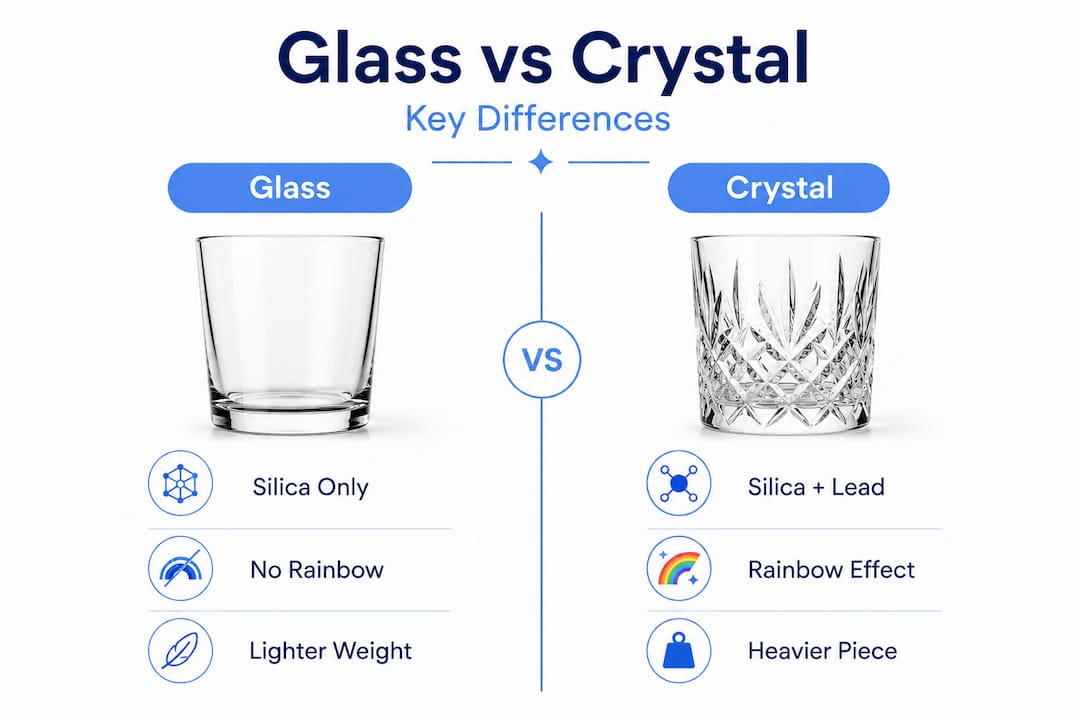
Here is a quick breakdown of how the base compositions compare:
| Property | Standard Glass | Leaded Crystal |
|---|---|---|
| Primary ingredient | Silica (SiO2) | Silica + lead oxide (PbO) |
| Lead oxide content | None or minimal | At least 24% by weight |
| Refractive index | ~1.5 | ~1.7 or higher |
| Weight | Lighter | Noticeably heavier |
| Hardness | Harder, scratch-resistant | Softer, more vulnerable |
| Brilliance | Moderate | High, rainbow-like sparkle |
The higher the lead content, the more light crystal refracts and the more brilliant it looks. But that softness is a real trade-off. Lead oxide makes the material easier to cut and engrave, which is why premium crystal chandeliers often feature intricate faceted patterns. It also makes the surface more prone to scratches and more vulnerable to harsh chemical cleaners.
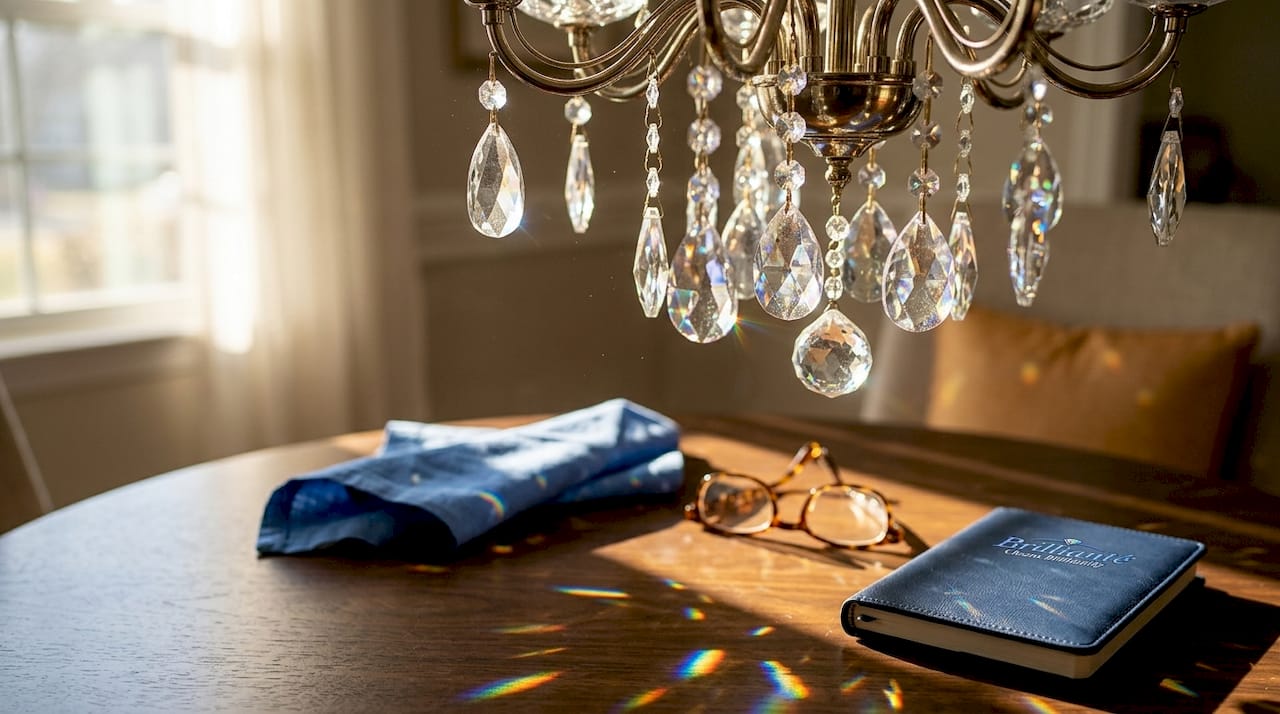
Pro Tip: Hold a pendant up to natural light. Leaded crystal will cast small rainbow patches on nearby walls. Standard glass will glow but won’t scatter rainbows the same way.
Modern “lead-free crystal” products also exist, using substitutes like barium oxide or zinc oxide to achieve similar refractive results without lead. These are better for the environment and still perform beautifully, but they fall into their own category for cleaning purposes since their softness levels vary by manufacturer.
Side-by-side comparison: Glass vs crystal chandeliers
With the definitions clear, it helps to see these differences side-by-side so you can spot them at home without any guesswork.
The most reliable way to identify your chandelier’s material without any tools is a combination of three simple tests: weight, sound, and light behavior. Pick up or gently touch a pendant. Crystal feels noticeably heavier for its size. Gently tap a pendant with your fingernail. Crystal produces a clear, ringing bell-like tone that sustains for a moment. Glass makes a dull, short “tink” sound. Finally, position a pendant in direct sunlight. Crystal breaks the light into distinct rainbow colors. Glass glows but does not produce the same colorful dispersion.
Here is the full feature-by-feature comparison:
| Feature | Glass chandeliers | Crystal chandeliers |
|---|---|---|
| Weight | Lighter | Heavier per piece |
| Sound when tapped | Short, dull click | Clear, ringing tone |
| Light dispersion | Glowing, soft | Rainbow scatter, brilliant |
| Price | Lower | Significantly higher |
| Scratch resistance | High | Lower (softer material) |
| Lead content | None or near zero | 24% PbO minimum |
| Cleaning sensitivity | More forgiving | Requires gentler products |
| Lifespan with care | Long | Long, but needs more attention |
| Common usage | Modern, budget fixtures | Luxury, heirloom, formal spaces |
Beyond the tests and the table, there are a few visual cues to look for on the fixture itself. Crystal chandeliers typically feature more precisely cut facets because the softer material is easier to shape into complex geometries. The edges on crystal pendants look sharper and more defined. Glass pendants tend to have smoother, less detailed edges. Also, check the price tag if you still have documentation. Crystal chandeliers generally cost two to five times more than comparable glass versions.
One more tell-tale sign: how a piece ages. Over several years without cleaning, crystal develops a distinctive milky film or haze from mineral deposits in water and dust. Glass stays clearer longer but can develop a duller, more uniform film. These aging patterns are worth noting because they also point you toward the right cleaning strategy.
You can use a chandelier cleaning checklist to track what material you have and how often each type of fixture needs attention. A regular schedule prevents the kind of stubborn buildup that turns a quick clean into a major project.
How differences affect care and cleaning
Knowing which material you have ensures you follow the right maintenance steps. The difference between glass and crystal cleaning is not just about product choice. It is about the entire approach, from the tools you reach for to the sequence you follow.
Why solution choice matters: Crystal’s softer surface scratches more easily than glass. That means abrasive cloths, rough sponges, or gritty cleaning products that would barely affect glass can leave permanent micro-scratches on crystal pendants. Those scratches scatter light unpredictably and dull the brilliant sparkle that makes crystal worth the price. For glass, you have a little more room to use standard household cleaners, though mild solutions are still preferred near metal fixtures.
Ammonia-based cleaners (found in many window cleaning products) and straight vinegar are two of the most common mistakes homeowners make. Both can corrode the metal frames and fittings that hold the pendants in place, leading to discoloration or pitting that is almost impossible to reverse.
“A practical maintenance approach for crystal is: turn power off, let bulbs cool, use gentle dusting and cleaning methods, avoid harsh chemicals on metal finishes, and dry thoroughly to prevent haze and water spots.”
Here is a safe, step-by-step cleaning sequence for leaded crystal chandeliers:
- Switch off the power at the wall switch and, ideally, at the breaker. Let the bulbs cool for at least 20 minutes.
- Lay a soft blanket or towels below the chandelier to catch any drips or fallen pendants.
- Dust lightly first using a clean, dry microfiber cloth or a soft natural-bristle brush. Remove loose particles before applying any liquid.
- Apply a specialty crystal cleaner designed to be non-abrasive and non-corrosive on metal. A drip-dry formula means you spray it on and let it do the work without wiping, which reduces the risk of scratching.
- Let it drip dry completely before restoring power. Any moisture left on metal connections can cause electrical issues or mineral spots.
- Inspect each pendant after drying for remaining haze. Repeat spot treatment if needed rather than soaking the entire fixture again.
For glass chandeliers, the process is similar but slightly more forgiving. You can use a gentle all-purpose cleaner diluted with water, wipe with a lint-free cloth, and dry with a second clean cloth. The key risk with glass is water spotting on the metal parts, so drying still matters.
Pro Tip: If your chandelier has both glass and crystal elements (some mixed designs do), always treat the whole fixture as crystal and use the gentler approach throughout.
Investing in the right crystal cleaning solutions from the start saves you from costly repairs or replacements later. The wrong product used once can create damage that takes professional restoration to fix.
Recognizing and upgrading your chandelier’s material
After understanding cleaning implications, you may want to take a closer look at your fixture and decide whether what you have is working for you.
Start by checking any documentation that came with the chandelier. Manufacturer labels, receipt descriptions, or model numbers can confirm the material. If that information is no longer available, use the tap test and light test described earlier. You can also feel the weight of a pendant relative to its size. If it feels surprisingly heavy for something so small, crystal is the likely answer.
Here are the key factors to think through before replacing or upgrading chandelier pieces:
- Budget: Crystal pendants cost significantly more per piece than glass replacements.
- Lifestyle fit: If you have young children, pets, or a high-traffic space, glass may actually be the more practical choice because it handles accidental contact better.
- Cleaning commitment: Crystal requires more frequent attention and gentler products. If your schedule does not allow for regular maintenance, glass will stay looking good with less effort.
- Aesthetic goals: Crystal creates a more formal, dramatic look. Glass suits contemporary, minimalist, or casual interiors just as well.
- Long-term value: Leaded crystal fixtures from reputable brands hold their value and can become heirlooms. Glass chandeliers are easier to replace when styles change.
There are genuine situations where glass outperforms crystal. Outdoor-adjacent spaces with humidity fluctuations, busy kitchens, or any room where grease and airborne particles are common can be harder on leaded crystal. Glass holds up with basic cleaning and does not develop the same haze from mineral deposits as quickly.
If you decide your fixture needs less effort rather than more beauty, a no wipe chandelier cleaner works well on both glass and crystal, making the decision less stressful regardless of which direction you go.
Why knowing your chandelier’s material matters more than ever
Here is something the home decor world does not say often enough: crystal is not automatically better than glass. It is different, and that difference comes with real responsibilities. Many homeowners inherit a chandelier, move into a home with one already installed, or pick up a fixture at an estate sale without any documentation. They assume it is crystal because it sparkles, and then they either over-clean it (causing scratches) or under-clean it (allowing mineral haze to set in). Both outcomes are avoidable.
We have seen firsthand that the right cleaning approach extends a chandelier’s life dramatically, regardless of whether it is glass or crystal. A well-maintained glass chandelier in good light can look stunning for twenty years. A crystal chandelier cleaned with the wrong product once can lose its characteristic brilliance permanently.
There is also a real issue with informed purchasing. People pay premium prices for “crystal” chandeliers without knowing that modern decorating trends have moved many manufacturers toward lead-free crystal or even high-quality glass marketed as crystal. That is not necessarily a problem, but it does mean your cleaning product choices need to match the actual material, not just the label on the box the fixture came in.
Our honest advice: identify your material, learn its specific vulnerabilities, and build a maintenance habit that fits your life. Understand your chandelier preservation insights so you can make decisions based on reality rather than assumption. Whether you own genuine leaded crystal, lead-free crystal, or beautifully crafted glass, the chandelier above your table deserves care that matches what it actually is.
Discover easy solutions for chandelier care
Ready to put these insights to work and make chandelier maintenance easier? Whether your fixture is glass or crystal, the right product makes all the difference in keeping it brilliant without the risk of damage.
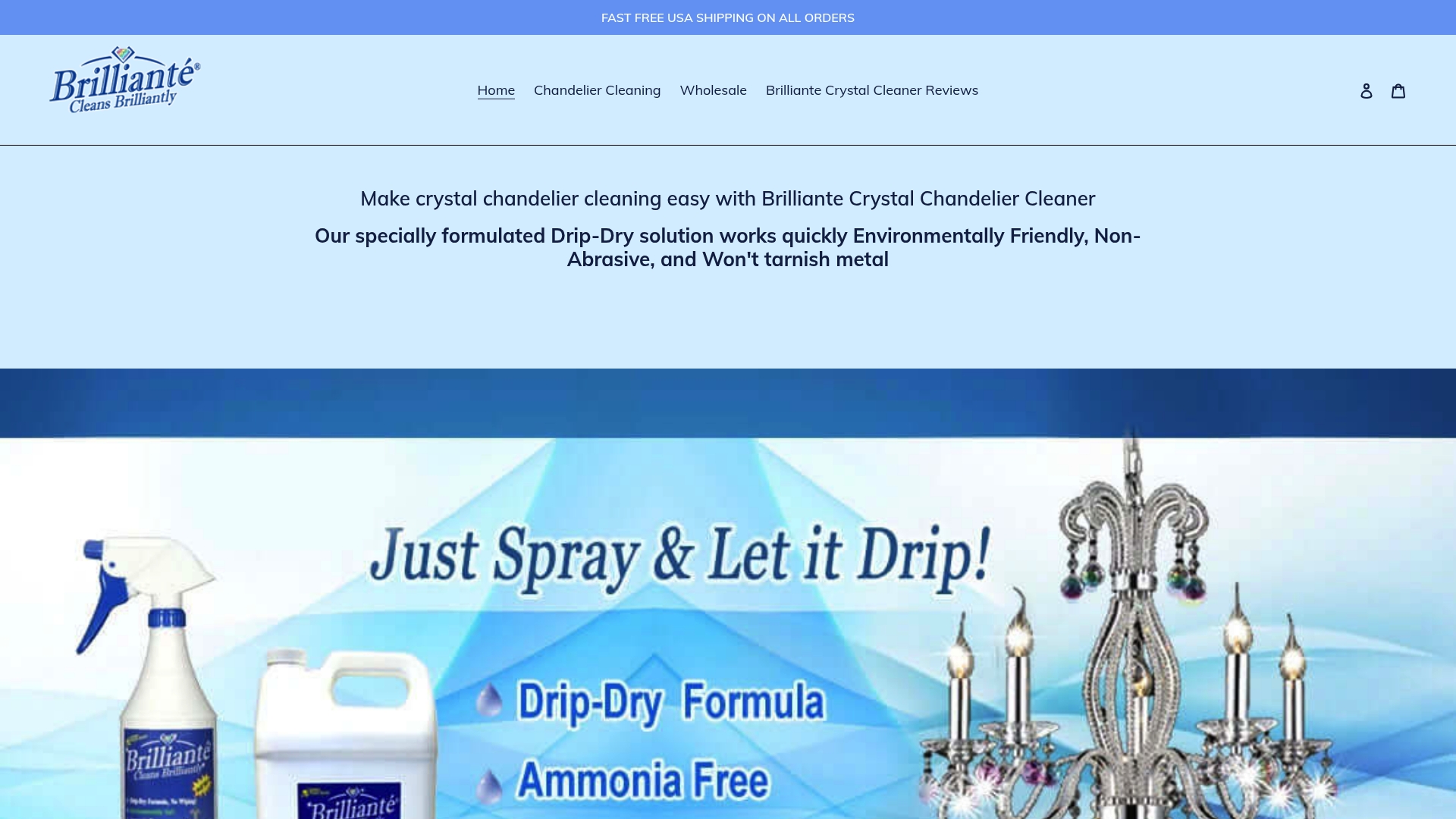
Brilliante Crystal Chandelier Cleaner is proudly made in the USA and specially formulated for exactly this kind of care. Our Drip-Dry solution requires no wiping, no disassembly, and no guesswork. Just spray it on and let it drip dry, leaving your pendants sparkling clean without scratching surfaces or tarnishing metal fittings. It is non-abrasive, environmentally friendly, and rated number one by hundreds of satisfied homeowners across the country. Visit brilliantecrystalcleaner.com to explore the full range of chandelier care solutions designed to make maintenance simple, safe, and effective for every type of fixture in your home.
Frequently asked questions
How can I tell if my chandelier is glass or crystal?
Crystal is usually heavier, more brilliant, and produces a clear ringing sound when gently tapped, while glass feels lighter and creates a shorter, duller sound. The lead-oxide content in crystal also gives it a distinctive rainbow light dispersion that standard glass cannot replicate.
Is leaded crystal safe for chandeliers in my home?
Yes, leaded crystal used in chandeliers poses no health risk during normal use because the lead oxide is locked into the glass structure and does not release into the air. You can enjoy and clean your fixture without concern.
What is the safest way to clean a crystal chandelier?
Always switch off power first and let bulbs cool completely before you begin. Avoid harsh chemicals like ammonia or vinegar on metal finishes, and dry the fixture thoroughly to prevent haze and water spots from forming.
Does crystal require different maintenance from glass?
Yes, crystal benefits from gentler, non-abrasive cleaners and more consistent drying after each clean to prevent mineral haze. Glass is more forgiving and can tolerate slightly less precise techniques, though mild products are still recommended near metal fittings.
Recommended
- Crystal vs glass: How to clean and preserve chandeliers
- Crystal vs Glass: How to Choose and Care for Chandeliers
- Crystal vs. Glass: How to Tell the Difference for Chandeliers
- Household cleaning checklist for crystal chandeliers 2026
- Marble lamp care instructions: keep luxury lighting pristine – Marmorique