
How to remove film from crystal chandeliers safely
Your crystal chandelier was once the crown jewel of the room, catching light and throwing it across every wall. Then, slowly, it went dull. A stubborn film settled in, and suddenly that brilliant sparkle was just a memory. The good news is that removing film from crystal chandeliers does not require professional help, harsh chemicals, or hours of frustrating scrubbing. With the right approach and the right supplies, you can restore that original brilliance safely, quickly, and without worrying about damaging delicate crystals or metal finishes.
Key Takeaways
| Point | Details |
|---|---|
| Identify film type | Knowing whether you’re dealing with dust, grease, or minerals helps choose the safest cleaning method. |
| Use safe supplies | Stick to distilled water and ammonia-free cleaners to protect crystals and finishes. |
| Follow gentle steps | Spray-and-drip techniques work well and prevent scratches or damage. |
| Avoid harsh chemicals | Never use vinegar or strong abrasives on crystal chandeliers. |
| Routine maintenance matters | Dust weekly and deep clean as needed to keep your chandelier sparkling year-round. |
Why film forms on crystal chandeliers
Understanding what you’re up against is the first step before tackling film removal. Crystal chandeliers are magnets for airborne particles, and the film that builds up is almost always a combination of household dust, grease, and mineral deposits. Each type sticks differently and responds to different cleaning approaches.
Here are the most common culprits:
- Household dust: Fine particles settle on crystal surfaces and bond with moisture in the air, forming a dull gray coating over time.
- Kitchen grease: Cooking releases microscopic oil droplets that travel through the air and coat nearby surfaces, including chandeliers above or near kitchen islands.
- Hard water minerals: Humidity carries dissolved calcium and magnesium, which leave a white, chalky residue when moisture evaporates.
- Smoke and candle soot: Even decorative candles nearby release carbon particles that cling to crystal and dull its surface.
As dust, grime, and mineral deposits accumulate, they scatter light instead of reflecting it cleanly, which is exactly why your chandelier loses that sharp, prismatic sparkle. Left too long, some mineral films can actually etch into coatings or cause metal parts to tarnish.
“A chandelier in a kitchen or dining room near cooking surfaces can accumulate grease film up to three times faster than one in a living room or entryway.”
Using harsh chemical cleaners to fight that film often makes things worse. Ammonia-based products can strip protective coatings on crystal, and abrasive scrubbing leaves micro-scratches that trap more dirt over time. That’s why environmentally friendly chandelier care is not just a trend. It’s genuinely the smarter, safer approach for your chandelier and your home.
What you need: Eco-friendly, non-abrasive supplies
With the causes explained, it’s time to gather the right materials for safe removal. You do not need a cabinet full of specialty products. A few carefully chosen supplies will handle almost every type of film without putting your chandelier at risk.

| Supply | Purpose | Why it matters |
|---|---|---|
| Distilled water | Mixing cleaning solution | Prevents new mineral spots |
| Mild dish soap | Cuts grease and grime | Gentle on crystal and metal |
| Isopropyl alcohol | Dissolves stubborn film | Evaporates cleanly, no residue |
| Spray bottle | Applying solution evenly | Controls coverage and waste |
| Lint-free microfiber cloths | Wiping and drying | No scratching, no lint left behind |
| Cotton gloves | Handling crystals | Prevents new fingerprint oils |
| Drop cloths or plastic sheeting | Protecting floors and furniture | Catches drips during cleaning |
| Stable stepladder | Safe access | Reduces risk of falls |
For a reliable homemade solution, a 4:1 ratio of distilled water to isopropyl alcohol (or mild dish soap) is non-abrasive and effective on most film types. Always use distilled water, never tap water, because tap water redeposits the very minerals you’re trying to remove.
If you prefer a ready-to-use option, Brilliante Crystal Cleaner is an environmentally friendly, non-abrasive, ammonia-free drip-dry spray made specifically for chandeliers. No mixing, no measuring, no guesswork.
Pro Tip: Check your eco-friendly cleaning solutions before you start. Anything containing ammonia, bleach, or abrasive particles should stay off your chandelier entirely. Even some “glass cleaners” marketed for windows can damage crystal coatings.
For Swarovski crystal care, the brand specifically recommends avoiding harsh chemicals and using only soft, lint-free cloths, which aligns perfectly with the non-abrasive approach outlined here.
Step-by-step: Safely removing film with no damage
Now that you have your tools, follow these clear steps for best results.
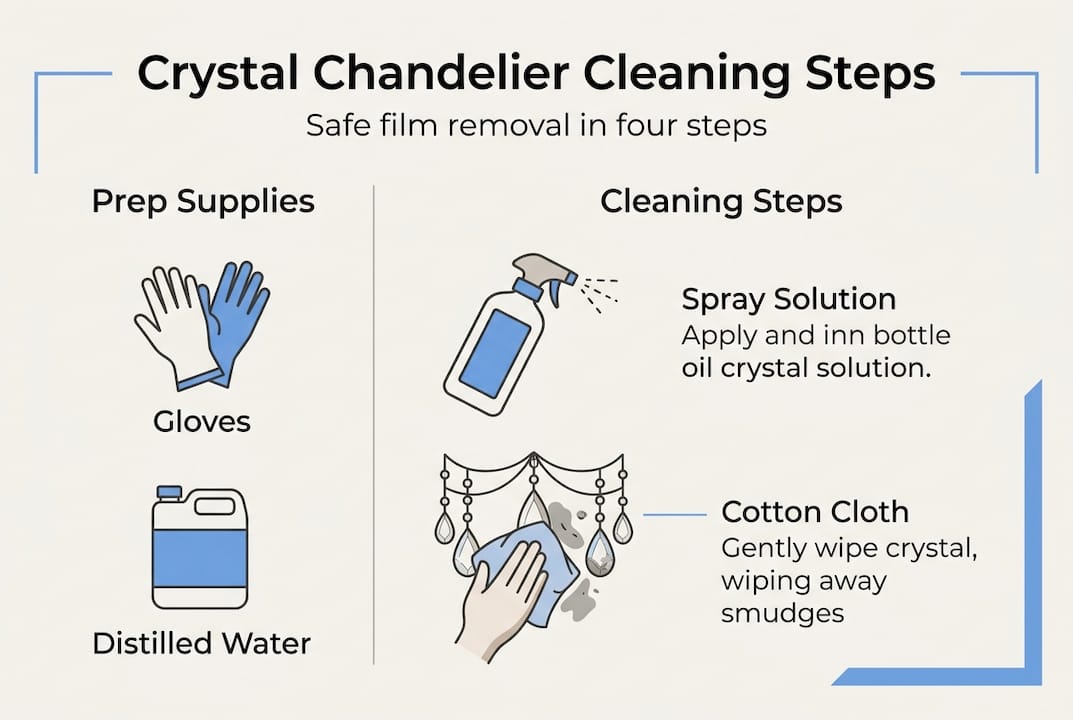
- Turn off the power. Switch off the chandelier at the wall and, if possible, at the breaker. Let bulbs cool completely for at least 30 minutes before you begin.
- Protect the area below. Lay drop cloths or plastic sheeting on the floor and over any nearby furniture. Cleaning solution will drip, and you want it landing on plastic, not hardwood.
- Put on your cotton gloves. Every time you touch a crystal with bare hands, you leave behind skin oils that create new smudges. Gloves are a simple habit that saves extra work later.
- Mix or prepare your cleaning solution. For a DIY mix, combine four parts distilled water with one part isopropyl alcohol in a spray bottle. Shake gently. If you’re using a ready-made spray, just shake the bottle.
- Spray the crystals evenly. Work from the top of the chandelier downward, covering each crystal with a light, even mist. Do not soak the fixture or spray directly onto light sockets or wiring.
- Let the solution drip dry. The spray-and-drip method is ideal for homeowners because it requires no disassembly and minimizes the risk of scratching or mishandling crystals. The solution lifts the film and carries it down as it drips off.
- Wipe only if needed. For any spots that remain after drying, use a lint-free cloth dampened with your solution and wipe gently in one direction. Never scrub in circles.
- Inspect under good light. Use a flashlight or portable lamp to check each section. Film often hides in the joints where crystals connect to metal pins.
Pro Tip: Always use distilled water and wear cotton gloves throughout the process. These two habits alone eliminate the most common causes of post-cleaning spots and smudges.
Here’s a quick comparison to help you choose the right method for your situation:
| Method | Best for | Time required | Risk level |
|---|---|---|---|
| Spray-and-drip (no wipe) | Light to moderate film, busy homeowners | 15 to 30 minutes | Very low |
| Spray and wipe | Moderate film, targeted spots | 30 to 60 minutes | Low |
| Full disassembly soak | Heavy mineral buildup, antique pieces | 2 to 4 hours | Moderate |
Troubleshooting: Dealing with stubborn film and common mistakes
While most films disappear easily, sometimes extra measures are required. Heavy mineral buildup looks different from regular dust film. It appears white or chalky, feels slightly rough to the touch, and does not wipe away with a single pass. If you see this, you’re dealing with calcium or magnesium deposits from hard water.
For thick or recurring film, consider these approaches:
- Multiple spray applications: Apply your solution, let it drip, then repeat two or three times before inspecting. Layering applications is gentler than scrubbing.
- Longer dwell time: Let the solution sit on the crystal for two to three minutes before it drips off. This gives it more time to dissolve mineral bonds.
- Targeted wipe with a damp cloth: After spraying, use a lint-free cloth to gently press and lift (not rub) stubborn spots.
- Disassembly for soaking: For heavy film cases, carefully remove individual crystals and soak them in a mild solution for 10 to 15 minutes, then rinse with distilled water and air dry on a clean towel.
Always test any new cleaner on a small, hidden crystal first. This one step can save you from discovering a compatibility problem on the most visible part of your chandelier.
Now, here are the mistakes that cause the most damage:
“Vinegar is often suggested for hard water deposits, but it can damage crystal coatings and tarnish metal fittings on chandeliers.”
While vinegar dissolves calcium effectively on plain glass, it is too acidic for crystal chandeliers and can strip protective coatings or react with metal components. Skip it entirely. Other mistakes to avoid include soaking the entire fixture while it’s still assembled (water gets into wiring), using paper towels (they scratch), and spraying directly onto light sockets.
For ongoing chemical safety tips, always check that your chosen product is ammonia-free and specifically labeled safe for crystal and metal. When in doubt, less is more.
How to keep your chandelier film-free: Maintenance tips
With the film removed, a little ongoing care keeps your chandelier brilliant year-round. The biggest mistake homeowners make after a deep clean is waiting too long for the next one. Film builds up gradually, and small, regular efforts are far easier than tackling months of buildup all at once.
Follow this simple maintenance schedule:
- Weekly: Use a clean, dry feather duster or a compressed air can to remove loose dust from crystals and the frame. This takes about five minutes and prevents dust from bonding into a harder film.
- Monthly: Do a quick visual inspection under a bright light. Look for any cloudy patches, greasy spots, or white mineral haze forming on lower crystals.
- Every 3 to 6 months (kitchen or dining room): Do a full spray-and-drip clean. Chandeliers near kitchens need deep cleaning more frequently because grease accumulates faster in those environments.
- Every 6 to 12 months (living room or bedroom): A full clean once or twice a year is usually enough for chandeliers in lower-traffic, lower-grease areas.
- After any renovation or dusty project: Clean immediately. Construction dust is coarser than household dust and can scratch crystal if left to sit.
Pro Tip: Keep a dedicated spray bottle of your cleaning solution near the chandelier so quick touch-ups take seconds, not a full setup. Check out these daily chandelier care tips for even more ways to simplify your routine.
Kitchens and dining rooms deserve special attention. Grease particles are invisible until they accumulate, so even a chandelier that looks clean may have a thin grease layer building up. A monthly quick spray in these rooms is a smart habit that keeps deep cleans from becoming a major project.
Discover an easier way: Professional-grade eco-friendly crystal cleaners
If you want even faster results with zero guesswork, here’s an expert-approved shortcut. Everything covered in this guide works, but there’s a reason hundreds of homeowners have made Brilliante Crystal Cleaner their go-to solution.
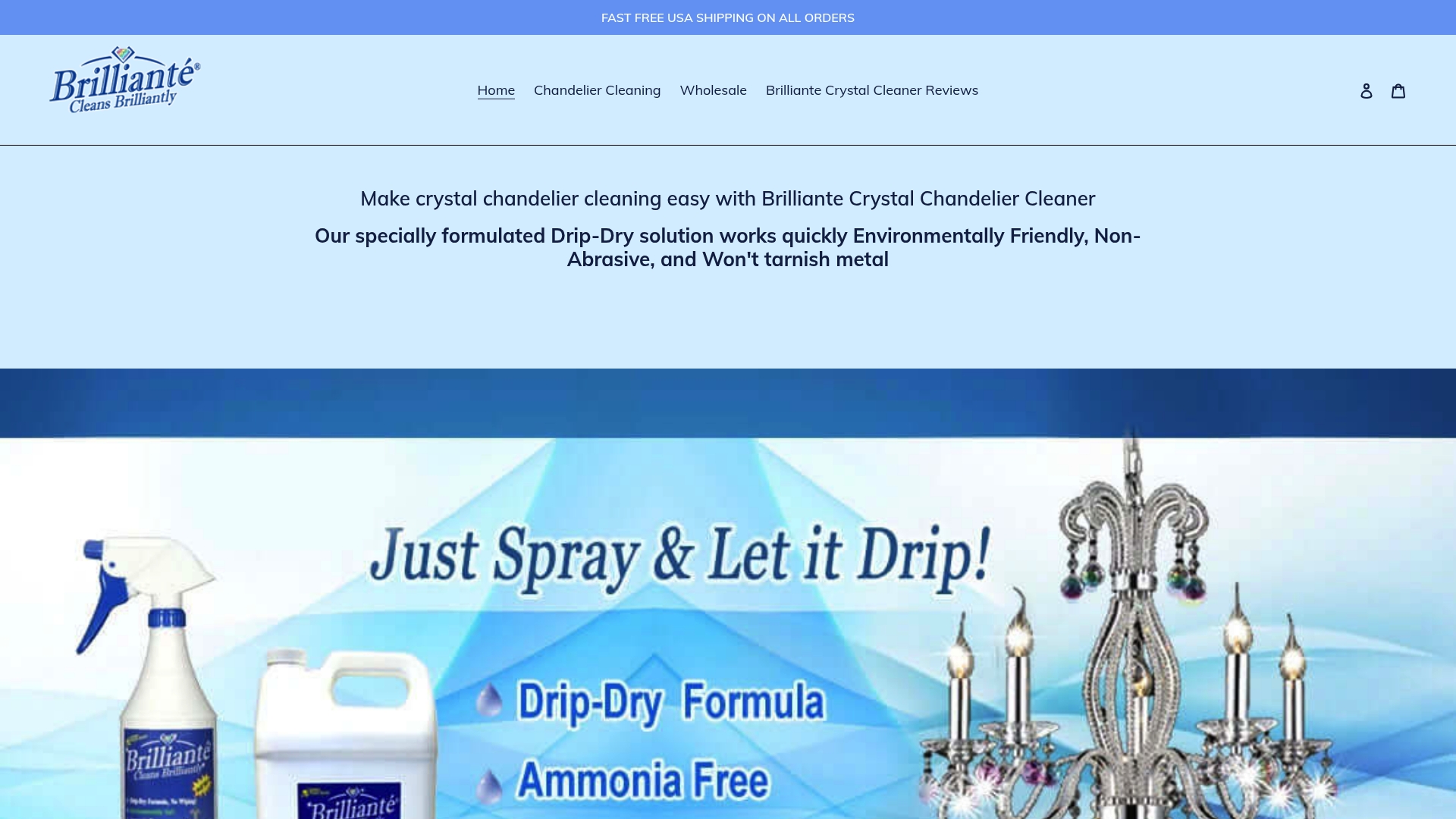
Brilliante is proudly made in the USA and specially formulated as a drip-dry spray that does all the work for you. Just spray it on and let it drip. No wiping, no rinsing, no disassembly required. It’s ammonia-free, non-abrasive, and won’t tarnish metal fittings, making it safe for every part of your chandelier. The formula is environmentally friendly, so you’re not trading a clean chandelier for a house full of harsh chemical fumes. Whether you’re tackling a film problem today or building a simple maintenance routine, explore eco-friendly cleaning tips and see why Brilliante is rated number one by homeowners who want brilliant results without the hassle.
Frequently asked questions
What causes cloudy film on my crystal chandelier?
Cloudy film is usually a mix of household dust, airborne grease, and mineral deposits from hard water that settle and bond to crystal surfaces over time.
Can I use vinegar to remove film from my chandelier?
No. While vinegar dissolves calcium on plain glass, it can damage coatings and metal on crystal chandeliers and is not recommended.
How often should I clean my crystal chandelier to prevent film?
Dust weekly and do a full deep clean every 3 to 12 months, with more frequent cleaning for chandeliers near kitchens or high-traffic areas.
Are commercial chandelier cleaners better than homemade solutions?
For most homeowners, yes. Products like Brilliante Crystal Cleaner are ammonia-free, non-abrasive, and formulated specifically for crystal, removing the risk of mixing the wrong solution or using the wrong ratio.