
Patina on crystal chandeliers: protect and beautify
TL;DR:
- Patina is a natural, protective film on metal that develops over years through oxidation.
- Preserving patina maintains authenticity, reduces restoration costs, and enhances vintage chandelier appeal.
- Gentle cleaning and inspection help protect patina without damaging the fixture’s character or integrity.
That dark, greenish, or brownish film on your chandelier’s metal frame is not a sign of neglect. It’s patina, and it’s one of the most misunderstood features in home decor. Many homeowners reach for harsh cleaners the moment they notice surface discoloration, not realizing they may be stripping away a natural layer that took years to form and actually protects the metal underneath. Understanding what patina is, how it differs from harmful corrosion, and how to care for it properly can save you money, preserve your fixture’s value, and keep your chandelier looking genuinely beautiful for decades.
Key Takeaways
| Point | Details |
|---|---|
| Patina is protective | The natural film that forms on metals like brass and copper defends your chandelier against harm. |
| Corrosion is different | Unstable, flaking, or spreading discoloration signals a problem distinct from healthy patina that may need expert help. |
| Preserve for value | Keeping patina intact saves on restoration, retains fixture authenticity, and enhances visual appeal. |
| Handle with care | Gentle, routine cleaning preserves patina, while harsh methods risk damaging it and your chandelier. |
What is patina? Science, history, and home relevance
Now that you’re aware surface changes aren’t always bad news, let’s explore precisely what patina is and why it forms.
Patina is a thin film that develops on metal surfaces over time as a result of exposure to air, moisture, and environmental elements. The process is primarily driven by oxidation, a chemical reaction where oxygen interacts with the metal’s surface. On copper, brass, and bronze fixtures, this process produces a layered structure. The patina science details reveal that the inner layer is typically cuprite (Cu2O), while the outer layer consists of atacamite (Cu2(OH)3Cl), a compound that forms when chloride in the air reacts with copper. Together, these layers create a stable, protective film on copper alloys that shields the metal from further degradation.
This is very different from rust, which is the destructive oxidation that occurs on iron and steel. Rust flakes, spreads, and weakens metal over time. Patina, by contrast, seals the surface and slows further chemical reactions. Think of it as the metal developing its own armor.
Historically, patina has been treasured across cultures. Ancient Greek and Roman bronze sculptures were prized partly for their aged coloring. In Victorian-era homes, brass fixtures with a warm, darkened finish were considered marks of quality and taste. Today, interior designers often seek out fixtures with original patina because it signals authenticity and craftsmanship that simply cannot be replicated by a factory finish.
For modern chandelier owners, understanding patina means recognizing it as an asset rather than a flaw. Here’s a quick look at how patina behaves across common chandelier metals:
| Metal | Patina color | Formation time | Protective value |
|---|---|---|---|
| Copper | Green to blue-green | Months to years | High |
| Brass | Dark brown to amber | 1 to 3 years | High |
| Bronze | Olive green to brown | 1 to 5 years | Very high |
Key characteristics of healthy patina include:
- Uniform appearance across the surface
- Smooth texture without flaking or pitting
- Stable color that does not transfer to a cloth when wiped gently
- Adherence to the metal without bubbling or peeling
For fixtures with plated finishes, the rules can differ slightly. Reviewing plated metal care tips before cleaning is always a smart first step to avoid accidental damage.
Patina vs. corrosion: How to tell the difference on chandeliers
With a basic understanding of patina’s natural formation, recognize how to differentiate between healthy patina and threatening corrosion.
This is where many homeowners get stuck. Both patina and corrosion can produce discoloration, and both can appear green or brown on metal fixtures. But they behave very differently and require completely different responses.
Experts distinguish patina from corrosion through a combination of visual inspection and tactile testing. Stable, adherent patina is protective, while corrosion is flaky, causes pitting, and is ultimately destructive. Advanced analysis methods like XRF (X-ray fluorescence) or SEM (scanning electron microscopy) can confirm the difference, but you don’t need lab equipment to make a solid judgment at home.
Here’s a comparison to guide your assessment:
| Feature | Healthy patina | Harmful corrosion |
|---|---|---|
| Texture | Smooth, even | Rough, flaky, pitted |
| Color transfer | None when gently wiped | Stains cloth or transfers color |
| Spread pattern | Uniform across surface | Patchy, spreading, irregular |
| Surface integrity | Intact, no pitting | Pits, bubbles, or cracks visible |
| Response to touch | Firm, adherent | Crumbles or lifts |
To check your fixture at home, follow these steps:
- Turn off and cool your chandelier completely before touching any part of it.
- Use a clean white cloth and gently wipe a small, inconspicuous area of the metal frame.
- Check the cloth for color transfer. A light smudge of dust is normal. Heavy green, black, or rust-colored staining is a warning sign.
- Inspect the surface under good lighting for any pitting, bubbling, or flaking.
- Look for uneven patches of discoloration, especially near joints or areas exposed to humidity.
Pro Tip: Edge cases matter. Thick, patchy, or spreading green layers may indicate active corrosion rather than stable patina, and those situations call for a professional opinion before you do anything else.
“When in doubt, do nothing.” This is the golden rule among experienced restorers. Cleaning a fixture that has active corrosion without proper guidance can accelerate damage rather than stop it.
For antique or lacquered chandeliers, the stakes are even higher. A lacquer coating changes how patina forms and how corrosion behaves, so standard visual tests may not tell the full story. Staying consistent with daily maintenance tips can help you catch problems early before they escalate.
Benefits of patina: Protection, savings, and beauty
Now that you can spot the difference, it’s vital to understand why preserving patina is often your best move.
Patina does more than look interesting. It actively works to protect your fixture. Once patina forms a stable layer, it acts as a moisture barrier, slowing the rate of further oxidation. This means less decay, less maintenance, and a longer lifespan for your chandelier’s metal components.
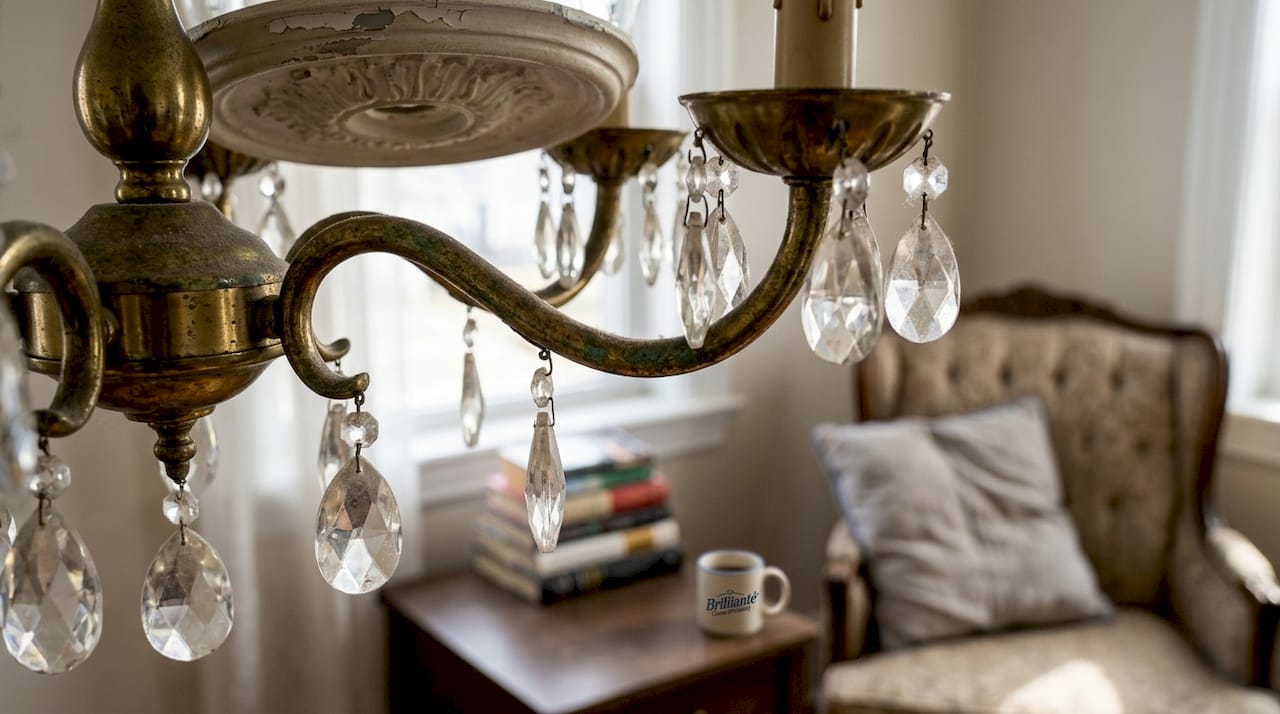
From a financial standpoint, the numbers are compelling. Patina preservation reduces restoration costs by 30 to 40 percent compared to fixtures that have been stripped and need professional refinishing. Chandelier restoration is not cheap. Depending on the size and complexity of the fixture, professional work can run into hundreds or even thousands of dollars. Keeping patina intact is genuinely one of the most cost-effective things you can do as a homeowner.
Beyond the financial case, there’s the matter of authenticity. Antique and vintage chandeliers with original patina command higher prices in the resale and collector markets. A restored fixture that has been polished back to a bright finish often looks like a reproduction, even if it isn’t. The patina tells a story that no new coating can replicate.
Here are the core benefits worth keeping in mind:
- Moisture barrier: Patina slows further oxidation and protects the base metal
- Cost savings: Preservation is far cheaper than professional restoration
- Increased value: Original patina boosts authenticity and resale appeal
- Unique character: No two patinas are identical, giving your fixture a one-of-a-kind look
- Reduced maintenance: A stable patina layer requires less frequent intervention
Pro Tip: If you’re considering eco-friendly chandelier care, gentle cleaning methods that avoid harsh solvents are your best allies for keeping patina intact while still maintaining a clean, polished appearance on the crystal elements.
Aesthetically, patina offers something that modern finishes simply cannot deliver. The warm amber of aged brass, the deep olive of old bronze, the soft blue-green of weathered copper — these tones add depth and warmth to any room. They complement both traditional and contemporary interiors in ways that bright, factory-fresh metal cannot.
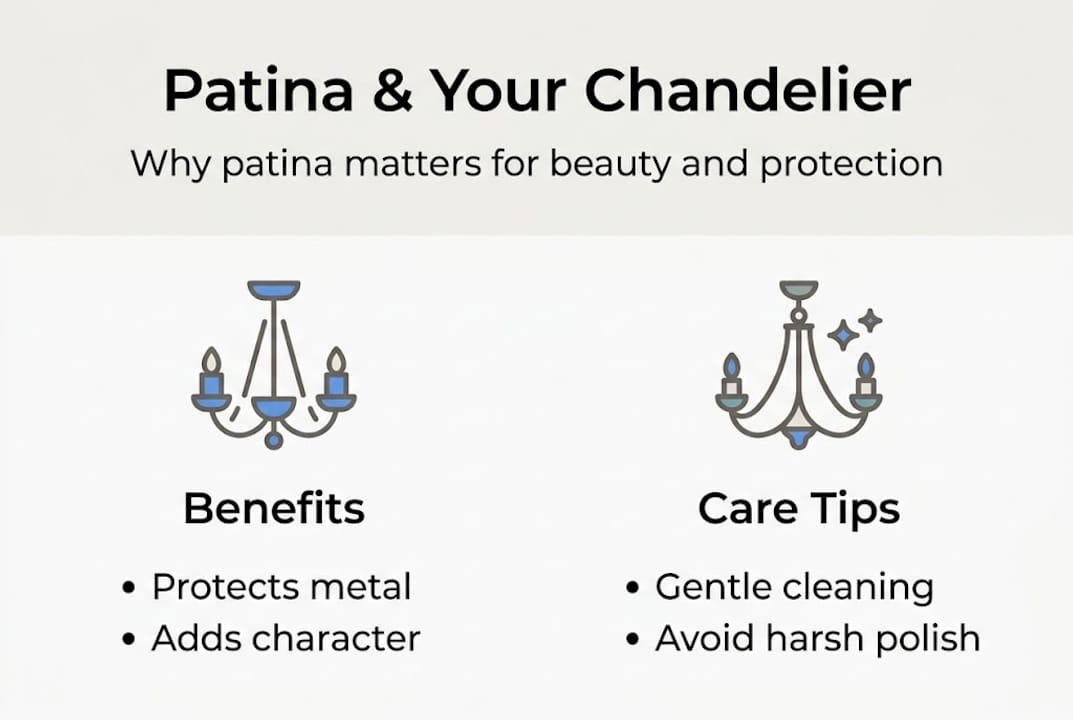
Maintaining patina on crystal chandeliers: Do’s and don’ts
Knowing why patina matters empowers you to preserve it. Here’s exactly how to care for your chandelier’s finish without risk.
The goal is to keep your fixture clean and the patina stable without accidentally stripping or damaging the protective layer. This requires a gentle, consistent approach rather than occasional aggressive cleaning.
Follow these steps for safe, patina-friendly chandelier maintenance:
- Dust regularly using a soft, dry microfiber cloth or a natural bristle brush. Dust buildup traps moisture, which can accelerate corrosion over time.
- Clean crystal elements separately from the metal frame. Use a product designed for crystal, and avoid letting liquid drip onto metal joints.
- Test any new cleaner on a hidden area first. Even products labeled as gentle can react unexpectedly with aged metal finishes.
- Avoid ammonia-based cleaners, bleach, and vinegar on patinated metal. These chemicals can dissolve the protective layer rapidly.
- Never use abrasive pads or steel wool on any part of a chandelier with patina. Scratching the surface removes the patina and exposes raw metal to the environment.
- Inspect your fixture twice a year for signs of active corrosion, paying close attention to joints, screws, and areas near light sockets where heat and moisture concentrate.
Pro Tip: If you notice thick, patchy, or flaking green layers developing on your fixture, stop cleaning and consult a conservator or restoration specialist. Attempting to clean active corrosion without guidance can cause irreversible damage.
For antique chandeliers especially, less is more. Many valuable fixtures have been ruined by well-meaning owners who polished away decades of authentic patina. When you’re unsure, reviewing metal care for chandeliers can help you identify the right approach for your specific fixture type.
The crystal elements of your chandelier, of course, don’t develop patina. They need their own care routine focused on removing dust, fingerprints, and residue without affecting the metal frame.
Our perspective: Why patina makes your chandelier truly timeless
With practical care tips established, we want to share something we’ve come to believe strongly after working with chandelier owners for years.
The instinct to restore a fixture to a “like new” appearance is understandable, but it often works against the homeowner. Polishing away patina doesn’t just change the look. It erases the protective chemistry the metal has built up over time and strips away the evidence of genuine craftsmanship. Experienced restorers consistently note that original patina is one of the clearest ways to distinguish a true antique from a reproduction.
We think the deeper issue is cultural. We’ve been conditioned to equate “clean” with “bright and shiny.” But a chandelier with rich, aged metal and sparkling crystal isn’t dirty. It’s distinguished. The patina is part of what makes it irreplaceable. Reviewing chandelier restoration realities often confirms what restorers already know: preserving original surfaces almost always produces better long-term outcomes than aggressive refinishing. Your chandelier’s patina isn’t a problem to solve. It’s a feature worth protecting.
Keep your chandelier stunning, inside and out
Inspired to treat your fixture’s patina with care? The good news is that protecting patina and keeping your crystal sparkling don’t have to be complicated.

At Brilliante, we designed our Crystal Chandelier Cleaner specifically to care for chandeliers without harming their metal finishes or stripping protective layers. Our Drip-Dry formula is non-abrasive, environmentally friendly, and proudly made in the USA. Just spray it on the crystal, let it drip dry, and you’re done. No wiping, no risk of accidentally disturbing the metal frame. Explore our full range of chandelier cleaning solutions and see why hundreds of homeowners rate us number one for safe, effective chandelier care.
Frequently asked questions
Can I remove patina from my chandelier or should I keep it?
In most cases, preserving patina is the smarter choice because it protects the metal and maintains the fixture’s authenticity and value. Removing it can expose the base metal to damage and reduce the chandelier’s appeal to collectors.
How do I know if green buildup is safe patina or harmful corrosion?
Stable patina looks thin and uniform and won’t stain a cloth when gently wiped. Thick, patchy, flaking green layers are a sign of corrosion and usually require a professional assessment before any cleaning.
Does patina form only on metal or can it occur on other chandelier materials?
Patina forms specifically on metals like copper, brass, and bronze through chemical reactions on copper alloys. Crystal and glass elements do not develop patina but can accumulate dust, fingerprints, and airborne residue over time.
Will cleaning my chandelier remove the protective patina?
Gentle dusting is completely safe, but harsh chemicals or abrasive tools can strip the patina layer. Since patina provides a moisture barrier that slows decay, losing it means the metal becomes more vulnerable, so always use mild, specialized products designed for decorative fixtures.