
What is green cleaning for crystal chandeliers?
You probably think your favorite glass cleaner is safe for your crystal chandelier. Most homeowners do, until they notice clouding, streaks, or tarnished metal arms. Conventional cleaners often contain harsh chemicals that damage delicate crystal and harm indoor air quality. Green cleaning offers a safer, eco-friendly approach that protects both your chandelier and your family’s health. This guide explains what green cleaning is, why it matters for chandelier care, and how to apply it effectively in your home.
Key Takeaways
| Point | Details |
|---|---|
| Green cleaning principles | Green cleaning minimizes health and environmental impact by using non toxic, biodegradable ingredients from renewable sources instead of synthetic solvents and volatile compounds. |
| Indoor air benefits | Compared with conventional cleaners, green products reduce indoor air pollution and protect your family health. |
| Safe chandelier care | Follow recommended practices such as letting solutions dwell, using two buckets, cleaning top to bottom, using microfiber cloths, and rinsing with distilled water. |
| Certification importance | Look for EPA Safer Choice or Green Seal labels to verify true green products rather than marketing claims. |
Understanding green cleaning: principles and benefits
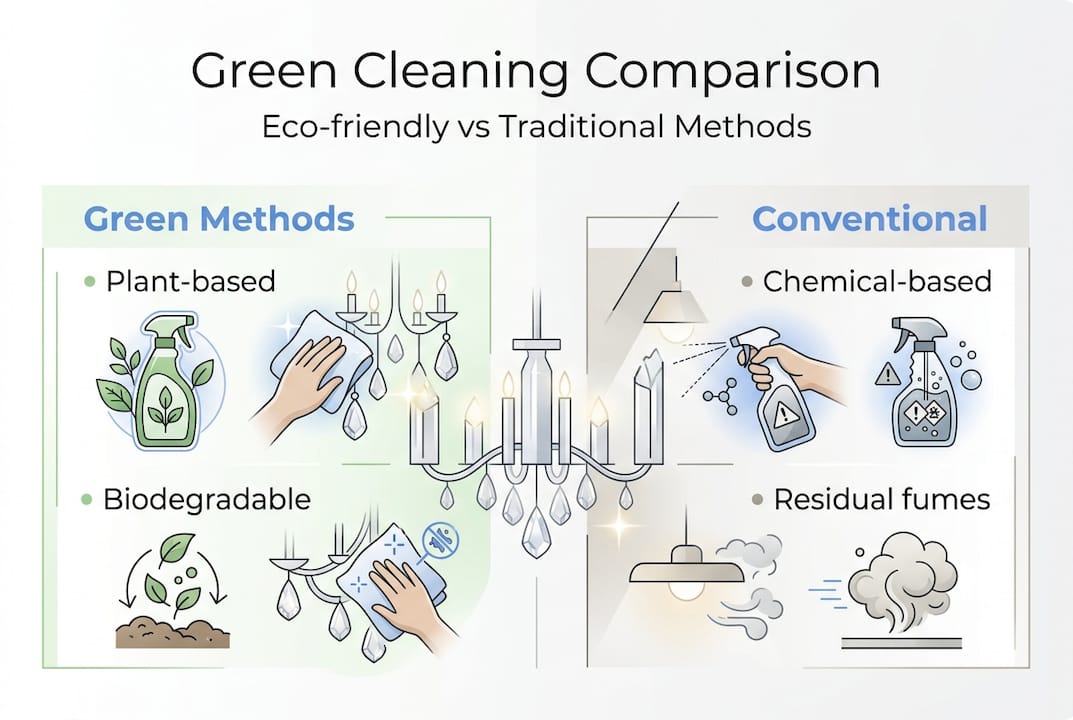
Green cleaning minimizes impact on human health and the environment using non-toxic, biodegradable ingredients from renewable sources. Unlike conventional products, green cleaners avoid synthetic chemicals, petroleum solvents, and volatile organic compounds that contaminate your home’s air and water. This approach protects your family while maintaining cleaning power.
The benefits extend far beyond environmental responsibility. Indoor air pollution from cleaning products can be a meaningful contributor to overall indoor air quality, highlighting the value of safer alternatives. When you spray conventional cleaners on your chandelier, those chemicals linger in the air you breathe for hours. Green cleaning reduces this exposure while delivering sparkling results.
Green cleaning products rely on plant-derived surfactants, vinegar, and enzymes packaged in biodegradable materials. These ingredients break down naturally without leaving toxic residues on your crystal or in your home. They work through mechanical action and pH adjustment rather than harsh chemical reactions that can etch glass or corrode metal.
Certification programs help you identify genuine green products. Look for EPA Safer Choice or Green Seal labels when shopping for chandelier cleaners. These third-party verifications ensure products meet strict safety and environmental standards. Without certification, manufacturers can claim anything is “natural” or “eco-friendly” without proof.
“Green cleaning protects indoor air quality while maintaining the beauty of delicate fixtures like crystal chandeliers through safer, plant-based formulations.”
The shift to green cleaning represents more than a trend. It reflects growing awareness that what we use to clean our homes directly impacts our health. For chandelier owners, this means choosing products that preserve both the fixture’s brilliance and your family’s wellbeing.
How green cleaning works: key ingredients and methods
Plant-derived surfactants biodegrade significantly faster than synthetic ones and effectively lift dirt without harsh chemicals. Decyl glucoside, derived from corn and coconut, serves as a gentle yet powerful cleaning agent for crystal surfaces. Vinegar at 5% concentration removes limescale and water spots through natural acidity. Enzymes break down organic soils like fingerprint oils and dust buildup without abrasive scrubbing.

Effective green cleaning follows a systematic room-by-room approach with foundational products. You need an all-purpose cleaner for general surfaces, a glass formula for crystal, a descaling solution for mineral deposits, and a floor cleaner for drips. This streamlined system simplifies chandelier maintenance while reducing chemical exposure throughout your home.
Recommended practices maximize cleaning power while maintaining safety:
- Allow adequate dwell time for solutions to work on surfaces before wiping
- Use the two-bucket method with one for cleaning solution and one for rinsing
- Work from top to bottom to prevent recontamination of cleaned areas
- Apply solutions with microfiber cloths that trap particles instead of spreading them
- Rinse thoroughly with distilled water to prevent mineral deposits
Mechanical scrubbing combined with green soap can give microbial reduction comparable to chemical disinfectants, without the harmful emissions. The main practical difference is in air quality impact, where green methods generally produce less indoor air pollution than harsher chemical products.
Pro Tip: Always allow appropriate dwell time on surfaces to maximize cleaning effectiveness while maintaining safety for both you and your chandelier.
The science behind green cleaning reveals that effectiveness comes from multiple mechanisms working together. Surfactants reduce surface tension, allowing water to spread and penetrate dirt. Acidic ingredients like vinegar dissolve mineral deposits through chemical reaction. Enzymes catalyze the breakdown of organic matter. This multi-pronged approach delivers thorough cleaning without relying on a single harsh chemical.
Understanding these mechanisms helps you choose the right green cleaning methods for chandeliers based on your specific needs. Hard water stains require acidic solutions, while dust and oils respond better to surfactants. Matching the method to the soil type ensures efficient cleaning with minimal effort.
Green cleaning your crystal chandelier: step-by-step guide
Regular maintenance prevents buildup that requires aggressive cleaning. Dust your chandelier monthly with a microfiber duster or dry cloth to remove loose particles. Deep clean every 6 to 12 months depending on your home’s air quality and the fixture’s location. Kitchens and dining rooms near cooking areas need more frequent attention than bedroom chandeliers.
Diluted white vinegar at 1:1 to 1:3 ratio with distilled water or mild dish soap cleans crystal safely when paired with microfiber cloths and cotton gloves. The gloves prevent oils from your hands transferring to the clean crystal, which would attract dust and create new spots. Distilled water eliminates mineral deposits that tap water leaves behind as it evaporates.
Follow these steps for effective green chandelier cleaning:
- Turn off power at the circuit breaker and allow bulbs to cool completely
- Lay drop cloths or towels beneath the chandelier to catch drips
- Mix your cleaning solution in a spray bottle or bowl
- Put on cotton gloves to protect crystal from fingerprints
- Spray solution directly on crystal pieces or dampen your cloth
- Wipe each crystal gently from top to bottom
- Rinse with distilled water on a clean cloth if needed
- Allow to air dry completely before restoring power
Avoid vinegar on metal chandelier frames to prevent corrosion and test cleaning solutions on inconspicuous areas first. Brass, bronze, and antique finishes can react unpredictably to acidic solutions. If your chandelier has mixed materials, use separate cleaning methods for metal and crystal components. A dedicated crystal cleaner protects metal while effectively cleaning glass.
Two main methods suit different chandelier types and homeowner preferences. The spray and drip method works for fixtures you cannot easily disassemble. Simply spray the solution and let it drip onto the protective cloths below, carrying away dirt and grime. This approach minimizes handling and risk of damage. The disassembly method gives more thorough results for heavily soiled chandeliers. Remove crystal pieces systematically, clean in a bowl of solution, rinse, and dry before rehanging.
Essential supplies for green chandelier cleaning:
- Distilled water to prevent mineral deposits
- White vinegar or mild plant-based dish soap
- Spray bottle for easy application
- Microfiber cloths that won’t scratch crystal
- Cotton gloves to prevent fingerprints
- Drop cloths or towels for floor protection
- Step ladder for safe reaching
Pro Tip: Always test your cleaning solution on a hidden area of the chandelier to prevent damage and preserve antique finishes before proceeding with the full cleaning.
Safety considerations matter as much as cleaning technique. Never clean a chandelier while standing on furniture or unstable surfaces. Use a proper step ladder with a wide base. Work with a partner who can hand you supplies and steady the ladder. If your chandelier hangs too high for safe access, consider hiring a professional rather than risking injury.
The chandelier cleaning checklist helps you track maintenance and ensures you never skip important steps. Regular care using green methods maintains your chandelier’s brilliance while protecting your investment. Many homeowners report noticeably less crystal damage when switching from harsh chemicals to eco-friendly alternatives.
Comparing green cleaning with conventional methods: efficacy and environmental impact
Common concerns about green cleaning effectiveness stem from marketing rather than science. Many people assume stronger chemicals clean better, but well-formulated green cleaning agents can achieve cleaning performance close to conventional chemical products, while producing meaningfully lower emissions and irritant exposure. The difference in cleaning power is often minimal, while the health and environmental benefits are substantial.
| Factor | Green Cleaning | Conventional Cleaning |
|---|---|---|
| Cleaning Efficacy | Comparable with proper technique | Comparable |
| Indoor Air Quality | Low VOCs and PM2.5 | Higher VOCs and PM2.5 |
| Health Risks | Minimal irritation | Respiratory issues, skin irritation |
| Environmental Impact | Biodegradable, renewable | Persistent chemicals, pollution |
| Cost | Comparable or lower | Varies by product |
Green cleaning advantages:
- Safer for children and pets who spend time near cleaned surfaces
- No toxic fumes that linger after cleaning sessions
- Biodegradable ingredients that don’t accumulate in water systems
- Renewable plant-based sources instead of petroleum derivatives
- Reduced packaging waste with concentrated formulas
Conventional cleaning drawbacks:
- Volatile organic compounds contribute to indoor air pollution
- Harsh chemicals can damage delicate crystal and metal over time
- Residues remain on surfaces even after rinsing
- Environmental persistence causes long-term ecosystem damage
- Health risks increase with repeated exposure
Green cleaning can reduce water and energy use compared to some conventional methods, while minimizing health risks and maintaining cost competitiveness. The initial investment in quality green products pays off through reduced replacement costs for damaged fixtures and lower healthcare expenses from chemical exposure. Many homeowners find green cleaning actually costs less because concentrated formulas last longer than conventional products.
“Green cleaning delivers comparable effectiveness to conventional methods while protecting health and environment, making it the smart choice for crystal chandelier care.”
The environmental footprint comparison reveals stark differences. Conventional cleaners release chemicals that persist in waterways for years, harming aquatic life and contaminating drinking water sources. Green alternatives break down naturally within days or weeks, leaving no toxic legacy. This matters for chandelier cleaning because what drips onto your floor eventually enters the water system through drains.
Performance on crystal surfaces shows green methods excel where it matters most. They remove water spots, dust, and oils without leaving streaks or residue. Conventional cleaners may appear to work faster, but they often leave invisible films that attract dust more quickly. This creates a cycle of more frequent cleaning and greater chemical exposure. Green cleaning breaks this cycle with truly clean surfaces that stay cleaner longer.
The comparison between green and conventional cleaning for chandeliers demonstrates that effectiveness depends more on technique than chemical strength. Proper application, adequate dwell time, and thorough rinsing matter more than harsh ingredients. Understanding this empowers you to choose safer products without sacrificing results.
Discover eco-friendly cleaning solutions for your chandeliers
Ready to transform your chandelier care routine? Our eco-friendly chandelier cleaning products deliver professional results without harsh chemicals. The specially formulated drip-dry solution works quickly with just a spray, letting gravity do the work while you stay safe. Made proudly in the USA, our non-abrasive formula won’t tarnish metal.

Download our free chandelier cleaning checklist for 2026 to track maintenance and ensure perfect results every time. Learn more about our chandelier crystal cleaner spray and discover how easy green cleaning can be. Your chandelier deserves care that protects its beauty while keeping your home healthy.
Frequently asked questions
What is green cleaning?
Green cleaning uses non-toxic, biodegradable products made from renewable resources to clean surfaces safely. These products avoid harsh chemicals, synthetic fragrances, and petroleum-based ingredients that harm health and environment. For chandeliers, green cleaning means using plant-based solutions that protect delicate crystal while keeping your indoor air clean.
How do I test green cleaning products safely on my chandelier?
Apply a small amount of your chosen green cleaner to a hidden crystal piece or the chandelier’s underside. Wait 24 hours and check for discoloration, cloudiness, or damage to metal components. If the test area looks perfect, proceed with cleaning the entire fixture using the same dilution and method.
How often should I clean my chandelier using green methods?
Dust your chandelier monthly with a dry microfiber cloth to prevent buildup. Perform a deep clean with green solutions every 6 to 12 months depending on your home’s air quality and the fixture’s location. Kitchens and high-traffic areas need more frequent cleaning than bedrooms or formal spaces.
Are green cleaning products as effective as conventional cleaners for chandeliers?
Yes, green cleaning products achieve comparable results to conventional cleaners with proper technique. Studies show plant-based cleaners and diluted vinegar remove dirt, oils, and mineral deposits effectively while producing less indoor air pollution. The key is allowing adequate dwell time and using appropriate tools like microfiber cloths.
How can I avoid damaging metal parts during green chandelier cleaning?
Avoid applying vinegar directly to brass, bronze, or antique metal finishes as the acidity can cause corrosion. Test any cleaning solution on a hidden metal area first. Use separate cleaning methods for metal and crystal components, or choose a pH-balanced green cleaner specifically formulated for mixed-material chandeliers that protects all surfaces safely.