
Green cleaning: eco-friendly care for crystal chandeliers
TL;DR:
- Green cleaning methods protect indoor air quality and prevent damage to delicate crystal chandeliers.
- Distilled water mixed with mild soap or diluted vinegar are effective and safe cleaning solutions.
- Using reusable cloths and eco-friendly sprays simplifies maintenance and reduces household environmental impact.
Most homeowners assume that getting a crystal chandelier truly clean means reaching for the strongest chemical cleaner available. That assumption is both common and costly, not just for your wallet but for the air inside your home and the planet outside it. Traditional cleaners often leave behind residues, release fumes, and contribute to chemical waste that adds up fast. The good news is that eco-friendly cleaning methods work just as well, and in many cases better, for keeping crystal sparkling. This guide walks you through exactly what to use, what to avoid, and how to build a green cleaning routine that protects your chandelier and your home.
Key Takeaways
| Point | Details |
|---|---|
| Eco benefits | Using green cleaning practices protects both your chandelier and the environment. |
| Safe alternatives | Natural ingredients like distilled water and mild soap can outshine harsh chemicals. |
| Simple methods | A careful, step-by-step green cleaning process keeps your chandelier sparkling longer. |
| Whole-home impact | Sustainable habits reduce waste and make every room healthier. |
Why green cleaning matters for your chandelier and home
Switching to green cleaning is not just a trend. It is a practical decision that protects your health, your home, and the surfaces you care about most. When it comes to crystal chandeliers, the stakes are even higher because these fixtures sit overhead, often in rooms where your family gathers and breathes the air directly below them.
Traditional chemical cleaners can release harmful fumes and residues that linger in your indoor air long after you have finished cleaning. Many standard products contain volatile organic compounds, or VOCs, which are gases that evaporate at room temperature and can irritate your eyes, throat, and lungs. For households with children, elderly members, or anyone with allergies or asthma, this is a serious concern.
Beyond health, harsh cleaners can physically damage your chandelier over time. Crystal is a delicate material. Abrasive chemicals strip away the surface clarity that makes crystal shimmer. Metal fittings can tarnish or corrode. What starts as a cleaning session can slowly dull the very beauty you are trying to restore.
“Household cleaning products are among the top contributors to indoor air pollution, with some releasing chemicals linked to respiratory irritation and long-term health effects.”
Green cleaning for conscious homes means choosing solutions that are biodegradable, non-toxic, and gentle enough to protect delicate surfaces. For chandeliers specifically, this approach delivers real, measurable benefits.
Top reasons to switch to green cleaning for your chandelier:
- No chemical residue left on crystal surfaces, so light refracts cleanly
- Safer to handle without gloves or ventilation masks
- Gentle on metal hardware, preventing tarnish and corrosion
- Biodegradable formulas reduce environmental waste
- Less risk of accidental damage to crystal finish or coating
- Better for indoor air quality, especially in enclosed dining or living rooms
- Cost-effective over time since natural solutions are often less expensive per use
The shift to green cleaning is not about sacrifice. It is about making smarter choices that work harder for you and your home.
Essential green cleaning alternatives: What to use and avoid
Knowing why green cleaning matters is only half the picture. You also need to know exactly which ingredients are safe for crystal and which ones will quietly cause damage over time.
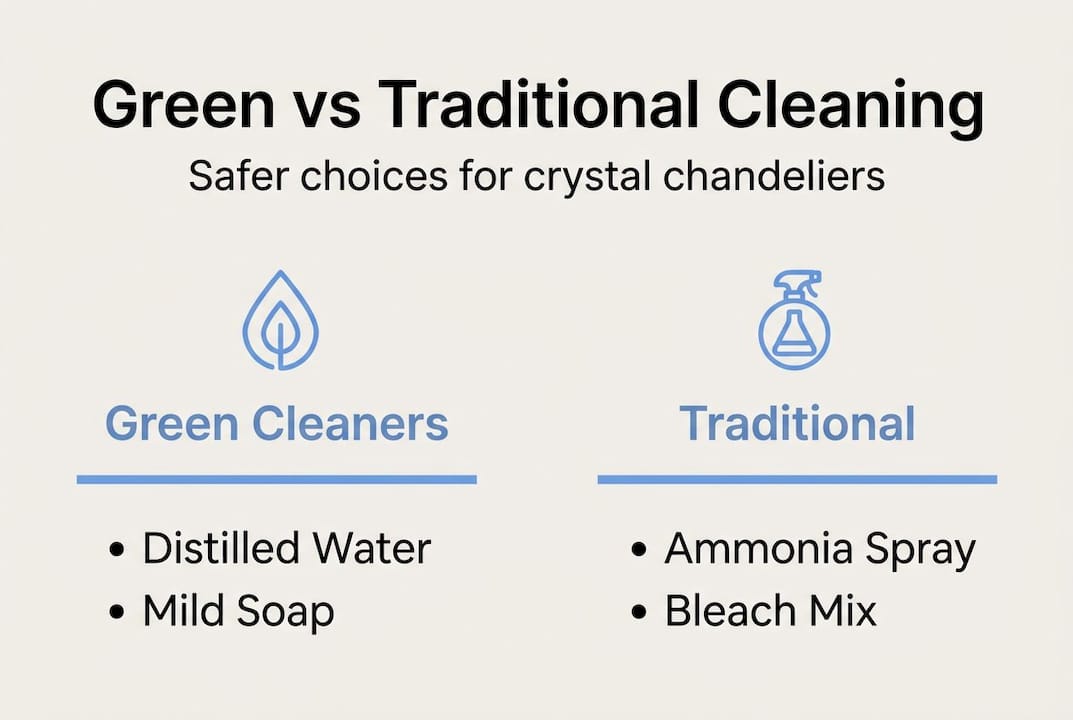
The safest base for any crystal cleaning solution is distilled water. Tap water contains minerals that can leave white spots or streaks on crystal. Distilled water evaporates cleanly and leaves no residue. Paired with a small amount of mild, plant-based dish soap or a gentle surfactant, it forms an effective cleaning solution that is easy to rinse away.

White vinegar diluted in water is another popular option. It cuts through grease and light grime without harsh chemicals. Use it at a ratio of one part vinegar to four parts distilled water, and always wipe surfaces dry afterward to prevent any etching from prolonged contact.
On the other side, alcohol and ammonia-based cleaners risk etching or dulling crystal surfaces. Bleach is equally damaging and can discolor metal fittings. These are the ingredients to avoid, even when the product label markets itself as a glass cleaner.
| Traditional cleaner | Green alternative |
|---|---|
| Ammonia-based glass spray | Distilled water with mild soap |
| Alcohol-based polish | Diluted white vinegar solution |
| Bleach solution | Plant-based gentle surfactant |
| Paper towels | Reusable microfiber cloths |
| Single-use spray bottles | Refillable glass spray bottles |
Pro Tip: Mix your green solution fresh each time you clean. Old mixtures can harbor bacteria or lose effectiveness. Store your distilled water in a sealed glass container to keep it pure between uses.
Ingredients to watch for on product labels:
- Ammonia (listed as ammonium hydroxide)
- Isopropyl or ethyl alcohol above 10% concentration
- Sodium hypochlorite (bleach)
- Artificial fragrances (often contain hidden VOCs)
- Phosphates (harmful to waterways)
Checking labels takes thirty seconds and can save your chandelier from years of gradual damage. The eco-friendly chandelier shine guide offers a deeper look at ingredient safety for crystal care.
Step-by-step: Green cleaning method for crystal chandeliers
With the right ingredients on hand, the actual cleaning process is simpler than most people expect. The key is working methodically and gently, letting your solution do the work rather than scrubbing.
Green cleaning prep checklist:
- Turn off the chandelier and allow bulbs to cool completely
- Lay a soft blanket or towel on the floor beneath the fixture
- Gather reusable microfiber cloths, a soft-bristle brush, and your green cleaning solution
- Have a dry cloth ready for immediate drying
- Wear cotton gloves to prevent fingerprints during handling
Step-by-step green cleaning process:
- Dust first. Use a dry microfiber cloth or soft brush to remove loose dust from each crystal and arm. Work from the top of the fixture downward.
- Prepare your solution. Mix distilled water with a few drops of plant-based soap, or use your diluted vinegar mix in a refillable spray bottle.
- Apply gently. Lightly mist one section at a time. Do not saturate the crystals or let liquid pool near electrical components.
- Wipe carefully. Use a clean microfiber cloth to wipe each crystal individually, using light circular motions.
- Dry immediately. Follow with a dry cloth to prevent water spots. Do not let crystals air dry, as mineral deposits can form even from distilled water if left too long.
- Inspect and reattach. Check each crystal for streaks. Reattach any pieces that were removed for easier access.
Proper green cleaning techniques prevent accidental damage to crystal and reduce environmental impact when practiced consistently.
| Cleaning method | Avg. time needed | Effort level | Environmental impact |
|---|---|---|---|
| Traditional chemical spray | 30 min | Medium | High (fumes, waste) |
| Green DIY solution | 45 min | Medium | Low |
| Purpose-made eco spray | 20 min | Low | Very low |
Pro Tip: Always clean from top to bottom and rotate each bulb socket a quarter turn after cleaning. This distributes light evenly and gives you a chance to check for any loose fittings while you are already up there.
For broader sustainable home cleaning tips that pair well with your chandelier routine, there are simple strategies that cut dust by up to 90% in other areas of your home too.
Integrating sustainable cleaning habits into your home
Once you have mastered green chandelier cleaning, it is natural to look around and ask where else these habits can make a difference. The answer is almost everywhere.
Building a sustainable cleaning routine does not require a complete overhaul of your home. It starts with small, consistent choices that add up over time. Regular, light maintenance with natural products reduces deep-cleaning needs and waste, which means less time scrubbing and fewer products purchased overall.
Think of it in three rhythms: daily, weekly, and monthly.
Daily habits keep surfaces from accumulating grime that requires heavy cleaning later. A quick wipe of counters with a damp microfiber cloth, opening windows for fresh air circulation, and removing shoes at the door all reduce the cleaning load significantly.
Weekly habits include dusting high surfaces like your chandelier with a dry microfiber cloth, mopping floors with a diluted plant-based cleaner, and wiping down bathroom surfaces with a vinegar-based spray.
Monthly habits are where deeper green cleaning fits in, including your full chandelier clean, baseboard care, and refreshing reusable cloths and sponges.
Ways to minimize waste across your cleaning routine:
- Replace paper towels with washable microfiber cloths in every room
- Use refillable spray bottles with concentrated, plant-based cleaners
- Switch to compostable sponges and scrubbers instead of synthetic ones
- Buy cleaning concentrates in bulk to reduce plastic packaging
- Store homemade solutions in glass containers instead of single-use plastic
- Donate or repurpose old cotton T-shirts as cleaning rags
For eco-friendly baseboard cleaning that complements your chandelier routine, small changes in how you approach dust removal can make a noticeable difference throughout your entire home.
The goal is not perfection. It is progress. Each swap you make reduces chemical exposure in your home and lessens your household’s environmental footprint in a real, measurable way.
Our take: What most homeowners overlook about green crystal cleaning
Here is something the eco-cleaning world does not talk about enough: the word “natural” on a label does not automatically mean safe for crystal. We have seen homeowners confidently spray undiluted lemon juice or full-strength vinegar on their chandeliers because it felt like the green thing to do. The result was etched surfaces and a dull finish that no amount of polishing could fully reverse.
True eco-friendly crystal care requires the same research and precision as any other specialized cleaning task. A product being plant-based does not mean it is pH-neutral or gentle enough for coated crystal surfaces. This is why we always recommend checking the formulation, not just the marketing language.
There is also a paradox worth naming: over-cleaning wastes resources. More frequent cleaning means more water, more solution, and more wear on the crystal itself. The smartest green approach is to clean less often but more effectively. A crystal cleaner eco analysis can help you understand what truly qualifies as environmentally responsible for your specific fixture.
Trust formulations that are purpose-built for crystal, tested for safety, and transparent about their ingredients.
Eco-friendly crystal care made easy with Brilliante
If mixing your own solutions feels like one more task on an already long list, we understand. That is exactly why Brilliante Crystal Chandelier Cleaner was created.

Brilliante is proudly made in the USA and specially formulated as a drip-dry solution. You simply spray it on and let it work, no wiping, no rinsing, no residue. It is environmentally friendly, non-abrasive, and safe for metal fittings. Rated number one by hundreds of satisfied customers, it takes the guesswork out of green chandelier care. Explore the eco-friendly crystal cleaner kit to get started, or browse more eco cleaning solutions designed to make your home shine without compromise.
Frequently asked questions
What is the most eco-friendly way to clean a crystal chandelier?
The most eco-friendly approach uses distilled water, natural mild soap, and reusable microfiber cloths for gentle, residue-free cleaning. For an even easier method, a purpose-made green spray eliminates the need for wiping entirely.
Are vinegar and water safe for crystal chandeliers?
Diluted white vinegar and water can be safe for crystal, but must be used sparingly to avoid etching and always wiped dry immediately. Avoid full-strength vinegar, as ammonia and alcohol-based cleaners are not the only risks to crystal clarity.
How often should I clean my chandelier with green methods?
Dust lightly every 2 to 4 weeks and perform a deeper green clean every 2 to 3 months to maintain brilliance and minimize buildup. Light regular maintenance with natural products reduces the need for intensive cleaning sessions.
What cleaning tools are best for the environment and my chandelier?
Reusable microfiber cloths, gentle brushes, and refillable non-toxic spray bottles are ideal for green chandelier cleaning. Green cleaning practices extend to tool choices, reducing single-use waste with every session.