
How to Tell Crystal from Glass: A Homeowner's Guide
TL;DR:
- The material of chandelier pendants affects their sparkle, weight, durability, and cleaning needs.
- Home tests can help distinguish crystal from glass by weight, sound, and light refraction.
- Professional X-ray fluorescence testing provides definitive confirmation of lead content in crystal.
You pick up a chandelier pendant and it catches the light beautifully. Is it real crystal, or just glass doing a good impression? Most people can’t tell the difference, and that’s a problem. The material your chandelier or drinkware is made from affects how it sparkles, how much it’s worth, and critically, how you should clean and care for it. Get the cleaning wrong and you can dull or even damage a piece you paid good money for. This guide gives you the practical tools to know exactly what you’re working with.
Key Takeaways
| Point | Details |
|---|---|
| Sensory tests | Sound, weight, and sparkle offer practical ways to distinguish crystal from glass at home. |
| Lead content matters | True lead crystal usually contains at least 24% lead oxide, affecting weight and visual effects. |
| Lookalikes exist | Lead-free crystal can behave like lead crystal, so home tests are indicators—not proofs. |
| Care above all | Routine and gentle cleaning preserves the beauty and longevity of both crystal and glass decor. |
Why the crystal vs glass difference matters
At first glance, a gorgeous chandelier strand and a decorative glass bead look nearly identical. But they are not the same thing, and the distinction carries real weight for anyone who owns or shops for quality decor.
What most people call “crystal” is not a mineral pulled from the earth. In the world of decor and drinkware, crystal sold for decor is typically a specially formulated glass that contains added metal oxides, often lead, barium, or zinc, rather than a true crystalline mineral structure. The name stuck because of how these pieces look and feel, not because of their geology.
Why does this matter for your home? Because each material has different physical properties that directly affect:
- Sparkle and refraction: Crystal has a higher refractive index, meaning it bends light more dramatically and throws more prisms across a room
- Weight and density: Crystal, especially lead crystal, is noticeably heavier than standard glass of the same size
- Durability and softness: Crystal can be softer and more prone to scratching than ordinary soda-lime glass
- Cleaning requirements: Harsh chemicals or abrasive cloths that are safe on glass can permanently damage crystal surfaces
- Monetary value: Genuine lead crystal pieces, especially antiques from brands like Waterford or Baccarat, can be worth significantly more than glass lookalikes
Understanding the chandelier crystal vs glass differences is not just academic. It is the difference between using the right cleaner and accidentally etching a $400 strand of pendants.
Know before you clean. Treating lead crystal the same way you’d treat standard glass is one of the most common and costly mistakes homeowners make with high-end lighting fixtures.
Regulatory bodies actually define these terms. In the European Union, “full lead crystal” must contain at least 30% lead oxide by weight. “Lead crystal” requires a minimum of 24% lead oxide. Items labeled “crystal glass” may contain as little as 10% and can use other metal oxides instead of lead. The United States follows similar but slightly less rigid standards. These definitions matter when you’re buying pieces and want to verify claims on packaging or seller descriptions.
Visual and physical tests: How to check at home
Now that you understand what’s at stake, here are the hands-on methods you can use right now without any special equipment.
Step-by-step home identification tests:
-
The tap test (acoustic ring test): Hold the piece loosely near its base and tap the rim gently with your fingernail or a small wooden spoon. Listen carefully. Crystal tends to produce a longer, clear, bell-like ring that lingers in the air. Ordinary glass makes a shorter, flatter, duller sound that fades almost instantly. The richer the ring, the more likely you are holding crystal.
-
The weight test: Hold a crystal piece in one hand and a glass piece of comparable size in the other. Lead crystal is denser and heavier than standard soda-lime glass. If you only have one piece, it can still feel noticeably substantial compared to what you’d expect from lightweight glass.
-
The refraction test: Hold the piece up to a light source, natural sunlight works best. Crystal will scatter light into vivid rainbow patterns due to its higher refractive index. Standard glass may show some sparkle but the light dispersion will be muted and less dramatic.
-
The visual inspection: Look at the edges and cuts. Crystal can be cut into sharper, more complex facets because of its composition. Glass cuts tend to look slightly softer or less precise at the edges. Under magnification, glass may also show small bubbles, something far less common in quality crystal.
Here is a quick side-by-side reference:
| Property | Crystal | Standard glass |
|---|---|---|
| Weight | Heavier | Lighter |
| Ring when tapped | Long, bell-like tone | Short, dull sound |
| Light refraction | Strong rainbow prisms | Mild sparkle |
| Edge sharpness | Crisp, precise cuts | Softer edges |
| Transparency | Very clear, brilliant | Clear but less vivid |
| Scratch resistance | Lower (softer material) | Higher |
One important caveat: these sensory methods are helpful starting points, not guarantees. Lead-free crystal formulations have become so advanced that they can closely mimic the look and feel of traditional lead crystal, making home tests less conclusive than they used to be.
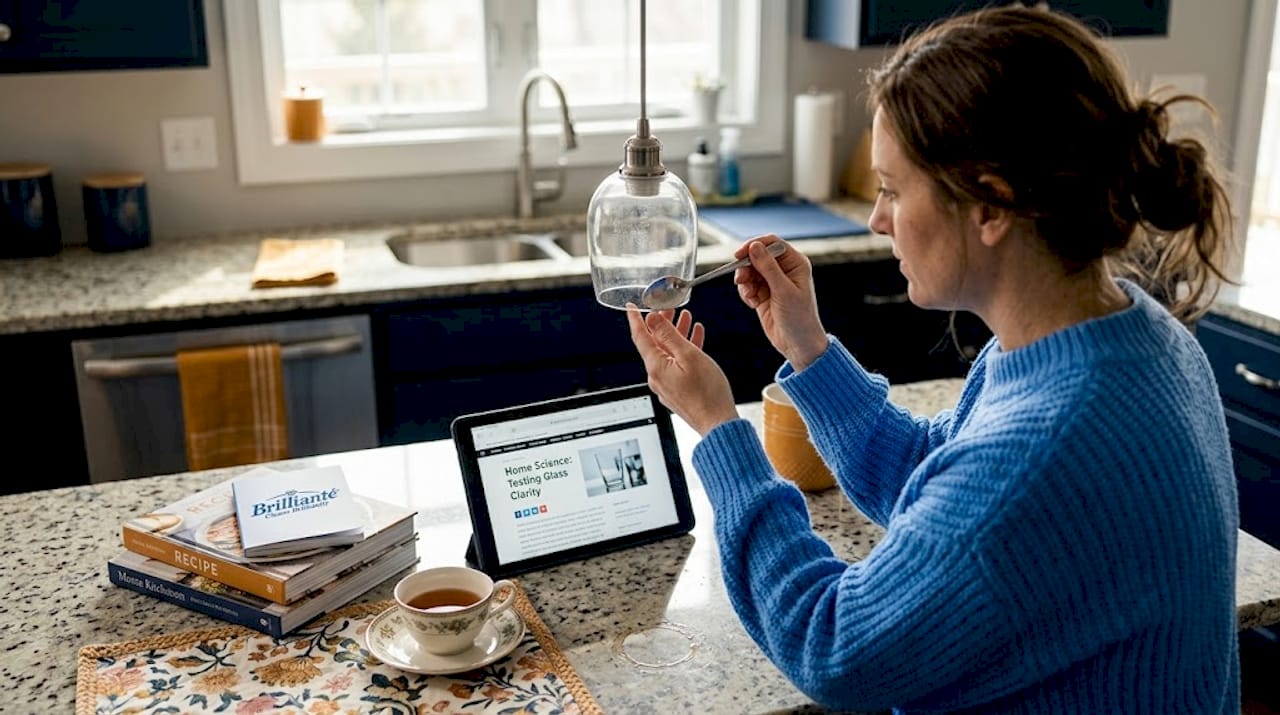
Pro Tip: For identifying crystal vs glass on a chandelier already installed, gently tap a pendant while the chandelier is off and listen from below. The ring quality carries even at a distance and can give you a quick read on what you’re working with.
Understanding crystal types: Leaded vs. lead-free and regulatory definitions
With the practical tests in your toolkit, it helps to understand that “crystal” is not a single category. There are several distinct types, each with its own composition and care profile.
The main categories of crystal:
- Full lead crystal: Contains 30% or more lead oxide. This is the premium tier, associated with heritage brands. It has exceptional brilliance and weight but is the most susceptible to damage from acidic cleaners.
- Lead crystal: Contains 24 to 29% lead oxide. Still high quality and regulated by name in the EU. Heavy, brilliant, and valuable.
- Crystal glass: Contains 10% or more of metal oxides, but can be lead-free. This is where barium, zinc, and potassium come in as substitutes.
- Lead-free crystal: Increasingly popular for health and environmental reasons. Uses alternative heavy metal oxides to replicate the optical qualities of leaded crystal.
This last category is where things get tricky for home testers. Lead-free crystal formulations may use barium, zinc, or potassium oxides to achieve the same refractive and dispersive effects as lead crystal, meaning the ring test and refraction check may not reliably distinguish lead-containing crystal from lead-free versions.
| Crystal type | Lead content | Key characteristics |
|---|---|---|
| Full lead crystal | 30%+ lead oxide | Maximum brilliance, very heavy, premium price |
| Lead crystal | 24 to 29% lead oxide | High sparkle, regulated EU term, valuable |
| Crystal glass | 10%+ any metal oxide | Good quality, may be lead-free |
| Lead-free crystal | 0% lead, other oxides | Near-identical look to leaded, safer for food use |
| Standard glass | Minimal metal oxides | Lighter, less sparkle, more durable |
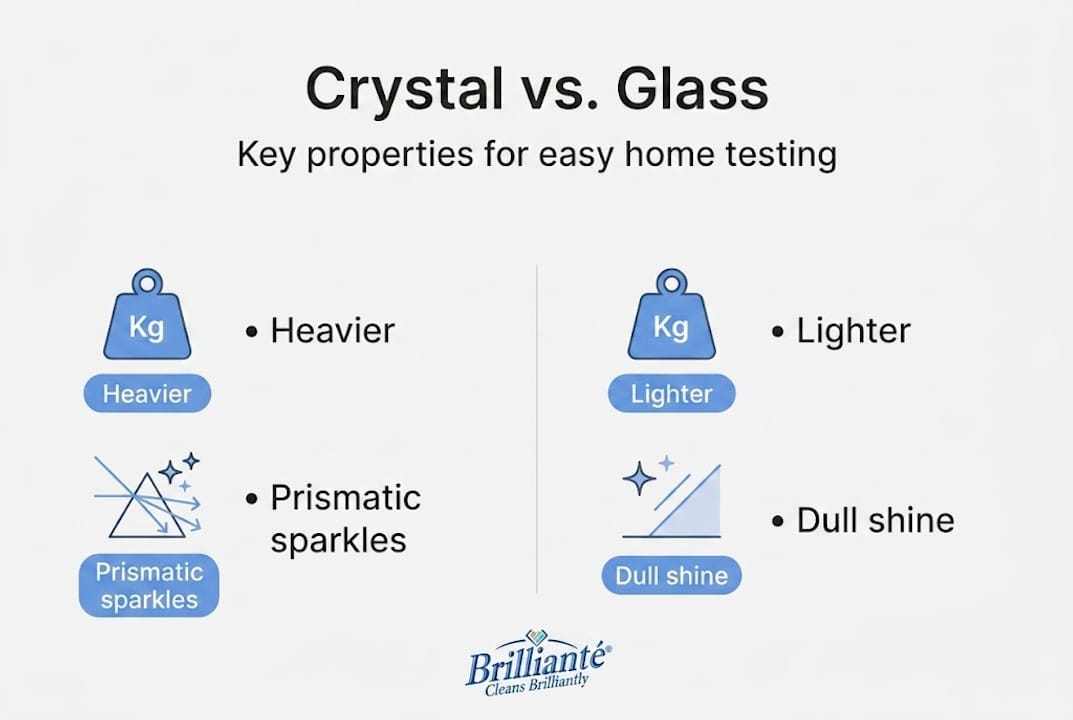
For most homeowners, the practical takeaway is this: if your piece rings clearly, scatters strong light prisms, and feels dense, it qualifies for gentle crystal-grade care, regardless of whether the formula uses lead or a modern substitute. The cleaning approach should match the material’s behavior, not just its marketing label.
It is also worth noting that if you are buying crystal pieces, labels can be misleading in the American market. The term “crystal” is not as strictly regulated in the US as it is in the EU, so some items labeled crystal may be enhanced glass rather than true crystal glass by any standard. Always look for brand provenance, origin country, and a weight comparison when shopping.
Scientific confirmation and advanced testing
Home tests narrow things down well. But what if you need to know for certain, because you are reselling a piece, insuring a collection, or concerned about lead content for safety reasons?
X-ray fluorescence (XRF) testing is the gold standard. XRF works by directing X-ray energy at the surface of a material and reading the energy that bounces back. Each element emits a unique energy signature, so the tool can identify exactly which elements are present and in what concentration. For a conclusive confirmation of lead content in glass or crystal, XRF is the most reliable non-destructive method available. Non-destructive means your piece stays intact throughout the process.
XRF devices are used by museums, auction houses, antique dealers, and insurance appraisers. They are also available through some university labs, environmental testing companies, and specialized antique restoration services. A single test typically costs between $50 and $200 depending on the provider and the detail of the report.
When is XRF worth it? If you are selling a piece and claiming it is full lead crystal, professional verification protects you legally and supports a higher asking price. If you’ve inherited a collection and want to know the health implications of long-term storage or use, XRF gives you definitive answers.
Pro Tip: Some museums and university materials science departments offer community testing days or low-cost analysis for historical objects. If you have a valuable or antique piece you cannot identify, this is a worthwhile resource to explore before investing in a private lab test.
For the vast majority of homeowners, however, XRF is overkill. If you are simply trying to keep your chandelier looking its best or choose the right cleaner for your glassware, the home tests combined with a careful look at the manufacturer’s documentation will serve you perfectly well. Reserve professional testing for high-stakes decisions involving resale, insurance, or health concerns.
The bottom line on scientific testing is simple: know when the extra step is worth it. Routine care does not require a lab report. But when the stakes are high, the technology exists and it is accessible.
A chandelier expert’s take: Look beyond the test
Here is what years of working with chandeliers and crystal decor have taught us: most homeowners get too caught up in the label and not enough in the care.
It does not matter as much whether your pendant is technically “full lead crystal” or a quality lead-free equivalent if you are cleaning it with the wrong product. A gorgeous piece of lead-free crystal treated with a harsh ammonia-based spray will lose its brilliance faster than a leaded crystal pendant treated with the right gentle cleaner. The sparkle you fell in love with is not protected by a chemical composition certificate. It is protected by consistent, appropriate care.
We have seen homeowners spend weeks researching crystal grades, then ruin a chandelier with dish soap and a rough cloth. We have also seen people with affordable glass chandeliers keep them looking brand new for over a decade simply by cleaning them properly and often.
The most useful mindset shift is this: stop asking “what is this made of?” and start asking “what does this material need from me?” Both crystal and glass benefit from non-abrasive, gentle cleaners and regular maintenance. Following a reliable chandelier care checklist does more for long-term brilliance than any material analysis. Treat every sparkling piece with respect, clean it regularly, and use products designed for delicate surfaces. That is the real expert advice.
Clean and care for your crystal with confidence
Knowing whether you have crystal or glass is only step one. Keeping it spotless and stunning is where the real difference shows.
Brilliante Crystal Chandelier Cleaner makes that second step effortless. Our specially formulated Drip-Dry solution is designed for both crystal and glass, so it does not matter where your piece falls on the spectrum. Just spray and let it drip dry. No wiping, no streaks, no guesswork. It is non-abrasive, environmentally friendly, and safe on metal fittings, so you never have to worry about tarnishing the frame while cleaning the pendants. Made in the USA and rated number one by hundreds of satisfied customers, Brilliante is the cleaner chandelier owners reach for when they want results without risk. You can also read the chandelier cleaning checklist to build a simple routine that keeps every piece looking its best year-round.
Frequently asked questions
How do I tell if my chandelier pendants are real crystal or just glass?
Check the weight, listen for a long-lasting ring when tapped, and look for strong rainbow prisms in light. Real crystal is generally denser and heavier than glass of the same size and rings with a clear, sustained tone.
Can lead-free crystal look or behave just like lead crystal?
Yes. Lead-free formulations using barium, zinc, or potassium oxides can visually and acoustically mimic traditional leaded crystal, making them nearly indistinguishable through home tests alone.
Is there a health risk from handling or using crystal containing lead?
Handling lead crystal poses minimal risk. The main concern is prolonged storage of acidic foods or drinks like wine or vinegar in lead crystal containers, which can cause small amounts of lead to leach into the contents over time.
How does cleaning differ between crystal and regular glass?
Crystal is generally softer and more vulnerable to surface damage, so you should avoid abrasive cloths and harsh chemical cleaners. Use a gentle, specialized cleaner designed for crystal and glass to preserve the surface and maintain brilliance.
What is the most reliable test to confirm crystal content?
XRF analysis is the most accurate non-destructive option, as it reads elemental composition and can confirm both the presence and percentage of lead or other metal oxides in the glass.