
Crystal vs. Glass: How to Tell the Difference for Chandeliers
TL;DR:
- Crystal contains lead or metal oxides, creating prismatic rainbows and heavier feel.
- Glass is lighter, more durable, and produces a uniform glow without rainbow reflections.
- Proper identification and maintenance are essential, as crystal requires careful hand-washing and routine cleaning.
Many homeowners spend thousands on a chandelier believing it’s pure crystal, only to discover later it’s glass. The two materials look similar at a glance, but their properties, visual impact, and care needs are dramatically different. Crystal produces brilliant prismatic rainbows; glass simply glows. Crystal requires careful hand-washing; glass can handle much rougher treatment. Whether you’re shopping for a new fixture, maintaining an heirloom piece, or just trying to understand what’s hanging above your dining table, knowing the difference protects your investment and keeps your chandelier looking its absolute best for years to come.
Key Takeaways
| Point | Details |
|---|---|
| Crystal sparkles, glass shines | Crystal’s higher refractive index creates rainbow sparkles, while glass has a subtler shine. |
| Care needs differ | Crystal requires gentle hand-cleaning; glass is more durable and often dishwasher-safe. |
| Test with touch and sound | Crystal feels heavier and rings when tapped, while glass feels light and makes a dull noise. |
| Match materials to needs | Choose crystal for heirloom pieces and glass for practical, lower-maintenance settings. |
What makes crystal different from glass?
With this common confusion in mind, let’s explore the core physical and visual differences that set crystal and glass apart.
The single biggest difference comes down to chemistry. Crystal contains lead oxide or other metal oxides mixed into its composition. Standard glass does not. That addition of lead or metal oxides changes everything about how light interacts with the material, how heavy it feels in your hand, and how it responds to cleaning products.
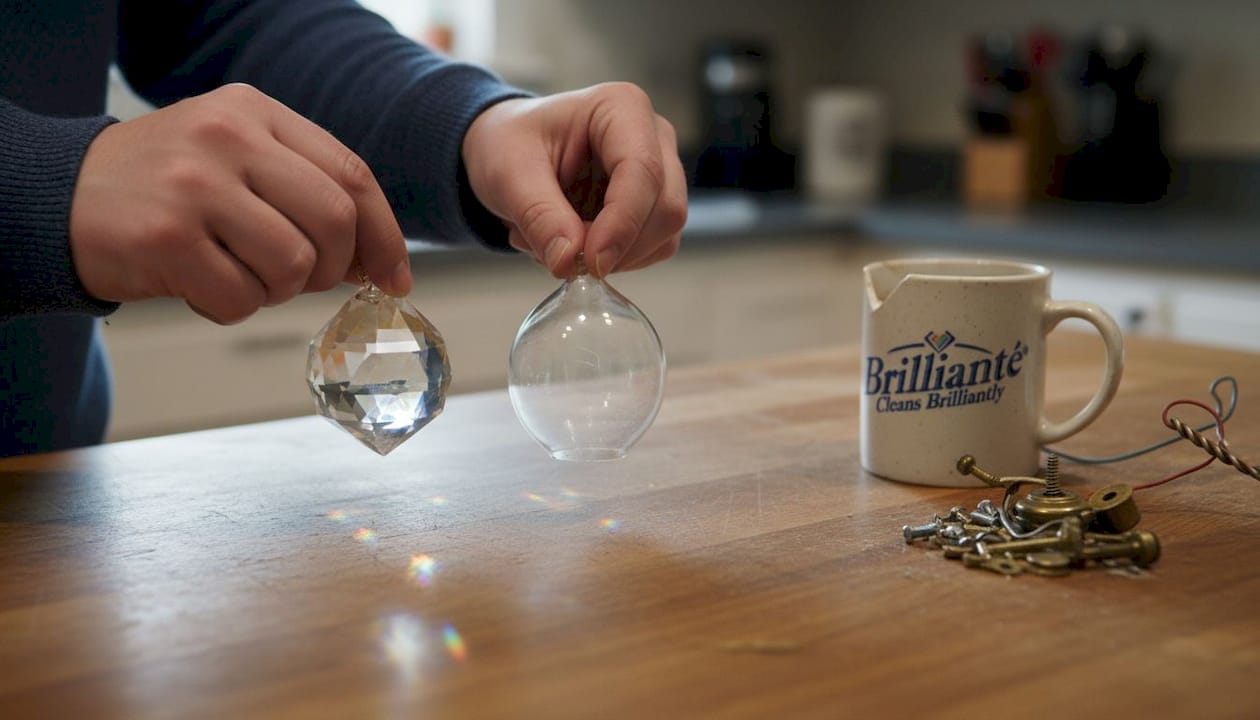
Light behavior is the most visible difference. Crystal has a higher refractive index (typically above 1.5 due to lead content), which means it bends and scatters light into prismatic rainbows across your walls and ceiling. Glass has a lower refractive index of around 1.46, producing a duller, more uniform shine without those signature color bursts. That sparkle you associate with luxury chandeliers? That’s crystal doing its job.
Beyond light, the physical feel is telling. Crystal is heavier, rings with a bell-like tone when tapped, feels noticeably colder to the touch, and can be cut into thinner, sharper facets. Glass is lighter, produces a dull thud when tapped, and requires thicker walls because it hardens faster during manufacturing.
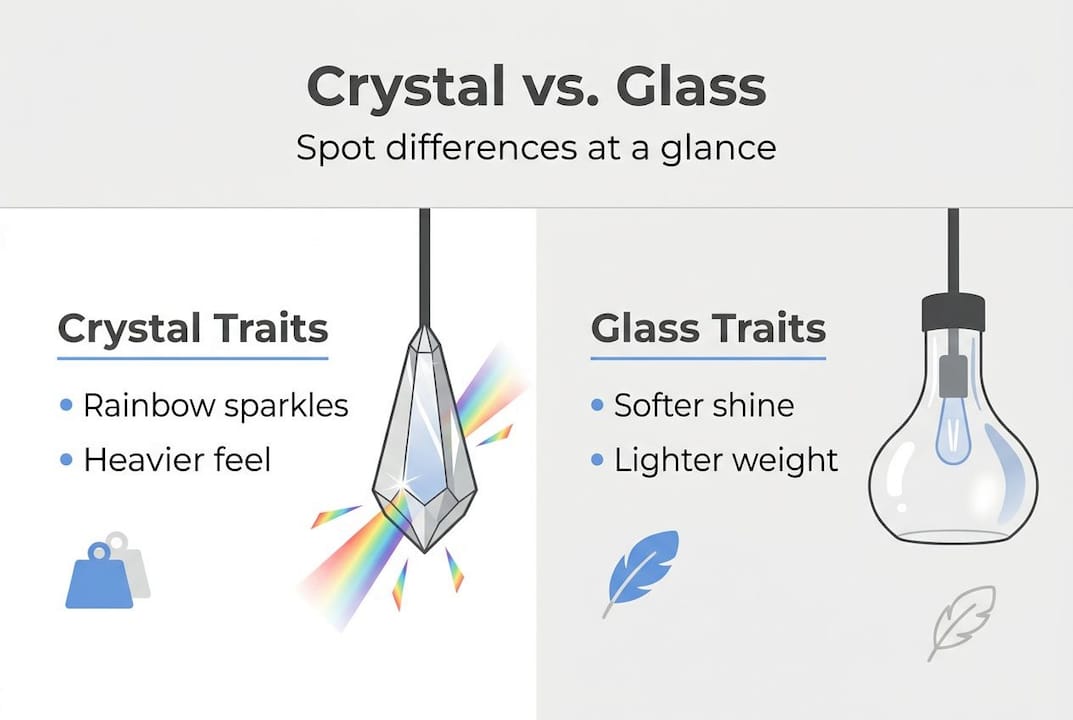
Here’s a quick side-by-side breakdown:
| Property | Crystal | Glass |
|---|---|---|
| Composition | Lead or metal oxides added | Pure silica, no additives |
| Refractive index | Above 1.5 | Around 1.46 |
| Weight | Heavier | Lighter |
| Sound when tapped | Clear, bell-like ring | Dull thud |
| Facet sharpness | Thin, precise cuts | Thicker, less defined |
| Light output | Prismatic rainbows | Uniform glow |
These differences also matter for long-term care. Crystal’s softness (a side effect of its lead content) makes it more prone to scratching and etching from harsh cleaners. Staying on top of your crystal cleaning checklist is essential to preserving that sparkle over time.
“The sparkle of crystal isn’t magic. It’s physics. Lead oxide raises the refractive index just enough to turn ordinary light into a room-filling light show.”
Key properties that distinguish crystal from glass at a glance:
- Sparkle: Crystal casts rainbow reflections; glass does not
- Weight: Crystal feels noticeably denser
- Sound: Crystal rings clearly; glass thuds
- Temperature: Crystal feels colder initially
- Facets: Crystal allows sharper, thinner cuts
- Durability: Glass resists scratching better
How to identify crystal vs. glass in chandeliers
Now that you know the main differences, here’s how you can quickly tell which material your chandelier uses.
You don’t need a lab or a jeweler’s loupe. A few simple hands-on tests will tell you everything you need to know in under two minutes. The key is knowing what to feel, hear, and look for.
Comparison of test results by material:
| Test | Crystal result | Glass result |
|---|---|---|
| Weight | Heavy, dense feel | Light, easy to lift |
| Sound (tap lightly) | Prolonged ring, bell-like | Short, dull thud |
| Light refraction | Rainbow colors on walls | White or pale glow only |
| Surface temperature | Noticeably cold | Closer to room temperature |
| Facet edges | Sharp, thin, precise | Rounded, thicker edges |
Follow these steps to test a chandelier pendant or drop:
- Hold it in your palm. Crystal will feel noticeably heavier than you expect for its size. Glass feels almost hollow by comparison.
- Tap it gently with your fingernail. Crystal rings with a prolonged tone, almost like a tiny bell. Glass produces a flat, quick thud with no resonance.
- Hold it up to a light source. Move it slowly. Crystal will scatter light into distinct rainbow colors on nearby surfaces. Glass will glow but won’t produce those color separations.
- Inspect the facet edges closely. Crystal can be cut thinner and sharper. If the edges look crisp and precise, it’s likely crystal. Softer, rounded edges suggest glass.
- Feel the surface temperature. Crystal retains cold longer and will feel cooler against your skin than glass at the same room temperature.
Pro Tip: Always wear clean cotton gloves when handling chandelier pendants during testing. Oils from bare hands can leave smudges that are hard to remove and may even cause film buildup on crystal over time.
One more thing worth noting: many modern chandeliers use a mix of both materials. The main frame might be glass while accent drops are crystal, or vice versa. Test multiple pieces before drawing conclusions about the whole fixture.
Cleaning and caring for crystal vs. glass fixtures
Once you’ve identified your material, maintaining it properly makes all the difference for lasting brilliance.
The biggest mistake homeowners make is treating crystal and glass the same way. They look similar, so people assume they clean the same. They don’t. The chemical composition that gives crystal its beauty also makes it more vulnerable to the wrong cleaning approach.
Crystal is more porous and scratch-prone than glass. It should never go in a dishwasher because the heat causes thermal shock and mineral deposits that cloud the surface permanently. Hand-washing only, with lukewarm water and a gentle soap, is the standard. Glass, by contrast, is non-porous, heat-resistant, and generally dishwasher-safe, making it far more forgiving.
For crystal chandeliers specifically, dust weekly or biweekly with a feather duster, and plan a deep clean every 3 to 12 months depending on how dusty your home gets. Use distilled water mixed with isopropyl alcohol at a 4:1 ratio, or a mild soap solution. Avoid ammonia and vinegar near metal hardware. Always air-dry completely before turning the lights back on.
Pro Tip: Distilled water is worth the small extra cost. Tap water contains minerals that leave white spots on crystal after drying, dulling that hard-earned sparkle.
Here’s a practical care routine broken down by frequency:
- Daily: Keep the room well-ventilated to reduce dust accumulation on pendants
- Weekly: Light dusting with a clean feather duster or soft microfiber cloth
- Monthly: Inspect for loose pendants, smudges, or early signs of film buildup
- Every 3-12 months: Full deep clean using appropriate solution for crystal or glass
- As needed: Call a professional for large antique fixtures or ornate multi-tier chandeliers
For glass fixtures, the routine is simpler. Dust regularly, wipe with a damp cloth, and use standard glass cleaner when needed. The lower maintenance demand is one of glass’s biggest practical advantages.
Exploring the right crystal cleaning spray solutions can also cut your cleaning time dramatically, especially for large chandeliers where hand-wiping every pendant is simply not realistic.
Which is right for your home: crystal or glass?
The care and characteristics of each material naturally influence which is a better fit for your lifestyle and aesthetic.
This isn’t a question with a universal answer. The right choice depends on your style goals, how much time you’re willing to invest in maintenance, your budget, and where in the home the chandelier will live.
Crystal is the luxury, heirloom choice. It carries more visual drama, holds its value better over time, and signals craftsmanship in a way glass simply cannot replicate. The trade-off is higher upfront cost and more careful ongoing maintenance. Crystal works beautifully in formal dining rooms, entryways, and master bedrooms where it becomes a true focal point.
Glass is the practical, modern choice. It’s lighter, easier to clean, more affordable, and works well in contemporary spaces where clean lines matter more than prismatic sparkle. High-traffic areas like kitchens or kids’ playrooms benefit from glass because it tolerates more aggressive cleaning without damage.
“Neither crystal nor glass is objectively better. The right material is the one that fits the room’s purpose, your cleaning habits, and your design vision.”
Before buying or installing a chandelier, ask yourself these questions:
- How formal is the room? Crystal suits formal spaces; glass fits casual or modern rooms
- How much time can you commit to cleaning? Crystal needs more careful attention
- What’s your budget? Crystal costs more upfront and in maintenance
- Is this a statement piece or background lighting? Crystal demands attention; glass supports it
- Do you have children or pets? Glass is more forgiving in active households
- Is the fixture in a high-humidity area? Both need care near moisture, but glass is more tolerant
Reviewing a solid chandelier cleaning checklist before you commit to a fixture helps you understand exactly what you’re signing up for in terms of ongoing care.
Our take: What most guides miss about crystal vs. glass
Most guides frame this as a binary choice: crystal or glass. That framing misses something important. Many of the most beautiful rooms we’ve seen use both materials intentionally. A crystal chandelier in the entryway creates that wow moment for guests, while glass pendants in the kitchen keep daily life manageable. That’s not a compromise. That’s smart design.
The other thing most guides overlook is how much modern cleaning products have closed the maintenance gap. Crystal used to feel intimidating because traditional cleaning meant removing every pendant by hand. Today, modern cleaning sprays let you spray and walk away, making crystal nearly as low-effort as glass for routine upkeep.
The real deciding factor isn’t the material. It’s whether you have a consistent maintenance routine. A neglected crystal chandelier looks worse than a well-kept glass one every single time. Commit to the routine first, then choose the material that fits your space and budget.
Crystal brilliance made simple
You now know exactly how to tell crystal from glass, how to care for each, and how to choose the right fixture for your home. The next step is making sure you have the right tools to keep whichever material you choose looking its best.
At Brillante Crystal Cleaner, we’ve made chandelier care as simple as it should be. Our Drip-Dry formula is proudly made in the USA, non-abrasive, and safe for metal hardware. Just spray and let it drip dry. No wiping, no ladder time, no stress. For a full step-by-step approach, our in-depth cleaning checklist walks you through everything from weekly dusting to annual deep cleans. Rated #1 by hundreds of satisfied customers, it’s the easiest way to protect your investment.
Frequently asked questions
How do I quickly tell crystal from glass in my chandelier?
Crystal sparkles with rainbow colors, feels heavier, and rings like a bell when tapped. Glass looks duller, feels lighter, and makes a flat thud.
Is crystal harder to clean than glass?
Yes. Crystal scratches easily and is not dishwasher-safe, requiring hand-washing only. Glass is non-porous, heat-resistant, and far more tolerant of standard cleaning methods.
How often should crystal chandeliers be deep-cleaned?
Plan on a full deep clean every 3 to 12 months, depending on dust levels in your home, with light dusting done weekly or biweekly in between.
Does crystal always cost more than glass?
Generally yes. Crystal’s luxury and craftsmanship command a higher price, though some premium art glass pieces can reach similar price points depending on the maker and design.