
How to distinguish crystal from glass: identify and care
TL;DR:
- Crystal and glass look similar but differ in weight, light refraction, and sound when tapped.
- Proper identification and gentle cleaning products are essential to maintain crystal’s brilliance and prevent damage.
- Regular dusting, careful cleaning, and use of specialized products keep crystal chandeliers sparkling for years.
Even seasoned interior decorators can walk right past a glass chandelier and call it crystal without a second thought. The two materials look remarkably similar hanging above a dining table, especially when cut into elegant prisms and strands. That single misidentification can lead to the wrong cleaning products, dulled surfaces, and real frustration. By the time you finish this article, you will know exactly how to tell crystal from glass, understand why the difference matters for your space, and have a clear care routine that keeps your fixture brilliant for years to come.
Key Takeaways
| Point | Details |
|---|---|
| Crystal vs. glass basics | Crystal is heavier and more brilliant due to lead content, while glass is lighter and less refractive. |
| Practical at-home tests | Using weight, sound, and light refraction tests helps reliably identify crystal versus glass. |
| Caring for chandeliers | Crystal requires gentler cleaning methods and specialized solutions for lasting sparkle. |
| Common pitfalls | Avoid harsh chemicals and always dry thoroughly to maintain clarity and avoid damage. |
| Worth the effort | Crystal delivers a unique elegance and ambiance that rewards a little extra care. |
Why crystal and glass are often confused
At first glance, the confusion makes total sense. Both materials start from nearly the same building blocks: sand, soda, and lime. The real divergence happens during manufacturing, when crystal receives an addition of lead oxide or other minerals like barium or zinc. This mineral content changes the density, weight, and optical behavior of the finished piece. Crystal and glass both derive from similar raw materials but differ in lead content and optical properties.
The visual overlap is where most people get tripped up. Both materials can be:
- Completely clear and colorless
- Cut into intricate geometric shapes
- Polished to a high shine
- Formed into nearly identical chandelier prisms
Inexpensive glass can even be treated or coated to mimic the sparkle of true crystal, making the problem worse at the point of purchase.
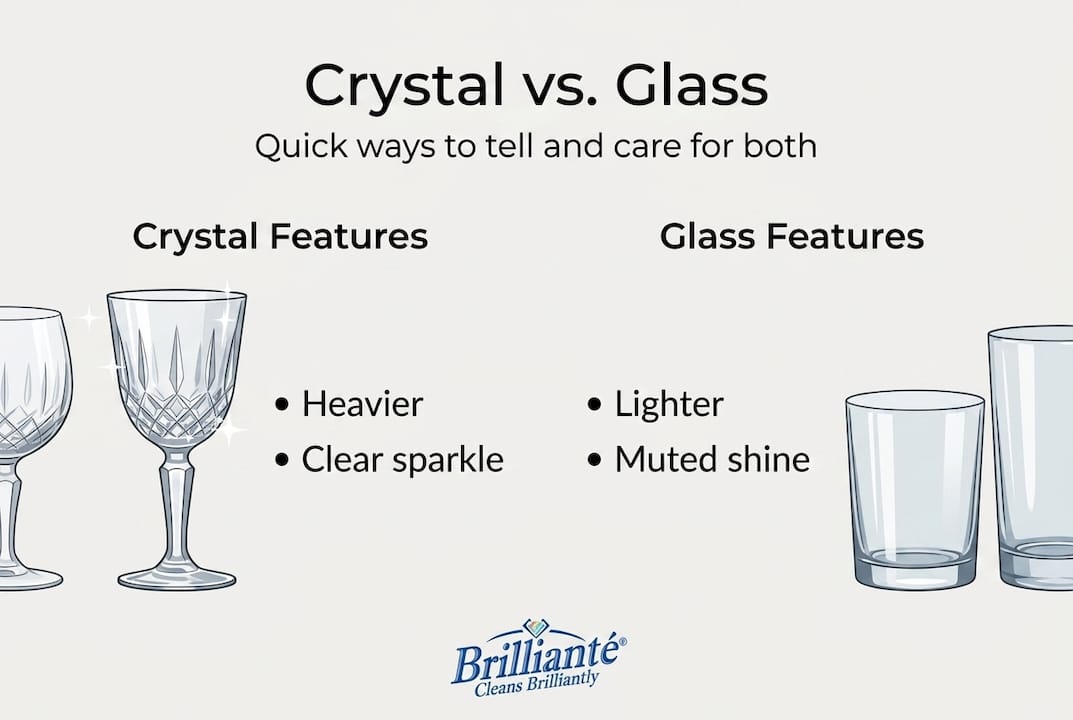
The reason this matters goes beyond pride of ownership. Crystal refracts light differently than glass. The lead or mineral content raises the refractive index, which means crystal breaks white light into a wider spectrum of color, casting those signature rainbow patches around your room. Glass scatters light more uniformly and with less drama. The ambiance these two materials create is genuinely different, even if the fixtures look similar on the shelf.
The most dangerous outcome of confusing the two is care errors. Crystal is softer and slightly more porous than glass. Cleaning it with the wrong products or harsh scrubbing strips its surface and permanently reduces its sparkle. Glass is more forgiving, but applying overly gentle techniques designed for crystal to a glass chandelier can leave residue. Knowing your material is the starting point for everything.
Pro Tip: When in doubt, check the manufacturer’s label or documentation that came with your fixture. Many reputable brands stamp “crystal” or include a certificate of material composition.
Key tests: How to spot crystal vs. glass at home
Understanding the origins helps, but what can you do right at home to tell the difference? Here are proven methods.
- The weight test. Pick up a single pendant or prism if you can safely remove one. Crystal feels noticeably heavier for its size than glass of the same dimensions. The added mineral content gives it a denser, more substantial feel.
- The light refraction test. Hold the piece up to a bright light source or a sunny window. True crystal scatters light into a vivid rainbow spectrum. Glass produces some sparkle, but the colors are muted and less dramatic.
- The sound test. Lead crystal is heavier and delivers a higher pitch when tapped compared to ordinary glass. Gently tap the piece with your fingernail. Crystal produces a long, clear, bell-like ring that sustains for a moment. Glass gives a shorter, duller thud.
- The seam and cut test. Look closely at the edges of the piece. Glass is often molded, leaving faint seams where the mold halves met. Crystal is precision-cut and polished, producing sharper, cleaner edges with no visible seams.
Here is a quick comparison to keep handy:
| Test | Crystal result | Glass result |
|---|---|---|
| Weight | Heavier for size | Lighter |
| Light refraction | Vivid rainbows | Mild, diffuse sparkle |
| Sound when tapped | Long, clear ring | Short, dull thud |
| Edge quality | Sharp, seamless cuts | May show mold seams |
The difference between glass and crystal becomes clearest when you combine at least two of these tests instead of relying on just one. No single test is foolproof on its own.

Pro Tip: Run the weight test and the sound test together. If a piece feels dense and rings clearly, you almost certainly have crystal. If it feels light and thuds, that is glass.
How to care for crystal and glass: Cleaning dos and don’ts
Identifying your material is step one. Next, let’s make sure you keep it looking brilliant with the right care routine.
Crystal’s mineral content makes it softer on the Mohs hardness scale compared to standard glass. That means it scratches more easily and absorbs cleaning agents more readily. Crystal can be damaged by harsh chemicals, so gentle cleaners are always recommended. Ammonia-based products, bleach, and abrasive scrubbers are all off-limits for crystal. They etch the surface and permanently cloud the finish.
Glass is more tolerant. Standard glass cleaners with ammonia are generally fine for glass chandeliers, and the surface resists minor abrasion better. That said, abrasive scrubbing pads can still leave micro-scratches over time, so softer cloths remain the smarter choice for both.
Here is a practical reference for cleaning both materials:
| Cleaning approach | Crystal | Glass |
|---|---|---|
| Specialized crystal cleaner | Recommended | Works well |
| Ammonia-based glass cleaner | Avoid | Acceptable |
| Microfiber cloth | Best choice | Best choice |
| Paper towels | Avoid (can scratch) | Use with care |
| Abrasive pads | Never | Avoid |
| Air drying without wiping | Risky (water spots) | Risky |
For crystal, follow this routine:
- Turn off the fixture and let bulbs cool completely before touching anything
- Dust weekly with a soft, dry microfiber cloth to prevent buildup
- For deeper cleaning, use a purpose-formulated chandelier cleaning tips solution that is non-abrasive and safe for metal fittings
- Never submerge crystal pendants in water, as prolonged exposure can weaken the metal wire connections
- Dry immediately with a clean microfiber cloth or allow a drip-dry formula to evaporate streak-free
For glass, the routine is similar but slightly more flexible. You can use standard glass cleaner on individual pieces, but always dry thoroughly to avoid water spots. Check your crystal chandelier cleaning checklist to stay on top of each step.
Pro Tip: Regular dusting dramatically cuts down on deep cleaning sessions. A two-minute weekly dust keeps buildup from hardening into grime that requires more aggressive removal later.
Common mistakes and expert tips for lasting brilliance
Now that you know what to do, here are some mistakes to avoid and tricks for making your fixtures shine for years.
The most common cleaning mistakes we see involve products people already have at home. Reaching for a multi-surface spray or a paper towel feels convenient, but those choices can permanently dull crystal. Improper cleaning is a top cause of damage to both crystal and glass chandeliers. The damage is often invisible at first, accumulating over multiple cleanings until the fixture simply stops sparkling the way it once did.
Here are the mistakes to stop making immediately:
- Using ammonia or bleach on crystal. These chemicals etch the surface and destroy the optical clarity that makes crystal worth owning.
- Scrubbing with paper towels or rough cloths. Paper fibers are abrasive at a microscopic level and scratch crystal’s relatively soft surface.
- Skipping the drying step. Water left on both crystal and glass evaporates and deposits minerals, leaving cloudy water spots that obscure sparkle.
- Not dusting regularly. Dust buildup bonds to the surface over time, especially in kitchens or rooms with cooking fumes, and becomes far harder to remove.
- Cleaning while the fixture is still warm. Heat causes materials to expand slightly, and cleaning solutions applied to a warm surface can cause streaking.
For expert results, look into eco-friendly chandelier care solutions that avoid harsh chemicals without sacrificing cleaning power. They protect both your fixture and your indoor air quality.
Pro Tip: Always remove rings and bracelets before handling crystal pendants, and wear clean cotton gloves if possible. Skin oils and metal jewelry can leave scratches or smudges that require extra effort to remove.
Our take: Why crystal is worth the extra effort
After years of working with both materials across all kinds of spaces, we keep arriving at the same conclusion: crystal is not just a material, it is an experience. The way genuine crystal throws color across a white ceiling at sunset, or catches candlelight during a dinner party, cannot be replicated by glass regardless of how well it is cut or polished.
Most guides treat crystal and glass as nearly interchangeable, just different price points. That misses the point entirely. Crystal changes the feel of a room in a way that is hard to quantify but immediately felt by anyone who walks in. It signals care and intention in your space.
Yes, caring for crystal takes a bit more thought. You need the right cleaner, a gentle touch, and a consistent routine. But that small investment of attention pays off every time light hits the prisms and fills your room with color. The satisfaction of making a chandelier dazzle is genuinely one of the more rewarding parts of home maintenance. Crystal rewards the people who care for it properly. That is not a small thing.
Keep your crystal brilliant with the right products
All the knowledge in the world works best when paired with the right tools. Knowing your cleaning dos and don’ts is only half the equation.
Brilliante Crystal Chandelier Cleaner was designed specifically for situations like yours. Our Drip-Dry formula is proudly made in the USA, non-abrasive, and environmentally friendly. You simply spray it on and let it drip dry, leaving zero residue and no need for wiping. It will not tarnish metal fittings, and it is rated number one by hundreds of satisfied customers. If you want a fast, effective way to keep your crystal or glass chandelier looking its absolute best, explore our crystal cleaning solution and see why so many homeowners and decorators trust Brilliante.
Frequently asked questions
Can you distinguish crystal from glass just by looking at it?
Crystal often shows higher clarity and vivid light refraction and clarity compared to glass, but visual inspection alone is not reliable. Combine it with the weight and sound tests for a confident identification.
Is lead crystal dangerous to handle or clean?
Lead crystal is safe for everyday handling and home cleaning. Lead crystal requires gentle cleaners for maintenance, and the main caution is to avoid harsh chemicals that can break down the surface over time.
What is the fastest way to clean a crystal chandelier?
Dust regularly and use a specialized cleaners and soft cloths approach with a purpose-formulated crystal cleaner for a quick, streak-free result without removing pendants.
Why does my chandelier look dull even after cleaning?
Residue from the wrong cleaners or incomplete drying leaves a film that blocks sparkle. Proper cleaning restores original brilliance, so always use a recommended solution and ensure the fixture dries completely.