
What is plated metal? Care tips for crystal chandeliers
TL;DR:
- Most chandelier finishes are plated metal, which is a thin, fragile surface coating.
- Proper cleaning involves gentle techniques and specific products to prevent damage.
- Regular, cautious maintenance extends the life of plated finishes and preserves chandelier beauty.
That gorgeous gold or silver finish on your crystal chandelier probably isn’t solid metal. Most chandelier frames feature plated metal, which is a thin metallic layer bonded over a base material to create a beautiful, polished look at a fraction of the cost of solid metal. It looks stunning, but that thin surface is far more fragile than it appears. Use the wrong cleaner or a rough cloth just once, and you can dull, scratch, or strip the finish permanently. This guide walks you through exactly what plated metal is, how to identify the finish on your chandelier, and the safest ways to keep it gleaming for years.
Key Takeaways
| Point | Details |
|---|---|
| Plated metal basics | A plated finish is a thin metal layer applied to another metal for elegance and protection. |
| Handle finishes gently | Abrasive cleaning easily damages the delicate surface of plated metals on chandeliers. |
| Routine cleaning matters | Weekly gentle dusting extends plated finish life and reduces deep cleaning needs. |
| Recognize wear signs | Dull spots or exposed base metal mean it’s time for professional help to restore the finish. |
Understanding plated metal: The basics
Now that you know most chandelier finishes are plated, let’s demystify how plated metal is made and why it matters for your home.
Plated metal is created by depositing a thin layer of one metal onto a base material, usually another metal, through processes like electroplating or electroless plating. The result is a surface that looks and feels like the coating metal while the base material underneath provides structure and keeps costs manageable. For chandeliers, this means you get the visual richness of gold or silver without paying for solid precious metal construction.
Here’s why manufacturers love plating for chandelier frames:
- Appearance: Plating delivers a mirror-bright, consistent finish that’s hard to achieve with raw base metals.
- Corrosion resistance: The outer layer shields the base metal from moisture and air exposure.
- Cost efficiency: A thin coat of a premium metal goes a long way, making elegant designs affordable.
- Design flexibility: Manufacturers can plate almost any shape, allowing intricate chandelier arm designs.
- Variety: Different plating metals produce wildly different looks from the same base material.
The two most common plating methods you’ll encounter are electroplating and electroless plating. Electroplating passes an electric current through a solution containing metal ions, which then bond to the base material. Electroless plating uses a chemical reaction instead of electricity, often producing a more even coat on complex shapes.
The key thing to remember: No matter how thick the finish looks, plated metal is always a surface treatment, not a structural material. It can be as thin as a few microns, which is why cleaning approach matters so much.
For chandeliers, common base metals include zinc alloy, brass, and steel. The plating on top is typically gold, silver, chrome, or nickel. Each combination has its own look and its own sensitivity to cleaning products. Understanding this layered construction is the first step to protecting your chandelier’s finish for the long term.
Types of plated metal finishes on crystal chandeliers
With the basics down, it’s helpful to recognize the different plated finishes common to chandeliers and what sets them apart.
Common plating types include gold, silver, chrome, nickel, and zinc, and each creates a distinct look on chandelier frames. Knowing which finish you have changes everything about how you should clean and maintain it.
| Finish | Appearance | Typical lifespan | Maintenance sensitivity |
|---|---|---|---|
| Gold plating | Warm, rich, classic | 2 to 5 years | High, tarnishes with harsh chemicals |
| Silver plating | Cool, bright, formal | 2 to 4 years | Very high, tarnishes quickly |
| Chrome plating | Mirror-bright, modern | 5 to 10 years | Moderate, shows fingerprints easily |
| Nickel plating | Warm silver tone | 4 to 8 years | Moderate, sensitive to acids |
| Zinc plating | Matte to satin gray | 3 to 6 years | Lower, but chips if abraded |
Gold plating is the most popular choice for traditional and crystal chandeliers. It creates that warm, luxurious glow that pairs perfectly with crystal drops. However, gold plating is thin and reacts badly to acidic cleaners.
Silver plating gives chandeliers a formal, cool-toned elegance. It tarnishes faster than gold and requires the most careful handling of any finish on this list.
Chrome plating is more common on contemporary designs. It’s harder and more durable than gold or silver plating, but it shows smudges and water spots very easily.
Nickel plating sits between chrome and gold in both tone and durability. It’s a popular choice for transitional style chandeliers and holds up reasonably well with regular gentle care.
Zinc plating is often used as a base coat under other finishes or as a standalone protective layer on budget-friendly fixtures. It’s less glamorous but still needs gentle handling to prevent chipping.
Pro Tip: Before you clean your chandelier, check the product description or any paperwork that came with it. Look for terms like “gold-plated,” “chrome finish,” or “nickel-plated.” If you’re unsure, take a close look at any edges or worn spots where the base metal might show through. That will tell you a lot about what you’re working with.
Why plated finishes need special care
Knowing the type of plated finish is just the start. Understanding why these surfaces require special attention is key to preserving your chandelier’s beauty.
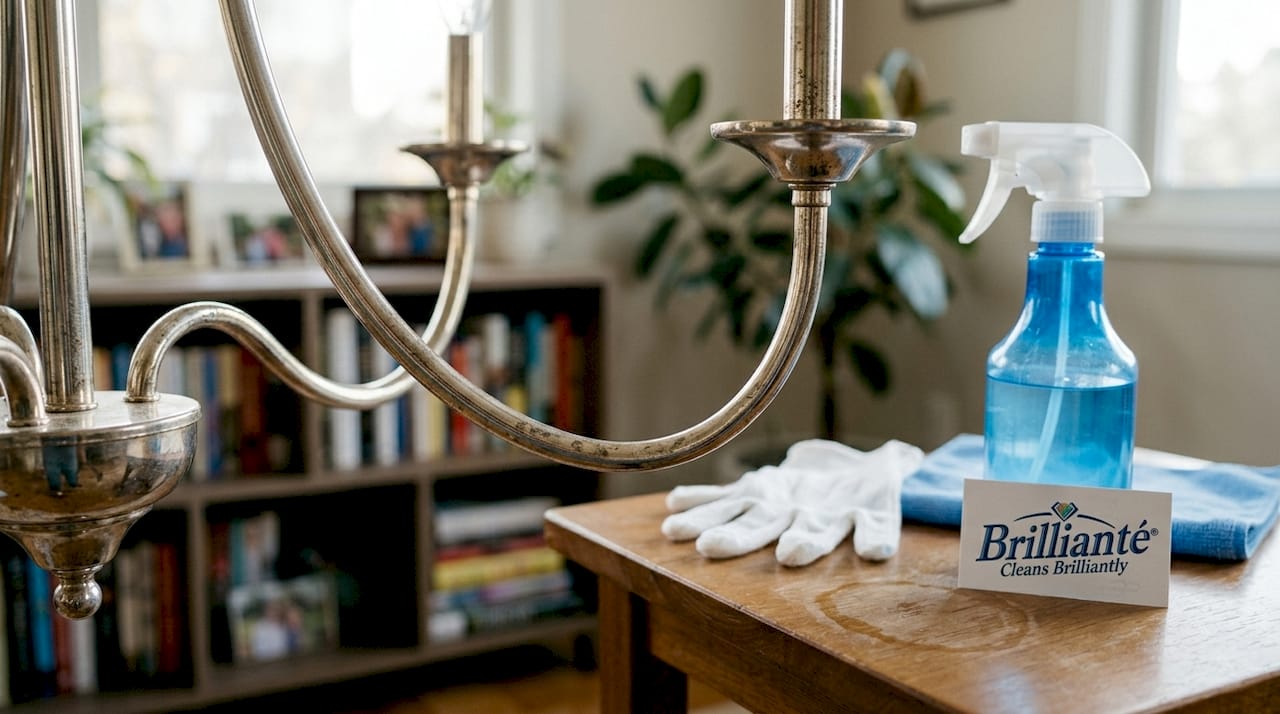
The thin plating layer is the entire reason your chandelier looks as good as it does, and it’s also its biggest vulnerability. Unlike solid metal, which can be polished aggressively and still look great, a plated surface has a finite thickness. Once it’s gone, it’s gone. The base metal underneath will tarnish, corrode, or simply look completely different from the original finish.
Here are the most common ways homeowners accidentally damage plated finishes:
- Abrasive cloths or sponges: Even a slightly rough cloth can scratch the thin surface layer over time.
- Harsh chemical cleaners: Products with bleach, ammonia, or strong acids eat through plating quickly.
- Vinegar or lemon juice: Natural acids are still acids. They corrode plated surfaces just as effectively as chemical cleaners.
- Excessive moisture: Leaving water sitting on a plated surface accelerates corrosion at any point where the plating is thin or compromised.
- Rubbing too hard: Friction is the enemy of thin plating. Gentle pressure is always the right call.
Proper care can prevent the large majority of corrosion damage on plated surfaces, which means most finish wear is entirely avoidable with the right habits. That’s a significant number when you consider how expensive chandelier restoration or replacement can be.
For electrical safety during cleaning, always review chandelier cleaning safety guidelines before you start, especially if you’re working with the fixture still mounted.
Pro Tip: Always test any new cleaning product on a small, hidden area of the chandelier frame first. Give it a few minutes and check for any discoloration or dullness before applying it more broadly.
Essential care and cleaning tips for plated metal chandeliers
Ready to take action? Here are proven steps you can follow to clean and maintain your chandelier’s plated surfaces safely.
Step-by-step routine cleaning:
- Turn off the chandelier and let the bulbs cool completely before touching anything.
- Use a clean, dry microfiber cloth to gently dust all metal surfaces weekly.
- For light soil, dampen a soft cloth with plain water and wipe gently. Dry immediately.
- Apply a cleaner specifically formulated for plated metal if deeper cleaning is needed.
- Never scrub. Use light, circular motions and minimal pressure.
- Dry all surfaces thoroughly with a second clean microfiber cloth.
What to avoid at all costs:
- Abrasive pads or scrubbing sponges
- Spray cleaners with alcohol, bleach, or ammonia
- Paper towels, which are rougher than they seem
- Leaving any moisture on the surface after cleaning
Weekly dusting reduces the need for deep cleaning to just every 6 to 12 months, which dramatically extends the life of your plated finish. Staying consistent with your chandelier cleaning checklist is the single best thing you can do for long-term finish preservation.
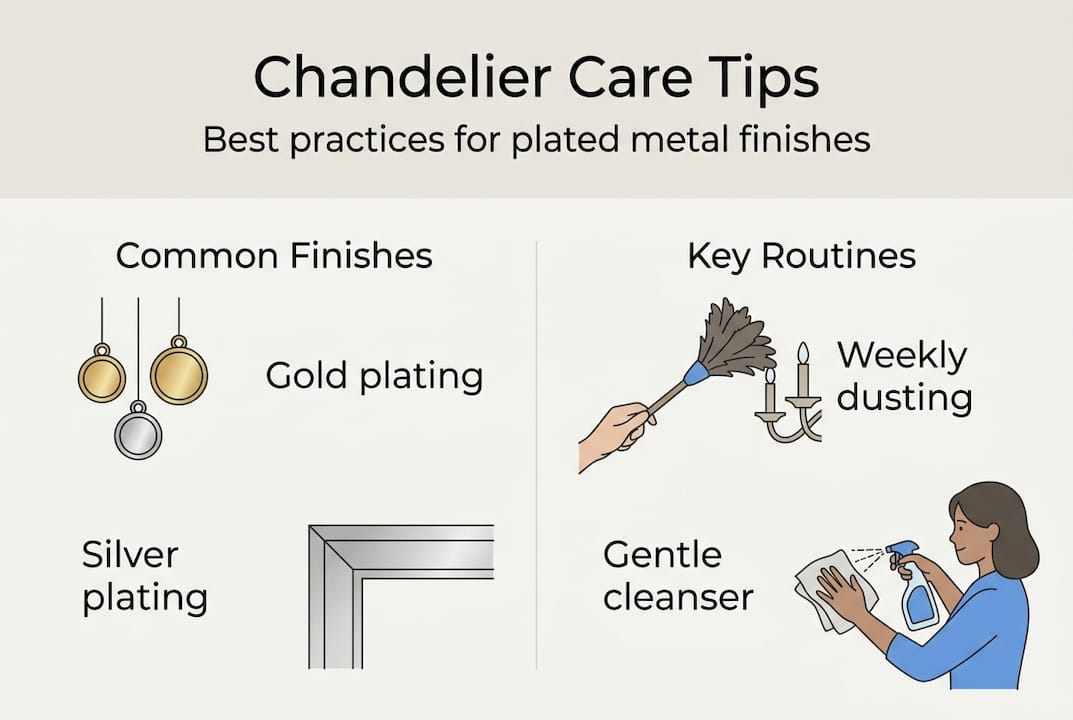
| Care method | Recommended frequency | Effect on finish longevity |
|---|---|---|
| Dry microfiber dusting | Weekly | Prevents buildup, reduces wear |
| Gentle damp wipe | Monthly | Removes light grime safely |
| Formulated cleaner | Every 6 to 12 months | Deep cleans without damage |
| Professional inspection | Every 1 to 2 years | Catches early wear before it spreads |
If you notice small areas where the finish looks dull, thin, or where the base metal color is starting to show through, that’s a sign of finish wear. At that point, continued cleaning won’t restore the look. A professional replating service is the only real fix. For a full breakdown of ongoing care, the essential chandelier care resource covers everything you need to stay ahead of wear before it becomes a problem.
Our perspective: What most homeowners get wrong about plated metal care
After covering the science and best practices, it’s worth stepping back and sharing some candid insights from years of chandelier care experience.
The biggest mistake we see isn’t using the wrong product. It’s the belief that more effort equals better results. Homeowners scrub harder when they see a stubborn spot, switch to a stronger cleaner when a gentle one seems slow, and then wonder why their chandelier looks dull six months later. With plated metal, effort works against you. The finish doesn’t respond to force. It responds to consistency.
Most wear and tear on plated chandeliers is completely avoidable. A weekly two-minute dusting does more for finish longevity than an aggressive monthly scrub ever will. Patience is the actual cleaning tool here.
We also find that many homeowners underestimate how fragile their specific finish is until it’s too late. Gold and silver plating in particular can look thick and solid, but they’re often just a few microns deep. Treating them like solid metal is the fastest way to lose that beautiful surface forever.
Gentle, regular upkeep isn’t the cautious option. It’s the smart one. Explore more chandelier care tips to build a routine that actually protects your investment instead of wearing it down.
Make chandelier care easy with trusted solutions
If you’re ready to simplify chandelier cleaning and preservation, here’s where to find the safest, most reliable solutions.
Protecting a plated metal finish doesn’t have to be complicated, but it does require the right product. Generic household cleaners are formulated for surfaces that can take more abuse. Your chandelier’s plated finish cannot. That’s exactly why we created Brilliante Crystal Chandelier Cleaner, a specially formulated, non-abrasive, drip-dry solution that won’t tarnish metal and is safe for all plated finishes.

Just spray it on, let it drip dry, and walk away. No scrubbing, no rinsing, no risk. Proudly made in the USA, it’s an easy way to keep both your crystals and your plated frames looking their best. Visit Brilliante Crystal Chandelier Cleaner to find the right solution for your chandelier and explore more care resources while you’re there.
Frequently asked questions
How do I tell if my chandelier has a plated finish?
Look for terms like “gold-plated” or “nickel-plated” on product labels, and inspect edges or worn spots where the base metal may show through in a different color.
Can I use vinegar or commercial metal cleaners on plated metal?
No. Acidic products like vinegar and abrasive commercial cleaners can damage the thin plating layer quickly. Stick to gentle, manufacturer-recommended solutions designed specifically for plated surfaces.
How often should I clean my plated metal chandelier?
Weekly dusting is the most important habit. It keeps buildup minimal and reduces deep cleaning needs to just every 6 to 12 months, which is much easier on the finish.
What happens if the plating wears through to the base metal?
Once the thin plating layer is gone, the underlying metal will tarnish or corrode and the only way to restore the original look is professional replating, which can be costly.