
Crystal vs Glass: How to Choose and Care for Chandeliers
TL;DR:
- Crystal contains lead oxide, making it denser and more sparkle-intensive than glass.
- Crystal chandeliers produce vivid rainbows and are suited for formal spaces, while glass is softer and more diffused.
- Proper cleaning with dedicated solutions and maintenance enhances the beauty and longevity of both materials.
Two chandeliers hang side by side in the showroom. Both sparkle. Both look elegant. Yet one costs three times more, casts vivid rainbows across the ceiling, and feels noticeably heavier when you touch it. The other glows softly and weighs almost nothing. Same shape, similar design, but they behave like completely different materials. If you’ve ever stood in a lighting store feeling confused about what you’re really buying, you’re not alone. This article will break down exactly what separates crystal from glass, explain why it matters for your home, and give you a practical roadmap for buying and maintaining whichever you choose.
Key Takeaways
| Point | Details |
|---|---|
| Crystal vs glass defined | Crystal contains lead oxide for extra sparkle, unlike ordinary glass. |
| Spotting the difference | Crystal feels heavier and refracts light into rainbows; glass gives a muted glow. |
| Selection matters | Choosing between crystal and glass impacts both appearance and maintenance needs. |
| Lighting boosts brilliance | Good lighting and expert mounting can enhance the effects of crystal or glass alike. |
| Proper care extends beauty | Gentle, specialized cleaning keeps both crystal and glass chandeliers shining for years. |
The basics: What is crystal and what is glass?
Most people assume ‘glass’ and ‘crystal’ are interchangeable words for the same shiny material. They’re not. Understanding the actual difference comes down to chemistry, and once you know it, you’ll never look at a chandelier the same way again.
Standard glass is made primarily from silica (sand), soda ash, and limestone. It’s the same basic formula used in windows, bottles, and ordinary drinking glasses. It transmits light reasonably well, but it doesn’t bend or scatter light in a dramatic way. The result is a clean, clear glow with minimal sparkle.
Crystal is technically a type of glass, but with a critical additive: lead oxide. Lead oxide increases the material’s density and, more importantly, its refractive index (the measure of how sharply a material bends light). That higher index is what creates those vivid prismatic effects you see on the ceiling and walls. As crystal vs glass differences outlines, this distinction matters enormously when you’re choosing a chandelier for a formal space.
The label ‘crystal’ also has a legal dimension in many countries. At least 24% lead oxide is required before a material can officially be called crystal. Below that threshold, manufacturers must use other terms, like ‘crystal glass’ or ‘half crystal.’
Here’s a quick breakdown of how the two materials compare at a foundational level:
- Glass: Made from silica, soda ash, limestone. Lower density, muted sparkle, very affordable, widely available.
- Lead crystal: Contains 24% or more lead oxide. Higher density, vivid light refraction, premium price point.
- Non-lead crystal: Uses alternatives like barium oxide or zinc oxide. Better clarity than standard glass, but generally less brilliant than true lead crystal.
- Borosilicate glass: Heat-resistant, common in lab settings, rarely used in chandeliers.
Pro Tip: If you’re shopping in person, ask the retailer for the product’s material specification sheet. Reputable crystal chandelier brands document the lead oxide content. If a salesperson can’t provide it, treat that as a red flag.
One important note: because lead is regulated in some markets, many modern ‘crystal’ chandeliers use lead-free alternatives. They’re still excellent and outperform standard glass, but they won’t produce the same intensity of sparkle as traditional lead crystal.
How crystal and glass chandeliers differ: Effects you can see and feel
Definitions are useful, but you really understand the difference once you experience these materials in action. Here’s how they perform in everyday home environments.
The most obvious difference is optical. Crystal bends and disperses light more sharply than plain glass, producing stronger sparkle and rainbow effects that dance across your walls. Glass, by contrast, creates a softer, more diffuse glow. Neither is wrong, but they suit different interiors. Crystal fits formal dining rooms and grand entryways. Glass works beautifully in casual living rooms or Scandinavian-style spaces where subtlety is the goal.
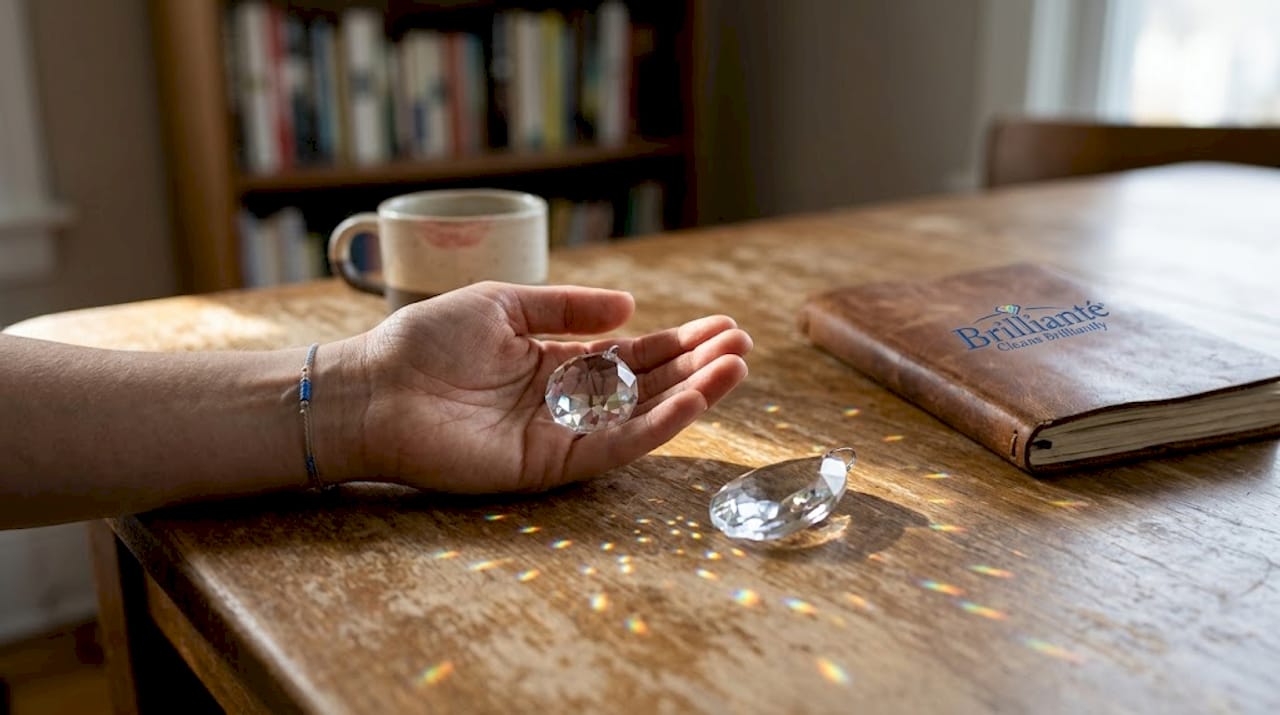
You can also feel the difference. Crystal is denser and noticeably heavier. Pick up a crystal pendant and a glass pendant of similar size, and the crystal one will feel almost twice as solid. When you tap two crystal pieces together, they produce a clear, almost musical ring. Glass produces a dull, flat sound. Interior decorators often use the tap test as a quick on-site check.
Here’s a side-by-side comparison to help you visualize the key differences:
| Feature | Lead crystal | Standard glass |
|---|---|---|
| Light effect | Vivid rainbows, prismatic | Soft, muted glow |
| Weight | Heavy and dense | Light and thin |
| Sound when tapped | Clear musical ring | Dull flat sound |
| Price range | Premium | Budget to mid-range |
| Scratch resistance | Lower (softer material) | Higher |
| Maintenance needs | Specialized cleaners | Standard gentle cleaning |
“Crystal is usually recognized for stronger sparkle because it bends and disperses light more sharply than plain glass.”
For elegant interior lighting, the material choice ripples through the entire room design. A crystal chandelier in a high-ceilinged foyer with white walls will scatter color in a way that a glass chandelier simply cannot replicate. But in a small, warm-toned room, that same intensity can feel overwhelming. Matching material to space is just as important as the chandelier’s shape or size.
- Best use for crystal: Formal dining rooms, hotel lobbies, large entryways, event spaces.
- Best use for glass: Casual family rooms, kitchens, minimalist interiors, rental properties.
Why crystal sparkles more: The science of light and craftsmanship
Sparkle isn’t magic. It’s physics. And once you understand the mechanics, you can make much smarter buying decisions.
The key concept is the refractive index, which is a measure of how much a material slows and bends light as it passes through. Standard glass has a refractive index of about 1.5. Lead crystal, depending on lead content, reaches 1.7 or higher. That difference means light bends more sharply inside crystal, splitting into a full color spectrum (the rainbow effect you see on the ceiling).
But material alone doesn’t explain everything. Cut geometry and mounting conditions also control how dramatic the sparkle appears in practice. A well-cut piece of glass can outperform a poorly cut piece of crystal in certain lighting setups.
Here’s a data comparison to put the science in context:
| Property | Standard glass | Lead crystal (24%+ lead) |
|---|---|---|
| Refractive index | ~1.5 | ~1.7 or higher |
| Density (g/cm³) | ~2.5 | ~2.9 to 3.0 |
| Lead oxide content | 0% | 24% minimum |
| Light dispersion | Low | High |
Cut quality also makes a massive difference. Machine-cut crystal produces clean, consistent facets. Hand-cut crystal has subtle irregularities that actually scatter light in more varied, interesting ways. Many collectors prefer hand-cut pieces for exactly this reason.
Lighting strategy matters too. Here’s how to maximize the sparkle of any chandelier:
- Position the chandelier at eye level when seated, not just flush to the ceiling. Light scatters outward, not just downward.
- Use clear bulbs instead of frosted ones. Frosted bulbs diffuse light before it even reaches the crystal.
- Aim for bulbs in the 4000K to 5000K color temperature range (cool daylight) for the most vivid rainbow effects.
- Paint surrounding walls white or very light colors to catch and amplify reflected light.
Pro Tip: Check out resources on energy efficient lighting to pair LED bulbs with your crystal chandelier without sacrificing that vivid sparkle. Modern LEDs in the right color temperature actually rival halogen for prismatic effects.
Selection and maintenance: What matters for homeowners and decorators
Choosing the right chandelier is step one. Keeping it beautiful is the ongoing commitment. Both matter equally if you want lasting results.
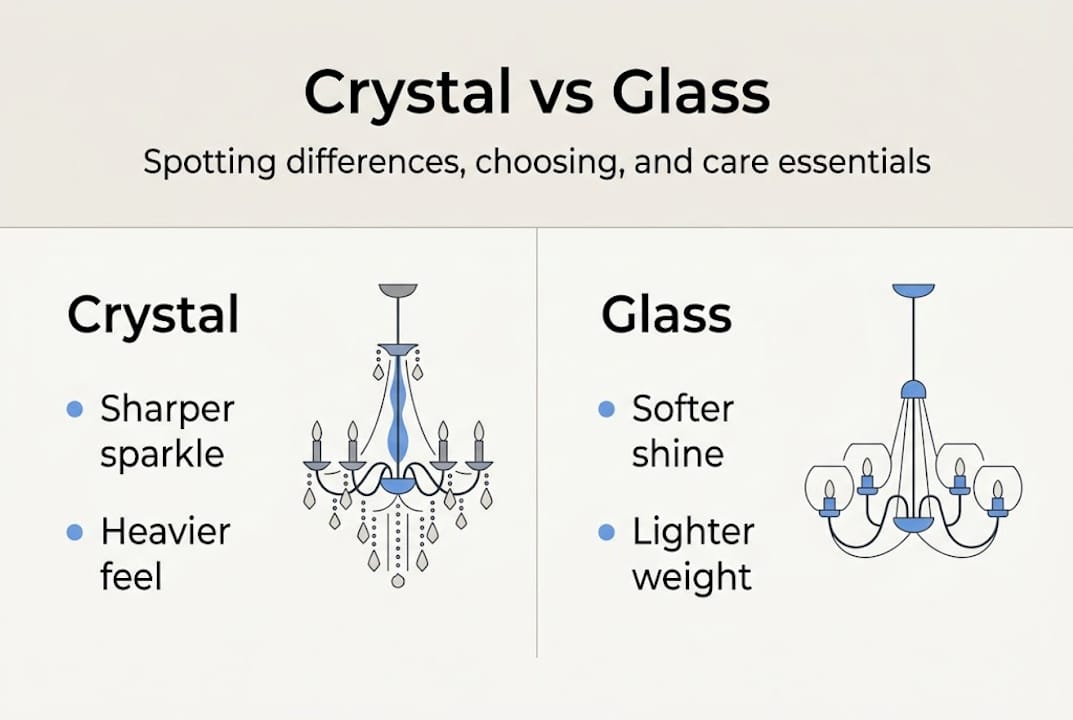
How to confirm what you’re buying
Before purchasing, use these practical checks:
- Ask for material documentation. Reputable brands list lead oxide percentage or confirm the crystal type (full lead, non-lead, borosilicate).
- Use the weight test. Hold the pendant. Crystal feels noticeably denser.
- Try the tap test. Crystal rings musically. Glass thuds.
- Check for rainbow projection. Hold a piece up to natural light. True crystal scatters a clear spectrum.
- Compare pricing context. Very cheap ‘crystal’ chandeliers are almost always glass. Genuine crystal carries a price premium.
Maintenance: Where the real difference shows
Crystal is softer than standard glass, which makes it more vulnerable to scratching. That means cleaning technique matters more. Following a solid crystal cleaning checklist is the best way to protect your investment. As best practices for maintaining crystal confirm, using the wrong cleaner can dull or damage crystal permanently.
Here’s a step-by-step cleaning process that works for both types:
- Turn off the chandelier and let bulbs cool completely.
- Lay a soft blanket or padding below to catch any drips or accidental drops.
- Dust each piece gently with a microfiber cloth before applying any liquid.
- For crystal, use a dedicated non-abrasive spray cleaner. Avoid ammonia-based products.
- For glass, a mild diluted dish soap solution works, but rinse thoroughly.
- Let pieces air dry completely before turning the chandelier back on.
Pro Tip: Schedule a deep clean once a year for crystal chandeliers, and a light dusting every four to six weeks. Homes with fireplaces, candles, or heavy cooking activity accumulate residue faster. Check out eco-friendly crystal care for green cleaning options that are safe for crystal and your household.
Families with kids or pets should weigh the trade-offs. Crystal’s beauty is unmatched, but its softness means it can scratch or chip more easily if a piece falls or gets knocked. In high-traffic rooms, glass may be the smarter, more durable choice.
Why the crystal vs glass debate is often oversimplified
Most articles stop at chemistry: lead oxide percentage, refractive index, price tag. That’s a limited lens. In our experience working with homeowners and decorators, the material is only one variable in a much larger equation.
We’ve seen beautifully mounted glass chandeliers outshine neglected crystal installations. A crystal chandelier coated in dust and residue produces almost no sparkle. A clean, well-positioned glass fixture in a bright room can look stunning. The real variable is care and intention, not just material.
Craftsmanship and lighting strategy are systematically underweighted in most buying guides. The cut of the crystal, the angle of the bulbs, the color of the surrounding walls, and the cleaning schedule together determine the actual visual result far more than lead content alone. Visit the advanced chandelier material guide for a deeper breakdown of how these variables interact.
Our honest take: buy the material that fits your lifestyle and your willingness to maintain it. A crystal chandelier you clean regularly will always reward you. One you ignore for years will disappoint you, regardless of what it cost.
Enhance and protect your chandelier’s beauty
Now that you know the real differences between crystal and glass, the next step is protecting whichever chandelier you choose. Regular care is what keeps both looking their best, and using the right products makes all the difference.
At Brilliante, we’ve made that part easy. Our professional crystal cleaning solutions are specially formulated for crystal and glass chandeliers, proudly made in the USA, and designed to work with a simple Spray and Drip method. No scrubbing, no harsh chemicals, no risk of scratching or tarnishing metal fixtures. Our formula is non-abrasive and environmentally friendly. For a complete care routine, start with the full chandelier cleaning checklist and make sparkling results your new standard.
Frequently asked questions
How can I tell if my chandelier is crystal or glass?
Crystal chandeliers are heavier and produce rainbow effects when light passes through them, while glass produces a softer, more muted glow. The tap test also helps: crystal rings clearly, glass sounds flat.
Is crystal always made with lead?
Traditional crystal requires at least 24% lead oxide to carry the ‘crystal’ label, but many modern alternatives use barium oxide or zinc oxide to achieve similar optical results without lead.
Does crystal require special cleaning products?
Yes. Crystal is softer than standard glass and scratches more easily, so dedicated crystal cleaners or gentle non-abrasive solutions are strongly recommended to preserve clarity and prevent surface damage.
Are crystal chandeliers more expensive than glass?
Generally yes. Crystal is priced higher because it requires more complex raw materials and precision craftsmanship, whether machine-cut or hand-cut, to achieve its optical performance.
Can I use regular bulbs with crystal chandeliers?
You can, but for maximum sparkle, choose clear bulbs in the 4000K to 5000K range and position them so light passes directly through the crystal pendants rather than around them.