
Maximizing Closet Space: Stylish Solutions and Tips
TL;DR:
- Effective closet organization involves assessing space, decluttering, and zoning by item usage.
- Proper shelving, accessories, and vertical zoning maximize space and accessibility.
- Consistent habits and seasonal rotations ensure long-term closet functionality and cleanliness.
Maximizing Closet Space: Stylish Solutions and Organization Tips
A cluttered closet does more than frustrate your morning routine. It wastes time, hides clothes you forget you own, and turns getting dressed into a daily chore. Whether you’re working with a small reach-in or a generous walk-in, the reality is the same: most closets are dramatically underused. The good news is that smart planning, a few key products, and some intentional zoning can transform even the most chaotic wardrobe storage into a space that’s both functional and genuinely stylish. This guide walks you through every step.
Key Takeaways
| Point | Details |
|---|---|
| Vertical zoning | Use vertical space efficiently by assigning items to eye-level, high, and low zones for maximum capacity. |
| Optimal shelf spacing | Adjust your shelves to fit clothing types and use risers to double available storage. |
| Stylish function | Choose custom or modular storage options that blend visual appeal with practicality. |
| Avoid common mistakes | Prevent crowding and poor access by following proven expert tips for lasting results. |
| Consistency matters | Regularly revisit your closet organization to maintain its efficiency and style. |
Assessing your closet and planning for optimization
Before you buy a single bin or move one hanger, you need to understand what you’re actually working with. Most closets fail not because they’re too small, but because they’ve never been thoughtfully organized. Items pile up in random spots, vertical space goes completely unused, and the closet becomes a catch-all rather than a curated wardrobe system.
Start with a full inventory. Pull everything out and sort items into three groups: what you use daily, what you use seasonally, and what you honestly never use. That last group should go to donation or storage elsewhere. This single step often frees up 20 to 30 percent more usable space before you’ve changed a single shelf.
Next, measure your closet carefully. Write down the height from floor to ceiling, the width of each wall, and the depth of existing shelves. These numbers matter because they determine which shelving systems, bins, and accessories will actually fit. A system that looks perfect in a showroom can be completely wrong for a 20-inch-deep closet.
Here’s a quick checklist to complete before purchasing any storage solutions:
- Measure floor-to-ceiling height and wall widths
- Note the depth of existing shelves or rods
- Sort and count items by category (hanging, folded, shoes, accessories)
- Identify items used daily vs. seasonally
- Check for available wall space for hooks or additional rods
- Note any lighting gaps (good lighting for small spaces dramatically improves visibility and usability)
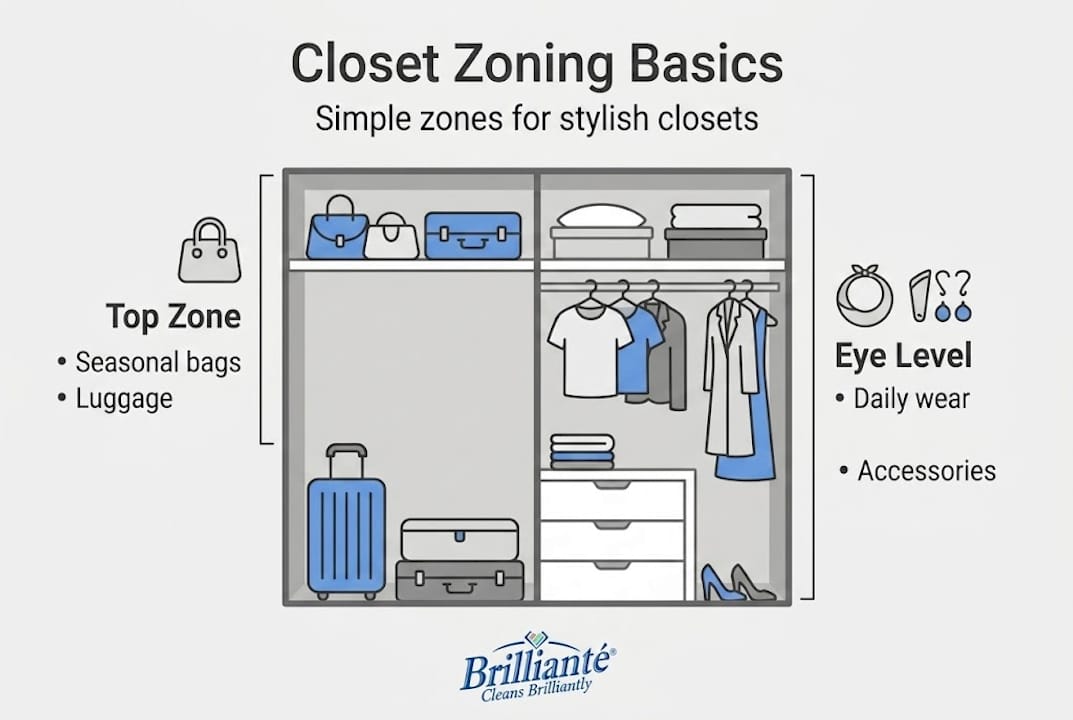
Once you’ve completed the inventory and measurement steps, you can make a smart plan. The most effective approach is the zone-by-use strategy. According to organized closet research, placing daily-use items at eye level, seasonal items and luggage on high shelves, and shoes or bins at floor level can boost vertical efficiency from 40% to 90%. That’s not a minor upgrade. That’s a near-total transformation of how your closet functions.
Here’s a side-by-side look at how an unplanned closet compares to a zone-optimized one:
| Feature | Unplanned closet | Zone-optimized closet |
|---|---|---|
| Vertical space used | 40% | Up to 90% |
| Daily item access | Scattered, slow | Eye-level, instant |
| Seasonal storage | Mixed in | High shelves, out of the way |
| Floor clutter | Common | Organized with bins/shoes |
| Overall usability | Low | High |
A clear plan prevents impulse purchases that don’t fit your space and creates a logical framework for everything that follows.
Smart shelving and vertical zoning techniques
With a solid plan in place, the next move is rethinking your shelving setup. Most standard closets come with a single rod and maybe one fixed shelf above it. That setup wastes enormous amounts of vertical space, especially in closets with ceilings higher than eight feet.
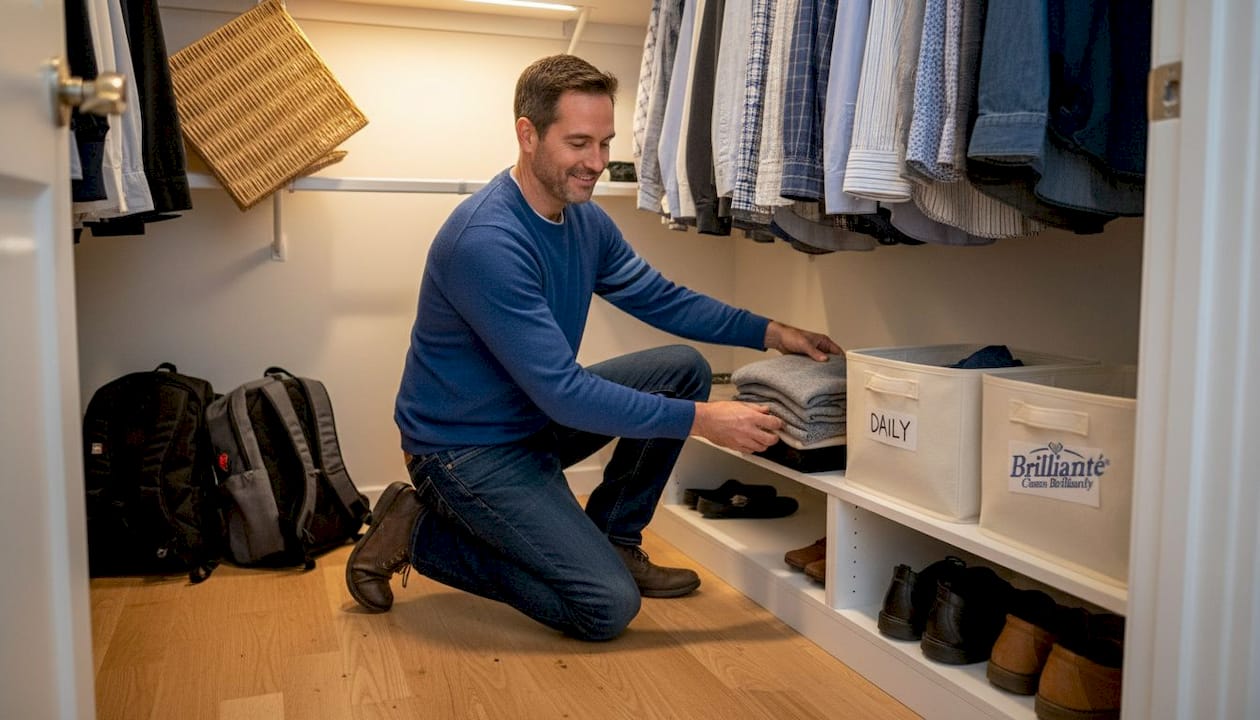
The key is matching shelf height to what you’re storing. Research on closet shelf spacing recommends 10 to 12 inches between shelves for sweaters and jeans, 8 to 10 inches for folded t-shirts, and 6 to 8 inches for shoes. When your shelves are spaced correctly, you fit more items in the same footprint without anything feeling crammed.
Here’s a quick reference for optimal shelf spacing:
| Item type | Recommended shelf spacing |
|---|---|
| Sweaters and jeans | 10 to 12 inches |
| Folded t-shirts | 8 to 10 inches |
| Shoes (upright) | 6 to 8 inches |
| Hanging shirts | 40 inches minimum rod length |
| Dresses and coats | 60 to 70 inches rod clearance |
Beyond fixed shelves, there are several affordable accessories that can dramatically increase your storage capacity:
- Shelf doublers: These clip-on mini shelves sit on top of existing shelves and effectively create a second level within the same space. They work especially well for handbags or folded items.
- Shoe risers: Stackable risers let you store two rows of shoes in the vertical space typically used for one.
- Tension rods: Installed horizontally inside a cabinet or vertically between shelves, tension rods create instant dividers for clutch bags, cutting boards, or cleaning supplies. No drilling required.
- Double hang rods: Install a second rod below your existing one for short items like shirts or folded pants. This instantly doubles your hanging capacity.
Vertical zoning is where these tools really shine. Think of your closet in three horizontal bands. The top zone (above eye level) is for seasonal items, luggage, and anything you access less than once a month. Using zone organization tips from room-by-room planning can help you replicate this logic across your whole home. The middle zone is your prime real estate. Hang frequently worn clothes here, store everyday accessories at eye level, and make sure nothing blocks quick access. The bottom zone handles shoes, bins for gym gear, or baskets for items you grab on the way out the door.
Pro Tip: Avoid placing drawers in closet corners. Corner drawers are notoriously hard to access and often become dead zones where forgotten items pile up. Use open bins or baskets in corners instead, where you can see and grab items easily.
Stylish storage solutions that boost function
Now that the structure is solid, it’s time to talk about what goes inside it. Storage doesn’t have to look utilitarian. The best closet systems balance function with visual appeal, and the options available today make that easier than ever.
If budget allows, custom closet systems are worth serious consideration. The custom closet market is valued at $12.5 billion and growing at a 6.8% annual rate, with 65% of buyers preferring custom over prefab options specifically for style and durability. Custom systems are built to your exact dimensions, use higher-quality materials, and often include features like built-in lighting, pull-out drawers, and jewelry organizers that prefab kits simply can’t match.
That said, prefab and modular systems have improved dramatically and offer excellent value. Here are some of the best stylish storage solutions available at a range of price points:
- Canvas bins and woven baskets: These add texture and warmth to open shelving while corralling loose items. Choose neutral tones for a cohesive look or bold colors for personality.
- Clear stackable bins: Ideal for accessories, socks, or folded items. The transparency means you always see what’s inside without digging.
- Fabric drawer inserts: These slip into existing shelves to create soft, divided compartments. Great for jewelry, belts, or small accessories.
- Modular cube systems: These freestanding units can be configured to any layout and moved if you change your mind. Add fabric drawers or baskets to each cube for a clean finish.
- Velvet hangers: Switching from plastic to slim velvet hangers instantly creates 30 to 40 percent more hanging space and prevents clothes from slipping.
- Over-the-door organizers: These use otherwise wasted door space for shoes, accessories, or cleaning products.
“A closet that looks good is a closet you’ll actually maintain. Style isn’t vanity in storage design. It’s a practical motivator.”
One edge case worth addressing is shared closets. When two people share a single wardrobe space, horizontal territory division often creates friction. A better approach is to zone by vertical height. Each person gets a full column of space from floor to ceiling, rather than splitting the top and bottom halves. This gives each person visual clarity and makes it much easier to organize seasonal items and rotating wardrobes without disrupting your partner’s section.
Pro Tip: For shared closets, label bins and baskets clearly. A quick label on each basket eliminates the guesswork and prevents items from migrating into the wrong zone over time.
Common mistakes and troubleshooting for lasting results
Even with great systems in place, closets can slide back into chaos. The most common culprit is overcrowding. When you try to fit too many items into a newly organized space, the zones collapse, shelves sag, and the whole system stops working. The rule of thumb: leave at least 20 percent of your shelf and rod space empty. That buffer gives you room to breathe and prevents the system from feeling cramped after a single shopping trip.
Here are the most frequent mistakes homeowners make after organizing their closets:
- Ignoring shelf height requirements: Shelves set too far apart waste vertical space. Too close together and folded items won’t fit correctly, leading to messy stacks.
- Mixing categories across zones: When seasonal items drift into your daily-use zone, access becomes slow and frustrating.
- Using bins without labels: Without labels, bins become black holes where items disappear. A simple label maker or even handwritten tags solve this completely.
- Skipping a seasonal rotation plan: Items worn only in winter or summer should move off prime shelving when seasons change. Build a rotation schedule into your calendar.
- Buying storage before measuring: Products that don’t fit your specific closet dimensions create dead space and awkward layouts.
Troubleshooting specific problems is often simpler than it seems. If bins keep getting messy, the issue is usually that the bin is too large. Smaller, more specific bins stay organized because they hold fewer items. If access is difficult, the problem is typically shelf depth rather than height. Shallower shelves (12 to 14 inches) are easier to use than deep ones because items don’t get hidden behind each other.
For closets where seasonal rotation is tricky, small closet optimization research recommends using tension rods for no-drill expansion and zoning shared spaces by vertical height rather than horizontal stacks. This approach prevents categories from collapsing into each other over time.
For broader household organization that ties into your closet work, applying the same logic to other storage areas, like under-sink organization tips, reinforces the habits that keep closets functional long term.
Pro Tip: Set a quarterly reminder on your phone to revisit your closet zones. A 20-minute reset every three months prevents small drift from turning into a full-scale reorganization project.
Our take: Maximizing closet space goes beyond design trends
Here’s what most closet organization articles won’t tell you: the products matter far less than your habits. You can install a beautiful custom shelving system, buy matching velvet hangers, and label every single bin. But if you don’t build consistent routines around your closet, it will return to chaos within six months. We’ve seen it happen repeatedly.
The real secret to a lasting, functional closet is consistency and honest zoning. That means putting things back where they belong every single day, not just when company is coming. It means actually removing items from your wardrobe when you stop wearing them, rather than letting them accumulate on the lower rod.
Design trends can be inspiring, but they’re not a substitute for understanding your own habits. A minimalist capsule wardrobe system is useless if you genuinely love having options. A maximalist, fully loaded closet works perfectly for someone with the discipline to maintain it. The system should fit your life, not the other way around.
We recommend anchoring your approach in zone-based organization and revisiting it quarterly. Consistent, small maintenance beats infrequent, exhausting overhauls every time.
Ready for a cleaner, more organized home?
Getting your closet in order is one of the most satisfying home improvements you can make, and the momentum doesn’t have to stop there. A well-organized home starts with smart systems in every room, from the wardrobe to the kitchen to the entryway.

At Brilliante, we believe that a beautiful, functional home deserves products and guidance that actually work. Whether you’re tackling closet organization, refreshing your storage solutions, or looking for professional home organization resources to support your next project, we’re here to help. Explore our site for practical tools and tips that make every corner of your home work harder and look better. A cleaner, more organized home is closer than you think.
Frequently asked questions
How much space should I leave between closet shelves?
Aim for 10 to 12 inches between shelves for sweaters and jeans, 8 to 10 inches for t-shirts, and 6 to 8 inches for shoes to maximize usable space without cramming.
What’s the best way to organize items for daily vs. seasonal use?
Place daily items at eye level, seasonal clothing and luggage on high shelves, and shoes or bins at floor level to boost vertical efficiency from 40% to 90%.
Are custom closet systems worth the investment?
For most homeowners, yes. The custom closet market shows 65% of buyers prefer custom over prefab for style and durability, and the quality difference is noticeable over time.
How can I share a closet space efficiently?
Zone by vertical height rather than splitting top and bottom halves, and avoid placing drawers in corners where access is awkward and items tend to get lost.