
Top storage solutions for small spaces: maximize every inch
TL;DR:
- Using vertical space and multi-functional furniture maximizes storage without sacrificing floor area.
- Decluttering and measuring are essential steps before implementing creative storage solutions.
- Periodic reassessment ensures storage systems remain effective and suited to changing needs.
Living in a small home doesn’t mean living with chaos. But if you’ve ever tripped over a pile of boxes, lost your keys under a stack of unsorted mail, or opened a closet only to have something fall out at you, you already know the daily frustration of not having enough room for everything you own. The good news is that your home almost certainly has more usable storage potential than you realize. From underused wall space to furniture that does double duty, the right strategies can completely transform how your home feels and functions. This guide covers practical, creative, and proven approaches to reclaiming every inch.
Key Takeaways
| Point | Details |
|---|---|
| Measure and declutter first | Start by eliminating unused items and mapping every available space for best results. |
| Vertical space is valuable | Use wall shelving and over-door solutions to maximize storage in any room. |
| Choose versatile furniture | Opt for multi-functional pieces like ottomans or modular cabinets to combine storage with daily utility. |
| Creativity unlocks hidden space | Under-bed, corners, and renter-friendly tools help you find storage in overlooked areas. |
Assessing your storage needs: Essential first steps
Once you’ve identified space pain points, it’s crucial to step back and evaluate exactly what you’re storing and where. Before you buy a single bin, basket, or shelf unit, take an honest look at what you actually own and what your daily routine requires. Jumping into storage solutions without this groundwork is one of the most common and expensive mistakes small-space homeowners make.
Step 1: Declutter first, organize second. This order matters more than most people expect. Decluttering before organizing is essential because effective storage requires removing unnecessary items first to avoid overfilling new systems. If you skip this step, you’re essentially paying for more containers to hold things you don’t need.
Step 2: Identify your “dead zones.” These are spots in your home that currently store nothing useful. Think about the area above your refrigerator, the wall beside your front door, the back of cabinet doors, or the corner behind a bathroom door. Expert methodology recommends assessing dead zones, mapping usage frequency, and measuring precisely before choosing any layered vertical or multi-use solution.
Step 3: Measure everything. Bring a tape measure and note the height, width, and depth of shelves, closets, cabinets, and open wall sections. A shelf unit that looks perfect online might be two inches too tall for your alcove. Precise measurements save you from returns, frustration, and wasted weekends.
Step 4: Separate daily-use from occasional-use items. Your everyday coffee mug should be at eye level with zero obstacles. Your holiday serving platters can live in a harder-to-reach spot. This simple sorting exercise will guide every storage decision you make and help you prioritize placement by frequency of use.
Step 5: Avoid single-purpose items. A shoe rack that only holds shoes is less valuable than a bench that holds shoes, provides seating, and stores bags inside. Every piece of storage furniture in a small home should pull multiple jobs. If an item does only one thing, reconsider whether it belongs in the space at all.
Pro Tip: Don’t try to overhaul every room at once. Start with one high-frustration area, like a cluttered closet or a chaotic cabinet under the sink. Momentum from one organized area will carry you forward. For more ideas on decluttering your home office or cutting household clutter in other rooms, there are targeted approaches that work for each specific space.
Vertical storage: The secret to reclaiming floor space
Having mapped your needs and decluttered, you’re ready to make the most of walls and overlooked vertical spaces. Floor space in a small home is precious real estate. But most people stop thinking about storage at eye level and ignore everything above. That’s where vertical storage comes in, and it’s genuinely one of the most impactful changes you can make.
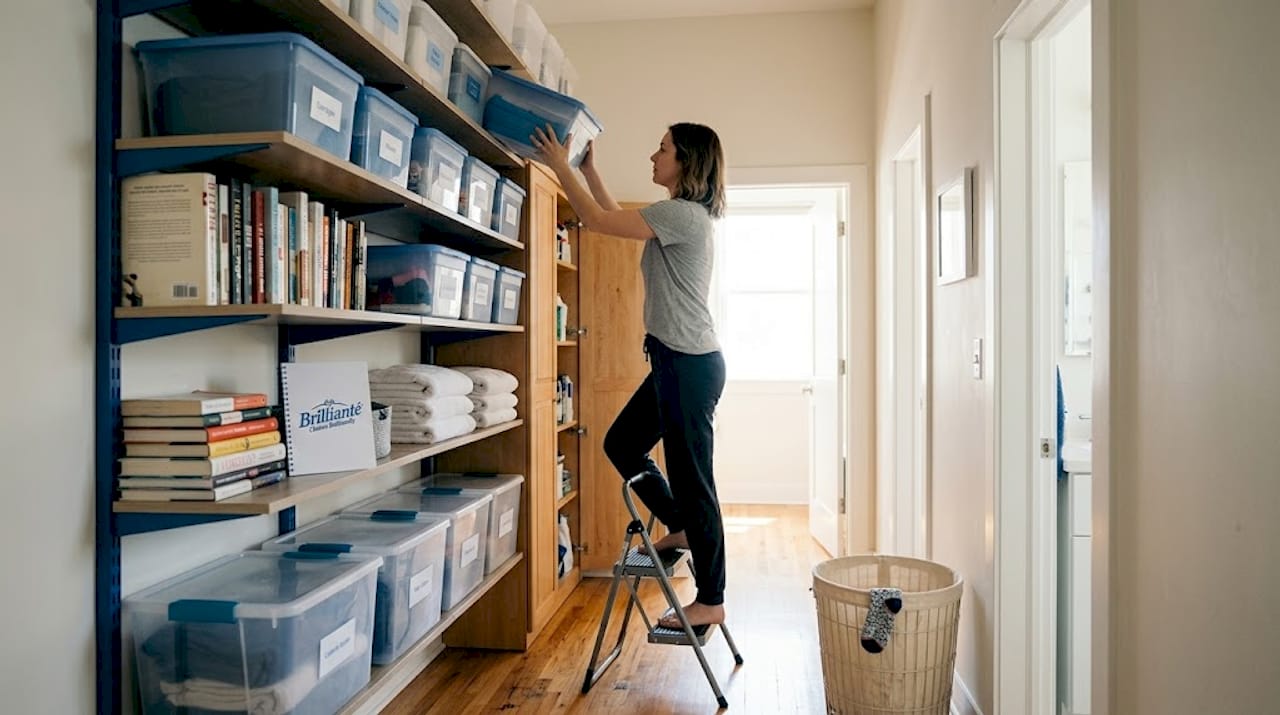
Wall-mounted shelves and tall cabinets are your first line of attack. Vertical storage using walls and full-height shelving maximizes floor space in small areas by utilizing unused air space above eye level. Think about a bookshelf that runs floor to ceiling. It occupies the same footprint as a shorter unit but can hold twice as much, sometimes more. In a kitchen, stacking open shelving up to the ceiling adds storage without narrowing the room.
Over-door organizers are another game changer. The back of almost every door in your home is a blank vertical canvas. Over-door racks work brilliantly in pantries, bathrooms, bedroom closets, and even laundry rooms. Over-door and tension rod organizers exploit vertical dead zones like cabinet interiors and door backs for cleaning supplies and small items. A simple tension rod inside a cabinet below the sink, for example, can double your storage without any tools or wall damage.
Here are some vertical storage options worth considering:
- Floating wall shelves above desks, sofas, or beds for books, plants, and decorative items that currently clutter surfaces
- Pegboards in kitchens or home offices for hanging tools, utensils, or supplies with maximum flexibility
- Over-door shoe organizers repurposed to hold cleaning products, craft supplies, or toiletries
- Tall wardrobe units that extend to the ceiling, with the upper section reserved for seasonal or rarely needed items
- Tension rods inside deep cabinets to hang spray bottles and free up the shelf space below
For ideas on using under-sink organizers to get more from one of the trickiest spaces in any home, or exploring lighting for small spaces that visually open up a room while supporting your storage setup, both are practical next steps.
Pro Tip: When shopping for shelving, prioritize adjustable systems. Fixed-shelf heights feel limiting after a year or two as your storage needs shift. Adjustable units let you reorganize without buying anything new.
Multi-functional furniture and modular systems
With walls working double duty, let’s look at how furniture and modular systems can hide storage in plain sight. Smart furniture selection might be the single highest-leverage change you can make in a small home. When every piece of furniture stores something, your home suddenly has far more capacity than its square footage suggests.
Multi-functional furniture such as storage ottomans, lift-up beds, and benches with hidden compartments provides dual utility without claiming additional floor space. A lift-up bed frame, for example, can hold bedding, out-of-season clothing, sports gear, and luggage. That’s an entire closet worth of storage beneath a piece of furniture you already needed.
Modular, stackable systems like foldable shoe cabinets allow customization for entryways and closets, with some units storing up to 24 pairs of shoes in a footprint of just 13x16x67 inches. That’s an enormous amount of storage in a very narrow column of space. These systems are also renter-friendly because they require no installation and move easily when you do.
Here’s a quick comparison to help you decide which solution fits your situation:
| Storage solution | Approx. storage capacity | Best room | Renter-friendly? |
|---|---|---|---|
| Storage ottoman | 2 to 4 cubic feet | Living room | Yes |
| Lift-up bed frame | 30 to 50 cubic feet | Bedroom | Yes (freestanding) |
| Stackable shoe cabinet | 10 to 15 cubic feet | Entryway or closet | Yes |
| Built-in under-stair cabinet | 20 to 40 cubic feet | Hallway | No (permanent) |
| Modular cube shelving | 8 to 20 cubic feet | Any room | Yes |
Additional furniture ideas worth trying:
- Coffee tables with drawers or lift-tops that turn your living room centerpiece into a storage hub for remotes, books, and blankets
- Dining benches with flip-top lids along one side of a table, storing table linens or kids’ items
- Entryway benches with cubbies underneath that give you a seat to put on shoes while keeping footwear organized
- Murphy beds with attached shelving that transform a bedroom into an office or studio during the day
- Nesting tables that stack together when not in use, freeing floor space on a moment’s notice
For more hidden storage ideas that work in every room, there are simple solutions that don’t require a renovation or a big budget.
Pro Tip: Modular systems are especially smart for renters. You can reconfigure them as your needs change without any tools, and they move with you to your next home without a second thought.
Getting creative: Under-used nooks and micro-space hacks
Beyond traditional storage, the smallest nooks often hold the biggest potential, especially with a little creativity. This is where most homeowners leave significant capacity untouched. The spaces you walk past every day without noticing are often the best opportunities.
Under the bed is prime storage territory. Under-bed storage with rolling bins or vacuum-sealed bags accesses prime real estate, storing 25 to 30 cubic feet under a queen bed. Rolling bins make access easy and keep items dust-free. Vacuum-sealed bags compress bulky items like comforters, pillows, and sweaters to a fraction of their original size, dramatically increasing what fits.
Renter-friendly solutions are worth a dedicated mention. Renter-friendly options prioritize no-drill solutions like tension rods, adhesive hooks, and freestanding modular units to avoid wall damage. Command hooks, for instance, can hold bags, hats, and accessories on the back of a door or along a hallway wall without leaving a mark.
Here’s a breakdown of storage capacity by common micro-space solution:
| Solution | Estimated volume | Notes |
|---|---|---|
| Under-bed rolling bins (queen) | 25 to 30 cubic feet | Great for seasonal or bulky items |
| Storage ottoman | 2 to 4 cubic feet | Best for everyday living room items |
| 6-tier shoe cabinet | 10 to 15 cubic feet | Ideal for entryway organization |
| Over-door tension rod shelf | 1 to 2 cubic feet | Perfect for small bathroom or pantry |
| Hallway rolling cart | 3 to 6 cubic feet | Versatile, moveable, renter-friendly |
Research on minimum housing requirements shows that spaces under 30 square meters per person lead to measurably reduced satisfaction. Storage must support minimum functional areas for sleep, hygiene, and storage at roughly 3 to 4 square meters per person. This means every square foot of recovered storage space directly improves your quality of life.
More creative micro-space ideas to put to work:
- Hallway alcoves fitted with a narrow rolling cart can hold cleaning supplies, craft items, or pantry overflow
- Corner spaces often go unused but can hold tall corner shelves that hold books, plants, or kitchen tools
- Inside cabinet doors fitted with adhesive organizers keep spices, lids, or small tools within easy reach without adding clutter to shelves
- Above kitchen cabinets provides room for infrequently used items displayed in matching baskets for a clean, organized look
- Behind the sofa with a narrow console table gives you a landing spot for lamps, books, and everyday essentials
For guidance on storing seasonal and holiday items without cluttering your living areas year-round, holiday decor storage solutions offers a smart framework for keeping things accessible without taking over your closets.
Our take: Why one-size-fits-all rarely works in small spaces
While creative hacks unlock new space, it’s important to pause and reflect on what actually works over time. We’ve seen countless homeowners buy matching sets of storage bins, install trendy pegboards, and order modular furniture sets, only to find things just as chaotic six months later. The issue isn’t the products. It’s the lack of a personalized system.
No single product or hack works for everyone. A lift-up bed frame is a brilliant solution for someone who needs seasonal clothing storage, and completely irrelevant for someone whose main problem is a chaotic kitchen. The key is matching solutions to your actual daily habits, not the habits you wish you had.
Tools help, but ongoing maintenance matters just as much as the initial setup. An organized closet requires a few minutes of weekly attention. If that doesn’t happen, even the best system falls apart within weeks.
The real secret to long-term small-space living is periodic reassessment. Every few months, revisit what you’re storing and ask honestly whether it still belongs. Things that seemed essential a year ago may no longer earn their space.
Customizing organization systems to match your specific patterns and routines consistently outperforms any off-the-shelf “miracle” product. Start with honest self-assessment, stay flexible, and treat your storage setup as a living system rather than a one-time fix.
Ready to transform your space? Explore smart cleaning and storage ideas
In the end, an organized small space is about more than furniture. It’s about ongoing strategy and the right tools. Getting your storage right is only half the equation. Keeping surfaces, shelves, and fixtures clean and looking great is the other half.

At Brilliante Crystal Chandelier Cleaner, we know that a beautifully organized home deserves to sparkle from floor to ceiling. Our drip-dry formula makes it effortless to keep your fixtures clean without taking anything apart. Proudly made in the USA, it’s non-abrasive, environmentally friendly, and rated number one by hundreds of happy homeowners. If you’re ready to take the next step in your home transformation, discover more small space solutions and find everything you need to keep your home looking its absolute best.
Frequently asked questions
What is the most efficient way to store items in a small bedroom?
Utilize vertical space with wall shelves and maximize under-bed storage with rolling bins or vacuum-sealed bags, which can hold 25 to 30 cubic feet beneath a queen bed alone.
Are there storage options that don’t require drilling or damaging walls?
Yes, tension rods, adhesive hooks, and freestanding modular units offer fully renter-friendly storage that leaves zero permanent marks on walls or surfaces.
How much storage do I need for comfortable small-space living?
Ideally, allocate 3 to 4 square meters per person to support the minimum functional areas for sleep, hygiene, and storage to maintain real satisfaction in small homes.